Should I buy in a developing neighborhood?
Should I buy in a developing neighbourhood in Milton? The brutal, profitable answer — yes, if you do this first.
Quick promise
Buy in a developing neighbourhood the smart way in Milton and you lock in cheaper entry, faster appreciation, and buyers lined up when you sell. Buy the wrong lot, build the wrong home, or ignore infrastructure and you lose time and money. This post is a direct, step-by-step playbook for Milton buyers who want upside without gambling.
Why Milton matters right now
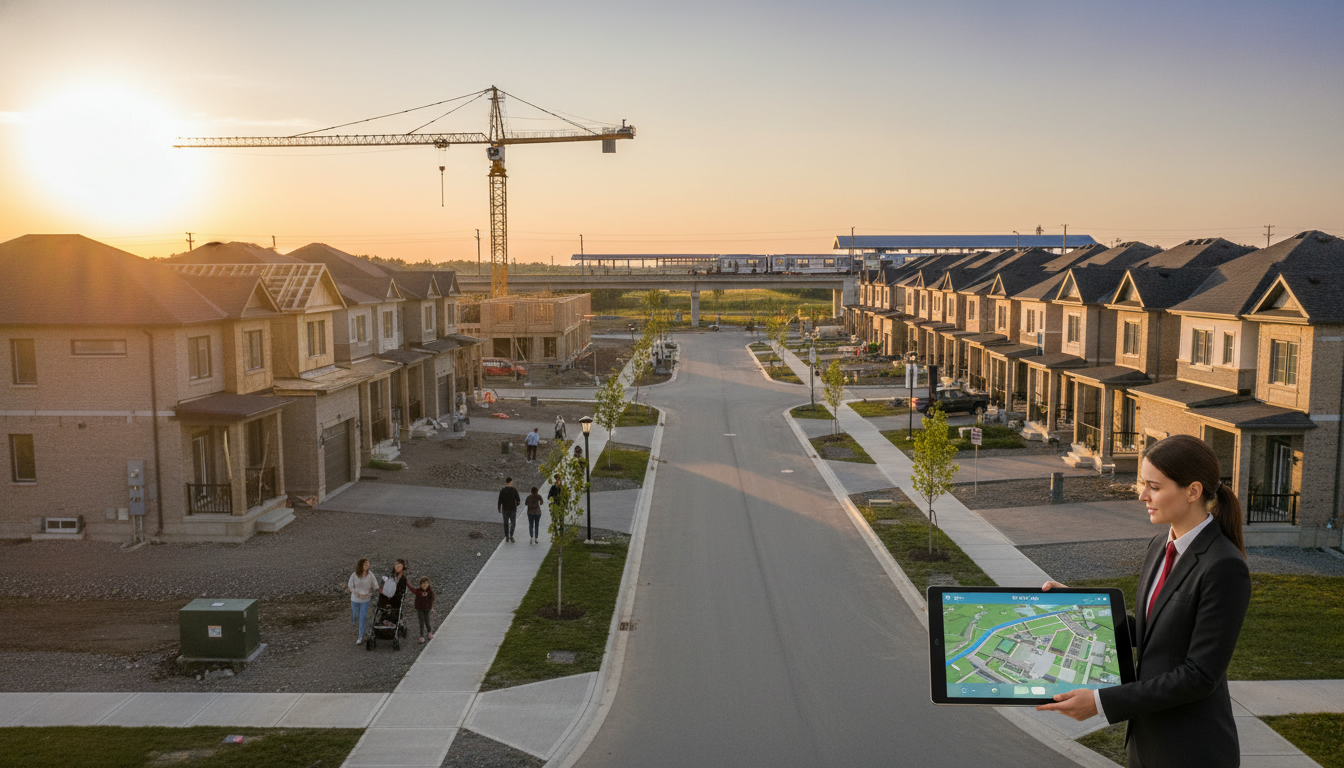
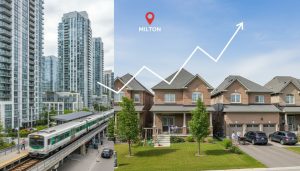
Milton is not just a suburb — it’s a growth engine in the Greater Toronto Area. Population growth, strong commuter demand to Toronto, limited land supply, and steady local job growth make developing neighbourhoods here a serious opportunity. Municipal plans and new transit upgrades push prices up faster where infrastructure lands first. That’s the rule.
Facts you need to keep in mind:
- Milton sits inside Halton Region and feeds Toronto’s housing demand while often offering lower entry prices than Toronto proper.
- Commuter access (Milton GO) and highway links make many Milton districts attractive to buyers who work in Toronto but want more space.
- New subdivisions and master-planned communities are actively being built. Where amenities, schools, and transit land first, resale values follow.
The simple math: why developing neighbourhoods can win
Price at purchase + infrastructure multiplier = resale value.
Buy early: lower price per square foot.
Buy near planned infrastructure: faster demand growth.
Buy with an exit plan: time your sale for after the community’s amenities open.
Put numbers on it (realistic scenario): buy early in a desirable Milton pocket, hold 3–7 years while schools and shops open, and you can reasonably outperform buying in an already-established pocket. That’s why investors and owner-occupiers both watch developing neighbourhoods closely.
The Milton-specific checklist — what to confirm before you buy
Treat this as a due-diligence checklist. Check every box before you sign.
- Municipal plans and zoning
- Pull the Milton official plan and local secondary plan for the neighbourhood. Confirm planned commercial nodes, parks, and schools. If the city has reserved land for retail or a school nearby, that’s a major plus.
- Transit and commuting
- Properties within easy reach of Milton GO station or major highway connectors hold value better. Look at future GO expansion and local bus plans.
- Builder reputation and product mix
- In Milton, the developer matters. Research past projects, build quality, completion timelines, and warranty claims.
- Timing and absorption rate
- Find out how fast houses are selling in the development. If lots sit unsold for months, appreciation will slow.
- Schools and catchments
- Families move where good schools and new school builds are planned. A confirmed school build is a demand multiplier.
- Local employment and commercial growth
- New business parks or logistics hubs nearby mean rental demand and buyer demand stay high.
- Comparable sales (comps)
- Use comps within the same phase or adjacent communities, not just town-wide averages. Pay attention to prices per square foot and recent sale dates.
- Future supply
- If five competing master-planned communities start at once around Milton, supply may outpace demand. Prefer pockets with limited new supply.
- Exit strategy
- Know whether you’re buying to flip, to rent, or to occupy long-term. Each strategy changes which property you choose.
Risk management: what can go wrong and how to avoid it in Milton
You won’t avoid all risk. You can control it.
- Construction delays: build buffer into timeline and mortgage planning. Choose reputable builders with track records in Halton.
- Overbuilding: watch permit filings and new project announcements around Milton. If many builders flood the same pocket, wait or renegotiate.
- Infrastructure delays: confirm municipal funding and timelines for transit or schools — get it in writing where possible.
- Commuter pattern changes: persistent remote work reduces commuter demand. That favors properties near local amenities and employment, not just near GO.
The best property types to buy in developing Milton neighbourhoods
- Townhouses: lower price point, high demand for first-time buyers and investors.
- Semi-detached & singles: strong long-term resale with family buyers.
- Low-rise condos in mixed-use nodes: if near a future main street or GO, they can deliver good rental yield.
Tip: In Milton, townhouses often offer the best combination of entry price plus future demand from families who trade up.

Practical buying strategy — step-by-step
- Start with objectives: flip, rent, or live? Define timeline (3, 5, or 10+ years).
- Set a firm budget that includes higher carrying costs if construction delays happen.
- Shortlist 2–3 developing pockets near transit or planned amenities.
- Run the municipal plan and builder checks from the checklist above.
- Compare recent resales and absorption rates of early phases.
- Negotiate price and incentives (deposit structure, upgrades, closing credits).
- Secure mortgage pre-approval with buffer for rate changes.
- Track the build and municipal timelines monthly.
- Stage exit strategy: list 6–12 months after major amenity openings for best resale timing.
How to value upside and calculate a conservative target
Conservative appraisal method:
- Use current comparable sales in adjacent established pockets for a baseline.
- Reduce that baseline by 5–10% for early-phase discount.
- Add projected value for known infrastructure (schools, transit, retail) — estimate a realistic 5–15% premium once those items are complete.
Conservative target: 10–20% appreciation over 3–5 years is realistic in Milton if you pick a location with confirmed infrastructure and limited competing supply. Aim for that; treat anything more as a bonus.
When NOT to buy in a developing neighbourhood in Milton
- If the neighbourhood has no confirmed schools or transit and timelines are vague.
- If absorption is slow and builders are discounting heavily.
- If you need quick liquidity (less than 2 years) — developing areas often need time.
- If the builder has a poor track record of finishes and customer service.
Local market signals that mean “go”
- A confirmed school or library build within 1–3 years.
- A clear timeline for transit upgrades or bus routing near the pocket.
- Strong pre-sale rates (lots moving quickly in Phase 1).
- Retail tenants signing for a main-street plaza.

Case study example (how the playbook works)
Scenario: You buy a townhouse early in Phase 1 near planned school + bus route. You negotiate deposit and get a 3-year hold plan. The school opens in year 2, retail in year 3. Demand spikes from families. You list in year 3 and sell above your conservative target. This is the pattern that repeats where Milton amenity timing aligns with the development.
Negotiation tips to lower risk
- Ask for delayed deposit schedule tied to milestones.
- Get incentive credits for upgrades you can sell for a profit later.
- Ask for documented timelines from builders and check default penalties.
Why working with a Milton specialist matters
You need a person who knows which pockets will finish first, which schools are funded, and which builders deliver. That person also knows local comps and can negotiate builder incentives. That saves you tens of thousands.
FAQ — Investing in a developing neighbourhood in Milton, ON
Q: What is the ideal hold period for a property in a developing Milton neighbourhood?
A: Plan for 3–7 years. That gives time for key amenities and demand to materialize and still captures strong resale windows in the GTA.
Q: Are developing neighbourhoods riskier than established ones?
A: Yes and no. They carry construction and timing risk, but they also offer lower entry prices and higher relative upside when infrastructure lands. Risk is manageable with the checklist above.
Q: Will remote work reduce Milton demand?
A: Remote work shifts the profile. Properties with local amenities, home office space, and good schools will still attract buyers. Choose locations with both commuter access and local services.
Q: How do I assess builder quality in Milton?
A: Check past projects in Halton, read customer reviews, visit completed units, and ask for warranty history. A good builder reduces your execution risk.
Q: Do townhouses or detached homes perform better in developing areas here?
A: Townhouses often outperform for entry-level buyers and investors because of price accessibility. Detached homes perform well for family buyers but require higher entry capital.
Q: How much should I budget for unexpected costs?
A: Add a 5–10% buffer to your purchase and renovation budget to cover delays, upgrades, and market fluctuations.
Q: What are the top Milton signs that a developing neighbourhood will appreciate?
A: Confirmed schools, transit routing, strong pre-sale rates, and planned retail/commercial nodes.
Q: Should I buy pre-construction in Milton?
A: Pre-construction can be profitable but requires builder vetting, realistic timelines, and buffer for delays. Use the checklist and secure conditional financing.

Final call — what to do next
If you want a concrete, neighbourhood-level read on Milton — I’ll cut to the chase, analyze the pockets, and give you a clear buy/hold/sell recommendation based on timelines, comps, and builder quality.
Contact: Tony Sousa — Milton real estate specialist
Email: tony@sousasells.ca
Phone: 416-477-2620
Website: https://www.sousasells.ca
No fluff. Clear tradeoffs. Local data-backed moves. Call or email and I’ll run the numbers for the exact Milton pocket you’re targeting.