How do I evaluate local traffic patterns before buying?
Want to avoid buying a house that’s stuck next to a daily traffic jam? Here’s the exact checklist to evaluate local traffic patterns before you buy in Milton, ON — fast, practical, and local.
Why traffic patterns matter (and why sellers need to care)
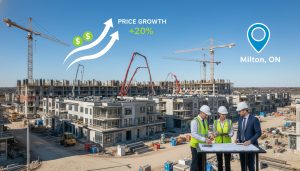
Traffic isn’t just annoying. It kills curb appeal, cuts resale value, shrinks buyer pools, and creates long-term maintenance and noise problems. In Milton — one of Ontario’s fastest-growing towns — population and development have pushed up congestion on key corridors. If you sell a home that backs onto a busy road or a frequent commuter route, you’ll need the facts to price and market properly.
Be ruthless: buyers will check commute times, noise, transit access, and safety. If you don’t, your listing will under-perform.
Quick wins: 8 immediate checks any seller or buyer can do today in Milton
- Drive the route at peak hours.
- Test morning (7–9 a.m.) and evening (4–6 p.m.) on weekdays.
- Try school drop-off times (8–9 a.m.) and weekend afternoons.
- Record commute time to Milton GO Station, Hwy 401/407 access, and downtown Oakville/Toronto if relevant.
- Use live traffic tools and historical data.
- Open Google Maps or Waze, use the traffic layer and check “Typical traffic” for a 7-day snapshot.
- Use Google’s “Depart at/Arrive by” feature to compare times.
- Check municipal and regional traffic reports.
- Halton Region and the Town of Milton publish traffic studies and planned road upgrades. Search “Town of Milton traffic study” and “Halton Region traffic counts.” These tell you vehicle counts and planned builds that will change flow.
- Watch for heavy vehicles and freight.
- Highway 401 and connecting ramps bring trucks through Milton’s southern corridors. High truck percentages mean more road wear and noise. Walk the site and note truck frequency at rush and off-hours.
- Inspect for rail crossing delays and industrial activity.
- Rail crossings and nearby industrial operations can cause unpredictable noise and stoppages. Stand at nearby intersections and time how often crossings close during peak.
- Talk to neighbors (the fastest qualitative research).
- Ask how long commutes take, whether intersections back up, and what times are worst. Locals will tell you when maps lie.
- Review crash and safety data.
- Check Halton Regional Police collision maps and the Town’s traffic safety reports. High-accident roads reduce appeal and can affect insurance costs.
- See future plans.
- Planned road widening, new traffic lights, or proposed subdivisions will change traffic dynamics — for better or worse. Town planning documents reveal these plans.
Milton-specific signals to watch
-
Commuter pressure east-west: Growth in Milton has increased commuter flows toward Mississauga and Toronto during peak hours. That affects Trafalgar Road, Derry Road, and main arterials.
-
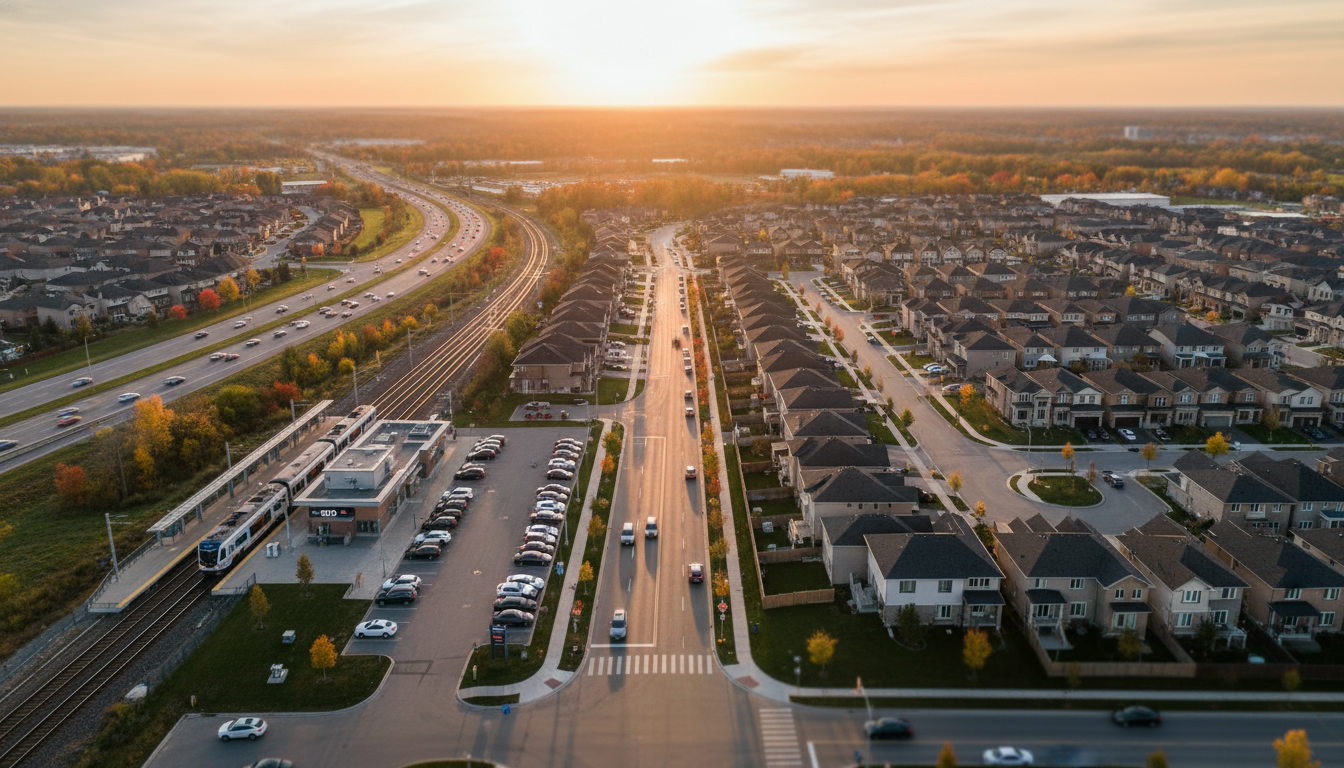
GO transit dependency: Milton GO provides commuter rail to Toronto. Service frequency is less than inner suburbs, so many still drive. Check distance and parking availability at your nearest GO station.
-
Highway access points: Proximity to Highway 401/407 ramps is a double-edged sword. Easy highway access’s boosts desirability for commuters, but on-ramps create traffic pulses that can back up local intersections.
-
Development growth: Rapid housing builds mean more cars. If your property is near an area with large new subdivisions, expect higher mid-term traffic.
How to turn traffic facts into selling strategies (what top agents do)
-
If traffic is light and transit-friendly: Lead with commute-time proof. Use screenshots from Google Maps showing fast times, highlight Milton GO station distance, and show walking/biking routes.
-
If traffic is moderate but manageable: Emphasize mitigation — double-glazed windows, mature trees, and strategic landscaping. Offer buyer-friendly showing times outside peak.
-
If traffic is heavy: Price to reflect it and market toward buyers who value location differently (investors, small families prioritizing lot size over quiet). Be honest in disclosures — hiding traffic info kills closings.
-
If traffic will improve (planned upgrades): Use municipal documents to show future enhancements. A credible quote from Halton Region or the Town of Milton goes a long way.
How traffic impacts home value — practical rules of thumb
-
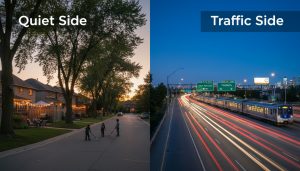
Immediate curb-facing frontage on a busy arterial: Expect a discount compared to a quiet street. How much? It varies — but be prepared for a measurable reduction in buyer demand and offers.
-
Close to major highway ramps but set back with good landscaping and fencing: Can retain value because of commute access.
-
Near transit hubs: Often a premium if transit frequency is good and the station is walkable. If station parking is congested or service limited, the premium drops.
Use comparables with similar traffic contexts — not just similar square footage. That’s the pro move.
Tools and data sources for Milton sellers (action list)
- Google Maps traffic + Typical Traffic
- Waze live traffic
- Town of Milton planning and traffic study pages
- Halton Region transportation and traffic counts
- Halton Regional Police collision data
- Milton GO schedules and station parking info
- Local social media groups (Facebook neighbourhood groups) for real-time resident feedback
Take screenshots, save PDFs of municipal docs, and append these to your seller packet. Buyers want proof, and having organized data reduces friction.

A simple 3-step audit you can use before listing
- Time audit (2 evenings + 1 morning): Drive and record commute times to 3 key points (GO station, Hwy 401 entrance, nearest shopping hub).
- Data pull: Download two municipal reports (traffic study, development application) and a police collision map for the last 3 years within 1 km.
- Presentation: Create a one-page traffic & commute summary for your listing — maps, peak times, noise mitigation, and any planned municipal projects.
This audit takes a couple of hours and protects you from surprises during due diligence.
Quick mitigation investments that protect price
- Install or disclose soundproof windows: High perceived value for buyers.
- Boost landscaping: Trees and berms reduce noise and improve privacy.
- Fencing and privacy screens for yards that back onto busy roads.
- Interior staging that downplays a busy exterior (focus on quiet rooms and backyard).
These moves cost far less than a prolonged time-on-market.
Call to action — local expertise matters
Milton’s market moves fast. You need local, aggressive, no-nonsense advice to price and position your home right. Don’t guess on traffic. Get an audit, a sell strategy, and the precise comps that reflect traffic realities.
Want a one-page Traffic & Commute Audit tailored to your Milton address? Contact the local real estate expert who knows Milton traffic, municipal plans, and buyer psychology. Email tony@sousasells.ca or call 416-477-2620. Visit https://www.sousasells.ca for a sample audit and recent sales in similar traffic situations.
FAQ — Answers Milton sellers need now
Q: How much does heavy traffic reduce my home’s value?
A: There’s no fixed number — it depends on street type, visibility, noise, and comps. Expect fewer showings and lower offers when frontage is on a busy arterial. Use local comparables with similar traffic for an accurate adjustment.
Q: Should I disclose traffic and noise to buyers?
A: Yes. Full disclosure prevents deal collapse. Provide objective data: traffic counts, noise mitigation measures you installed, and any municipal plans.
Q: How can I prove commute times and traffic to buyers?
A: Use dated screenshots from Google Maps showing travel times at peak hours, municipal traffic studies, and a one-page audit you produce with recorded drive times.
Q: Will a GO station nearby always increase my home’s value?
A: Not always. If the station is walkable and has frequent service, it’s a plus. If parking is congested and service is infrequent, it won’t help much. Context matters — show service frequency and distance.
Q: What if municipal plans will increase traffic near my home?
A: If planned development or new roads increase traffic, you must factor that into pricing. Conversely, if a planned grade separation or bypass reduces local cut-through traffic, highlight it as a selling point.
Q: I’m near a rail crossing — does that scare buyers?
A: It can. Measure how often crossings block roads and include that data. If closures are rare, show evidence. If common, price accordingly and invest in interior sound mitigation.
Q: When is the best time to show my home if it’s near a busy road?
A: Outside peak rush hours — mid-morning and early evening works. Also show on weekends when traffic patterns differ. Offer virtual tours that emphasize interior quiet.
This is practical, Milton-focused guidance. If you want a custom Traffic & Commute Audit for your address — with screenshots, municipal links, and a suggested pricing adjustment — get it. Email tony@sousasells.ca or call 416-477-2620. View recent Milton listings and market analysis at https://www.sousasells.ca