
How do I sell a childhood home while honoring family memories?
Want to sell your childhood home in Milton but keep the family memories intact? Read this first — and do it right.
Why this matters
Selling a childhood home is part financial move, part grieving process. People in Milton, Ontario face the same hard choices: how to respect family memories while preparing a house that sells fast and for a great price. Do the emotional work, make the smart business moves, and you get both: peace of mind and top market value.
Quick roadmap
- Decide what to keep and what to sell
- Preserve memories in practical ways
- Prep the house for Milton buyers
- Price and market with local expertise
- Handle legal, tax, and estate details in Ontario
- Close with dignity and clarity
Step 1 — Make a firm decision and set deadlines
Indecision drains value. Set a date. Decide whether this is an estate sale, downsizing move, or straight sale. If family members disagree, appoint a neutral executor or mediator. Clear deadlines stop endless discussions and turn emotion into action.
Step 2 — Preserve memories without hurting resale value
Don’t make emotion expensive. Do this:
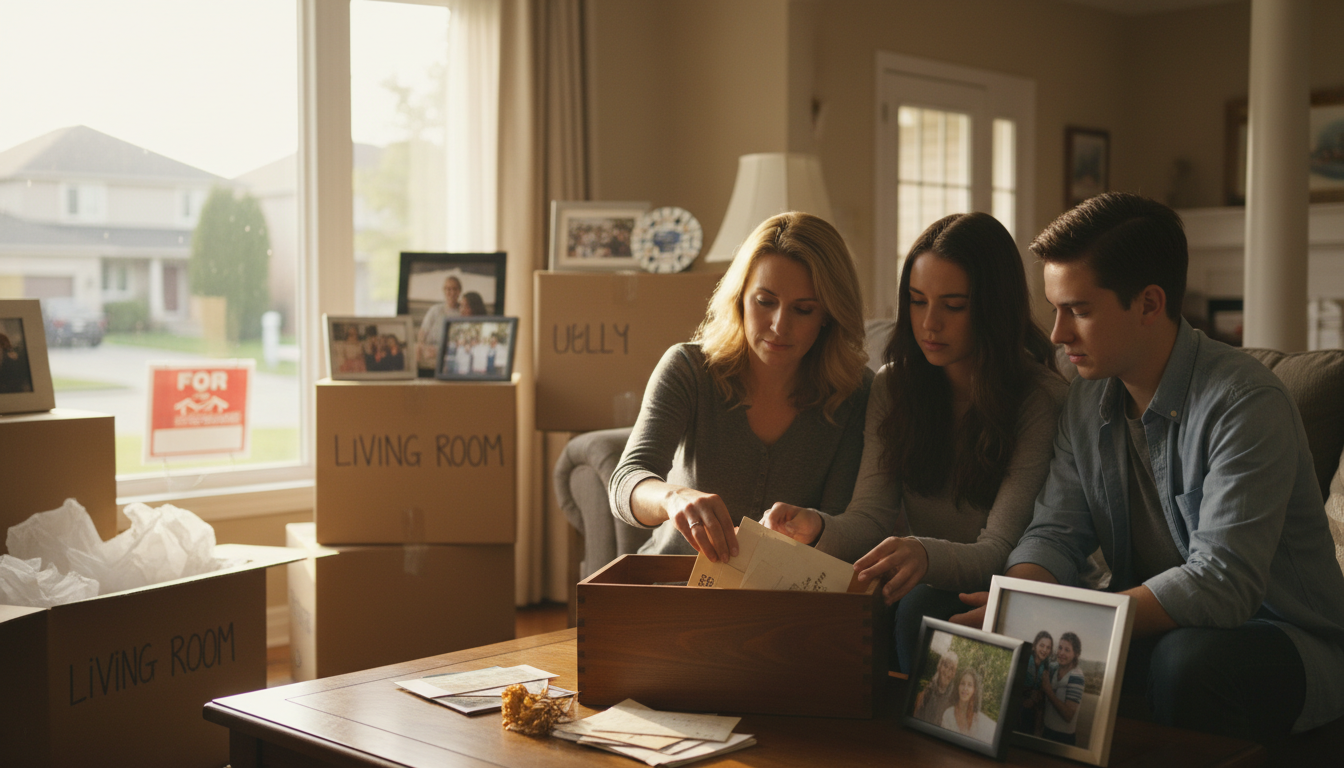
- Create a memory box. Let each family member take a small box of items: photos, letters, small heirlooms. Keep a digital copy of large memorabilia (scan photos, record stories).
- Photograph the house as-is. Capture rooms, special features, handwritten notes on walls, and unique details. Store those images in a cloud folder labeled “Memories — [Address].”
- Replicate special features. If a built-in bench or mural is precious, photograph it and offer to remove and reinstall it in the buyer’s new home or make prints for the family.
Step 3 — Staging that honors memories and sells
Buyers in Milton want move-in-ready homes with character. Keep a few personal touches that tell a warm story, but remove clutter. Practical staging tips:
- Keep 2–3 sentimental items on display per room (a framed photo, a trophy, a vintage lamp). They add warmth without distracting buyers.
- Neutralize strong personal elements. Bright paint, family murals, or heavy religious décor should be neutralized or removed for showings.
- Highlight Milton features. Talk about nearby schools, parks (Kelso Conservation Area is a big draw), transit, and community vibe. Use signage and listing copy to sell location as much as the home.
Step 4 — Price and market with Milton expertise
Milton’s market is unique. Proximity to Highway 401/407, Halton Hills, and commuter access to Toronto shapes buyer demand. Work with a local agent who:
- Knows Milton micro-markets and recent sale comps
- Can advise on small upgrades that boost offers (kitchen hardware, curb appeal)
- Handles sensitive family situations and coordinates viewings smoothly
Market smart: use emotional, factual, and local selling points. Example listing copy line: “Beloved family home near great schools, parks, and commuter routes — filled with years of memories, ready for its next chapter.” That balances nostalgia and buyer needs.
Step 5 — Legal, tax, and estate logistics in Ontario
These are real documents and real timelines. Key points:
- Title and ownership. Confirm who is on title and whether probate is needed. If the property is part of an estate, the estate trustee may need a Certificate of Appointment of Estate Trustee (probate) in Ontario.
- Consult a real estate lawyer. They will handle transfer, required disclosures, and closing details.
- Taxes. A primary residence is typically exempt from capital gains tax in Canada, but estates and mixed-use properties can complicate tax outcomes. Consult an accountant for your specific case.
- Power of attorney and executor responsibilities. Know who can sign and sell.
Step 6 — Handle family dynamics with clarity
Emotion causes delays. Prevent them:
- Communicate early and often. Share timelines and decisions in writing.
- Offer family viewings by appointment only.
- Use a neutral facilitator for tough conversations. A trusted real estate professional can reduce conflict by focusing on facts: market value, offers, and timelines.
Step 7 — Open house and negotiation tactics
Open houses can be emotional. Prepare the home and prepare the family:
- Remove family schedules and personal calendars.
- Store valuables off-site.
- Use professional photography and highlight community assets: schools, parks, transit, and nearby amenities in Milton.
- Don’t accept the first lowball offer out of sentiment. Let market signals guide decisions. If you need a benchmark number, ask your agent for comparable sales within a 2–3 km radius in the last 6 months.
How to honor memories after the sale
Selling the house doesn’t mean losing the memories. Practical ideas:
- Memory replicas. Keep framed photos or a small piece of molding or a plaque.
- Annual visit. Set a day each year for the family to visit the old home or neighborhood if that’s allowed.
- Digital memorial. Create a private website or digital album with photos, floor plans, and recorded family stories.
- Commemorative event. Host a small goodbye gathering before the house transfers.
When to hire professionals
- Lawyer: always, for transfers and estate issues in Ontario.
- Accountant: when estate taxes, capital gains, or business use of home may apply.
- Realtor: when you want top price, clean process, and local Milton market expertise.
Why local expertise matters in Milton
Milton buyers value schools, park access, and commuter routes. Nearby attractions and infrastructure—Kelso, the GO train access, proximity to Brampton and Oakville—impact pricing and the speed of sale. A local agent who understands Milton neighborhoods, local school boundaries, and buyer profiles makes a measurable difference.
Call to action
If you’re in Milton and facing this decision, get a local market plan. I’m Tony Sousa — a Milton realtor who handles family sales with sensitivity and results. Email tony@sousasells.ca, call 416-477-2620, or visit https://www.sousasells.ca to schedule a no-pressure consultation.
FAQ — Selling a childhood home in Milton, ON
Q: Do I need probate to sell a house in Ontario?
A: Not always. If the property is solely in the deceased’s name, the estate trustee often needs a Certificate of Appointment of Estate Trustee (probate) to sell. Estates with joint-signed owners or named beneficiaries may transfer more easily. Talk to a real estate lawyer to confirm.
Q: What documents are required to sell a house in Milton?
A: Current title deed, recent mortgage statement (if any), property tax bills, utility bills, any renovation permits, warranties for upgrades, survey (if available), and identity documents for signatories. Your lawyer and realtor will provide a complete checklist.
Q: Will sentimental items lower the sale price?
A: Not directly. Clutter and personalization can. Keep a few sentimental items for staging, but depersonalize rooms to help buyers imagine themselves living there. That increases perceived value and speeds the sale.
Q: How do I split proceeds among family members?
A: Follow the will or estate plan. If there’s no will, Ontario’s Succession Law governs distribution. Use clear accounting, document expenses, and get legal advice to avoid disputes.
Q: How long does it take to sell in Milton?
A: It depends on price, condition, and market. Right price and good presentation can sell in days to weeks; overpriced or poorly presented homes can take months. A local agent will give a realistic timeline.
Q: Are there tax implications for heirs selling a home?
A: Potentially. A deceased’s principal residence may be eligible for the principal residence exemption, but estates and special circumstances can create tax obligations. Consult an accountant.
Q: Should we do a full cleanout or sell with furniture?
A: Buyers prefer neutral space. Remove clutter and personal furniture; consider light staging. For estates, consider an estate sale for furniture and personal items before listing.
Q: How do I handle an emotional open house?
A: Limit family exposure. Host a private family goodbye day before public showings. Leave a small framed photo in the house for buyers to connect emotionally.
Q: What if family members disagree on selling?
A: Use mediation. If disagreements persist, legal steps may be required. Start with open communication, set clear deadlines, and involve a neutral third party if needed.
Q: How can I keep a piece of the house after it sells?
A: Negotiate with the buyer before closing to remove or replicate specific non-structural items. Include a list in the Agreement of Purchase and Sale to avoid disputes.
Final note
Sell the house like a business and handle the memories like family. That balance gets you maximum value and minimal regret. If you’re ready to move forward in Milton, reach out: tony@sousasells.ca | 416-477-2620 | https://www.sousasells.ca