
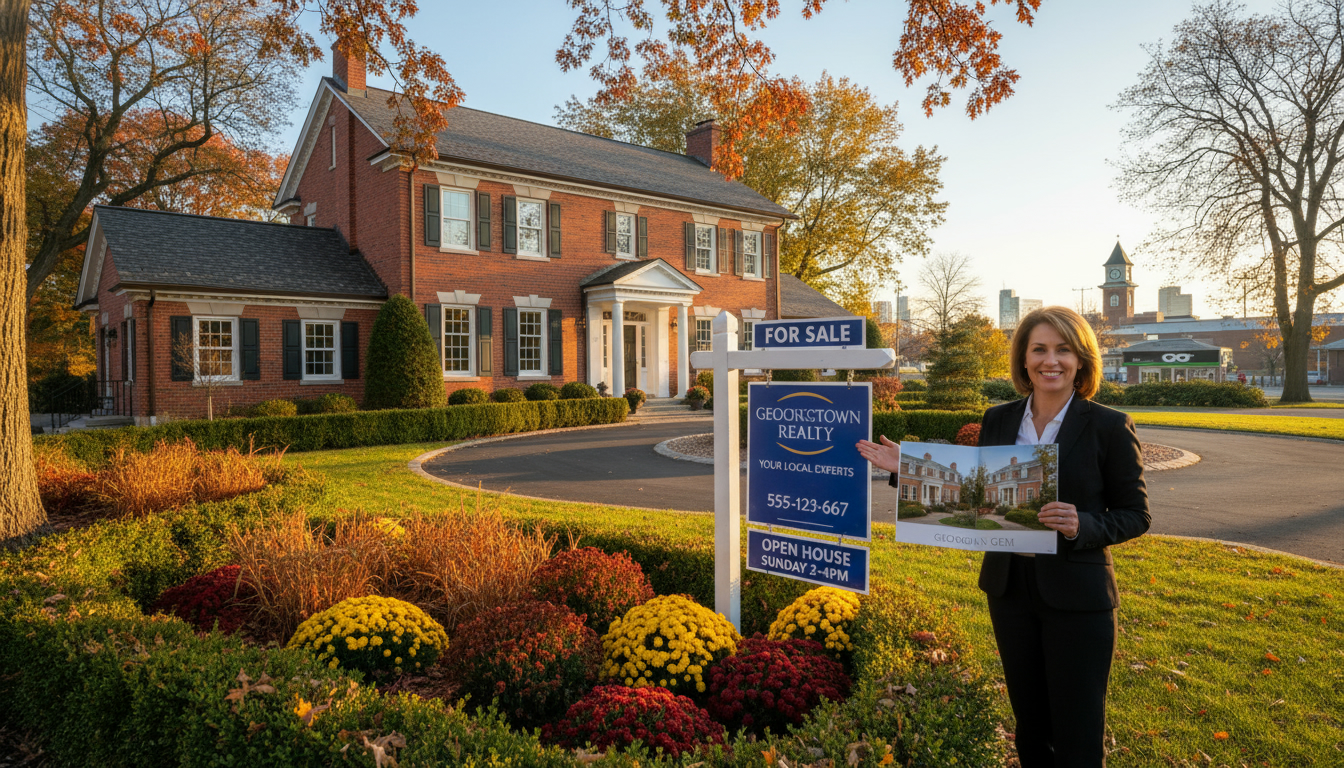
How do I sell an estate home that’s been in the family for decades?
How can you sell an estate home that’s been in the family for decades — and get the best price without the stress?
Quick, brutal truth
Selling a multi-decade family estate in Georgetown is not the same as selling a regular house. It’s legal work, emotional work, and marketing work — all at once. Do any one of those poorly and you lose time, money, or family peace.
This guide walks you step-by-step, with local Georgetown insight, legal checkpoints, pricing tactics, staging moves, and negotiation playbooks that actually work. Read it, follow it, and call a single local expert if you want to outsource with confidence.
Why Georgetown changes everything
- Georgetown sits in Halton Hills with high buyer demand and limited inventory compared to surrounding markets. That creates pricing opportunity.
- Commuter appeal (GO Transit Kitchener Line) and access to Toronto buyers make older, character homes attractive.
- Heritage features, larger lots, and mature neighbourhoods mean your estate may sell for a premium — but only if marketed to the right buyer.
Keywords to remember: sell an estate home in Georgetown, estate home Georgetown, selling estate home Georgetown ON, estate trustee, probate Ontario, Halton Hills real estate.

Step 1 — Get your legal paper trail in order (do this first)
Selling an estate property in Ontario starts with documentation. Missing paperwork slows or stops any sale.
What you need immediately:
- The Will (if there is one) and the name of the estate trustee.
- Certificate of Appointment of Estate Trustee (probate) — if required. In Ontario this is the formal document your lawyer gets from the court.
- Title documents, mortgage statements, property tax bills, and insurance information.
- Utility and service records, recent property tax assessment, and any heritage designation paperwork.
Practical moves:
- Call an estate lawyer locally. Ask about the Certificate of Appointment of Estate Trustee and Estate Administration Tax. Don’t try to DIY unless you do estates daily.
- Loop in a tax accountant. Estates can trigger capital gains rules and tax filings. Get a handle on potential liabilities before you list.
Step 2 — Decide sale strategy: as-is, cleaned & staged, or renovated
You have three main options. Each affects time-to-close, net proceeds, and buyer pool.
- Sell as-is to investors: Fast, low-effort. Attracts cash buyers and renovators. Price lower, close quicker.
- Clean, repair, stage, and list: Best balance for residential buyers who pay top dollar.
- Renovate for top market: High cost, high return only if work is done correctly and with local buyer tastes in mind.
Georgetown tip: Buyers here love preserved character (original woodwork, mouldings). Small cosmetic updates and professional staging usually outperform full gut renovations.
Step 3 — Clean, declutter, and respect the emotional side
Estate sales come with emotions. Family items, decades of memories, and differing opinions create friction.
Tactical steps:
- Remove personal items and valuables first. Photograph everything before removal for estate records.
- Hire a professional estate cleaner and a junk removal service. Empty rooms photograph better and sell better.
- Hold a family meeting. Assign a decision-maker (the estate trustee) and set a timeline. Clear roles prevent disputes.
Tone advice: Be decisive. Emotions are valid; real estate is not a therapy session. Make a plan, set firm dates, and communicate.
Step 4 — Pricing strategy that captures Georgetown buyers
Price is the single biggest factor that drives outcomes. Overprice and you languish. Underprice and you leave money on the table.
Proven approach:
- Order a professional appraisal or get a comparative market analysis (CMA) from an agent experienced with Georgetown estate homes.
- Review recent solds in Halton Hills that match lot size and vintage, not just square footage.
- Decide positioning: Market to families (move-in-ready, highlight character) or investors (list as-is, emphasize potential).
Local nuance: Heritage-style properties in central Georgetown often attract higher-per-square-foot prices than similar homes in newer subdivisions. Use that.

Step 5 — Marketing that targets the right buyer
A generic MLS listing won’t cut it. You need a plan that reaches Toronto commuters, young families, and heritage lovers.
Must-have marketing items:
- Professional photos and twilight shots.
- Floor plans and virtual tours.
- Targeted social ads aimed at Halton, Toronto, and the Kitchener-Waterloo corridor.
- Broker open to capture local agent networks and investor lists.
Message angles that work:
- “Character + commuter convenience” (appeals to Toronto buyers who want a family home outside the city).
- “Investor opportunity” (appeals to renovators and developers).
- Emphasize lot size, mature landscaping, original features, and local school/downtown access.
Step 6 — Disclosures, offers, and negotiations
Ontario law requires honesty. Disclose known defects and any heritage restrictions. Sellers who hide issues get sued or have deals collapse.
Offer strategy:
- Set a deadline for offers if you expect multiple bids.
- Consider conditional offers (subject to financing, inspection) if you want a steady close; or accept firm offers for guaranteed close.
- Review all offers with your estate lawyer and agent. Ask for proof of funds if buyer is cash.
Negotiation tactics:
- Use timelines to your advantage: set a realistic but firm closing date tied to the estate administration timeline.
- If you have multiple offers, request best and final to push buyers.
Step 7 — Closing and distributing proceeds
Once the sale is firm:
- Lawyer handles closing, pays outstanding mortgages, property taxes, and estate administration tax.
- Net proceeds go to the estate. The trustee distributes according to the will or intestacy rules.
- Keep clear accounting. Save all invoices, statements, and communication.
Tax point: The estate may have reporting obligations. Coordinate final tax returns with your accountant to avoid surprises.
Pricing and timeline expectations for Georgetown (realistic view)
- Timeline: 6–12 weeks from listing to closing is typical but probate or legal complications can extend this.
- Net proceeds: Variable. Proper preparation and targeted marketing often increase net sale price by 5–15% compared to a rushed as-is sale.
Local supply/demand: Halton Hills has lower inventory than many GTA pockets. Well-positioned estate homes often sell quickly if priced correctly.

Common pitfalls — avoid these
- Waiting to probate before listing when it could be started concurrently.
- Letting family disagreements stall the sale.
- Over-improving for the neighborhood.
- Hiring an agent without estate sale experience or local Georgetown knowledge.
Why hire a local estate specialist
You need an agent who knows Georgetown buyers, understands probate timing, and can manage sensitive conversations with families. They coordinate lawyers, cleaners, appraisers, trades, and marketing — and they push timelines.
If you want the best outcome: hire someone who does this every month, not once every few years.
Call to action (clear, direct)
If you’re selling an estate home in Georgetown and want to move confidently, call or email for a no-nonsense consultation and a free comparative market analysis tailored to your property and timeline.
Tony Sousa — Local Georgetown Estate Home Specialist
Email: tony@sousasells.ca
Phone: 416-477-2620
Website: https://www.sousasells.ca
I’ll give a straight plan, timeline, and net numbers you can expect. No fluff.
FAQ — Selling an estate home in Georgetown, ON
Do I always need probate before I can sell?
Not always, but often. Probate (Certificate of Appointment of Estate Trustee) gives legal authority to sell. If title is clear and all interested parties agree, some sales proceed without a full probate. Talk to an estate lawyer early.
How long does the estate sale process take?
If paperwork and probate are in place and the market is normal, expect 6–12 weeks from listing to closing. If probate is required or there are family disputes, plan for months.
Who handles the costs before closing?
The estate pays costs (repairs, staging, legal fees). Lenders or buyers don’t cover these unless negotiated. The trustee manages payment and accounting.
What about capital gains or taxes?
Estate tax rules can be complex. The calculation depends on whether the property was a principal residence and how the estate is structured. Consult a tax accountant to estimate liabilities before sale.
Do I have to disclose defects or renovations?
Yes. Ontario law requires disclosure of known defects. Failure to disclose can lead to legal claims. Be upfront and let your lawyer manage language.
Should I renovate or sell as-is?
If you need speed, sell as-is to investors. If you want maximum net proceeds and have time, clean, do targeted repairs, and stage. Small cosmetic updates typically yield the best ROI in Georgetown.
What if family members disagree about selling?
Decide who the legal estate trustee is and let them act. Hold a family meeting, set timelines, and get legal advice. If disputes persist, mediation or court intervention may be necessary.
How do I find the right agent in Georgetown?
Look for an agent who:
- Has recent sales in Halton Hills and Georgetown specifically.
- Understands probate and estate timelines.
- Demonstrates a documented marketing plan (photos, virtual tours, targeted ads).
Can I sell to a private buyer?
Yes, private sales are possible, but still require the same legal clearance and disclosures. Use a lawyer and get everything in writing.
Selling a family estate in Georgetown is logistical, legal, and emotional. You don’t have to navigate it alone. Follow the steps above, get the right local professionals, and you’ll sell faster and for more money.
Contact Tony Sousa for a no-nonsense, local plan tailored to your estate home in Georgetown: tony@sousasells.ca | 416-477-2620 | https://www.sousasells.ca