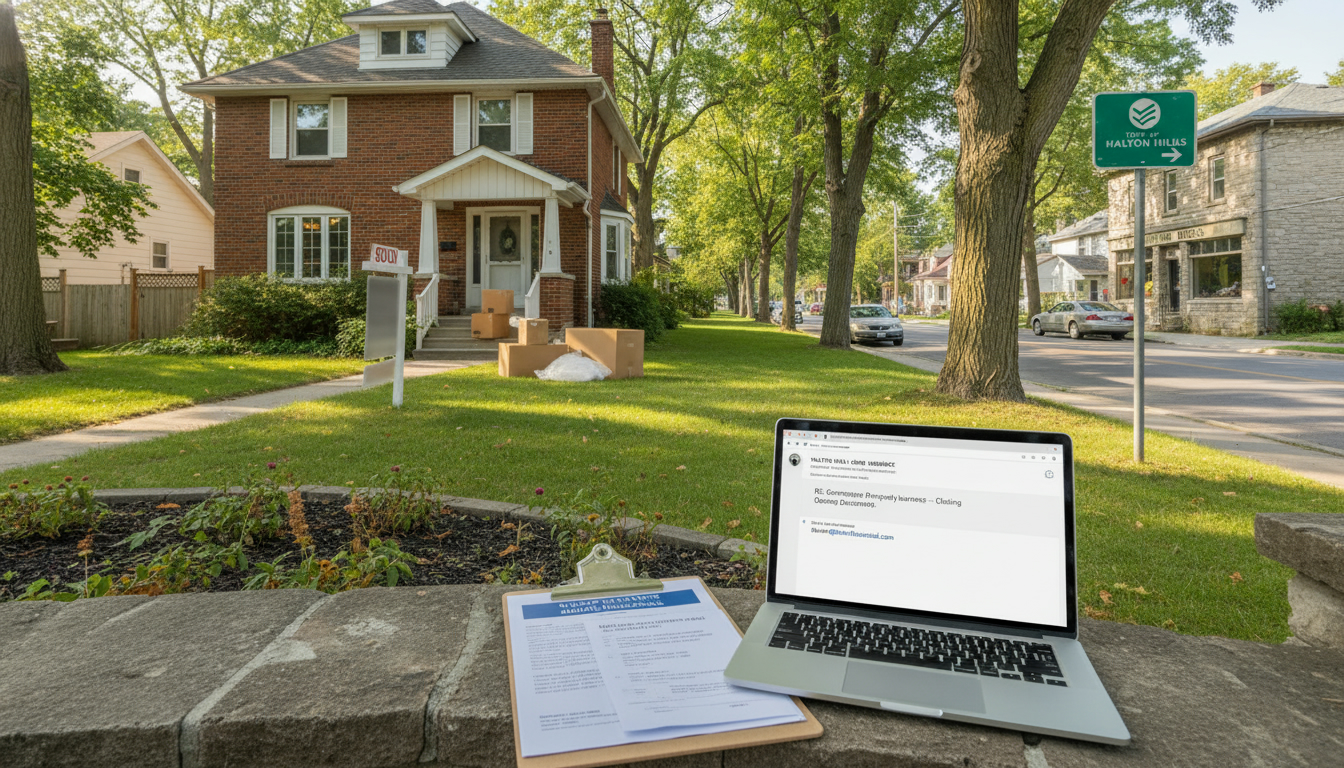
How do I set up home insurance before closing?
Want to close and move without a last-minute insurance disaster? Here’s the no-fluff playbook every home seller in Georgetown, ON needs.
Why home insurance matters before closing (and why lenders care)
If you’re selling a home in Georgetown, the closing day is when legal title moves. Lenders demand proof the property is insured at closing because they hold a financial interest. If a loss happens and there’s no policy, the lender is exposed. That’s why you’ll be asked for an insurance binder or policy that names the mortgagee.
For sellers: you must keep your insurance in force until ownership transfers. Canceling too early risks uncovered damage, liability claims on moving day, and conflicts with your lawyer or the buyer’s lender.
Quick overview — what to do, in order
- Start 7–14 days before closing: contact an insurance broker or your current insurer.
- Provide property details: address, year built, dwelling type, rebuild value, heating type, plumbing, roof age, recent claims, and mortgage/lender details.
- Decide coverages: dwelling, personal property, liability, sewer backup/overland flood options, and additional endorsements for older homes.
- Request the lender mortgagee clause: exact lender name and mortgage number if available.
- Get an insurance binder or declaration page showing the policy number and effective date equal to your closing date.
- Send proof to your lawyer and mortgage lender.
- Keep the policy active until your lawyer confirms title transfer. Cancel only after closing and funds clear.
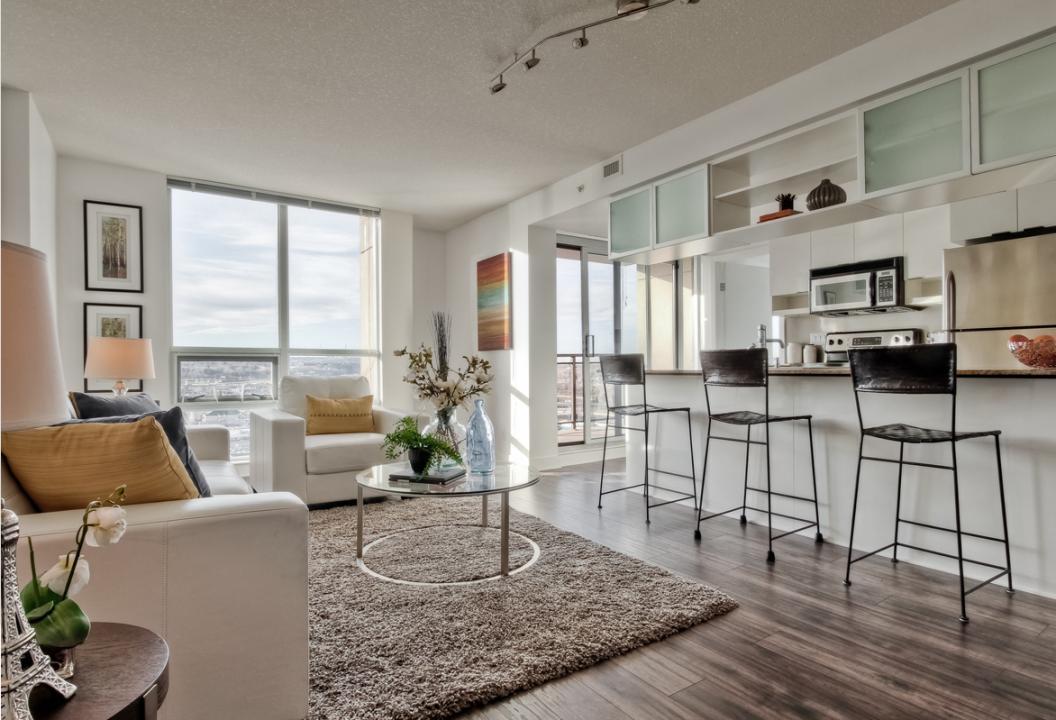
Step-by-step: Setting up the policy fast and right
1) Choose broker vs direct insurer
- Broker: compares multiple insurers, can find niche coverage for older Georgetown homes or flood-prone areas along the Credit River. Good if you have a complex situation.
- Direct insurer: faster if you’re comfortable with one company and your property is straightforward.
For sellers with special risks (old wiring, older roof, proximity to Credit River), use a broker who knows Halton Hills and local insurer appetite.
2) Gather the facts — what underwriters will ask
- Legal property address (include unit/lot if present)
- Year built and construction type (brick, wood frame)
- Replacement cost estimate (not market value)
- Roof age and material
- Heating type (furnace, oil, electric)
- Any renovations or additions and permit history
- Recent claims (last 5–10 years)
- Basements: finished, sump pump, backwater valve?
- Is the property vacant before closing?
Having this ready speeds quote time and reduces surprises.
3) Know the coverages to buy
- Dwelling coverage: set to replacement cost. Under-insure and you’ll be short after a loss.
- Personal property: covers contents—important if you still have items in the house until possession.
- Liability: protect against injuries on the property or claims during moving.
- Sewer backup/overland water: sewer backup is usually an add-on; overland flood often excluded and harder to get. Georgetown sellers near the Credit River should ask specifically.
- Additional endorsements: sewer back-up, water seepage, sewer backup, extended replacement cost.
4) Mortgagee clause and binder — what your lender needs
Your lender wants a mortgagee clause added to the policy. It must contain the lender’s full legal name and address. The binder or declaration page should show:
- Policy start date (set to closing date)
- Property address
- Mortgagee clause details (name of lender)
- Coverage amounts
- Policy number (if issued)
A binder is a temporary confirmation if the full policy isn’t ready. It’s accepted by lenders and lawyers. Get it 48–72 hours before closing.
5) Timing and effective dates
Make the policy effective the day of closing. Many sellers set the start time to 12:01 a.m. on closing date to avoid gaps. Confirm with your lawyer whether the transfer takes effect at noon, end of day, or when funds are exchanged — insurers accept the closing date as effective date.
If closing is delayed, notify the insurer immediately. They can shift the start date or issue a short-term extension.
6) Cancelling the seller’s policy after closing
Do not cancel until your lawyer confirms registration of the transfer and funds have cleared. If you cancel early, you remain liable for incidents that occurred before title transfer. After closing, provide the insurer proof of sale so they can cancel and refund unused premium.
If you’re buying and selling at the same time, coordinate both policies so there’s no overlap or gap on moving day.
Georgetown-specific tips and risks
-
Flood risk and Credit River: Georgetown sits on the Credit River. Parts of town are subject to floodplain restrictions. Standard policies often exclude overland flood. Ask your broker about flood maps from the Region of Halton and the Town of Halton Hills. Consider sewer backup coverage—heavy spring runoff or municipal sewer surges are real risks.
-
Older homes: Georgetown has many older, character homes. Older plumbing, knob-and-tube wiring, or vintage roofs can affect premiums and required inspections. Disclose renovations and electrical upgrades. If the insurer requires an inspection, budget time and cost.
-
Vacant property rules: If the house will be vacant after closing for any time, specialized vacant-home coverage may be needed. Standard policies restrict coverage if a property is vacant over 30–60 days.
-
Local contractors and rebuild cost: Use local rebuild cost values. Halton Hills building costs and permitting can be slightly higher than rural averages. Ensure replacement cost reflects local labour and permit costs.
Moving day risks — cover these before you lift a box
- Liability: Someone slips on your porch, drops drywall. Liability coverage protects you until legal possession transfers. Keep your homeowner policy active.
- Contents in transit: Your homeowner policy typically covers belongings during transit, but check limits. For high-value items, add scheduled personal property or purchase moving insurance.
- Moving companies: Ask movers for proof of their liability and cargo insurance. Get a signed inventory and condition report.
Sample script/email to request insurance binder (copy and paste)
Hello [Broker name],
I have a closing scheduled for [closing date] at [lawyer name]. Property: [full address]. I need an insurance binder effective [closing date] that names my mortgage lender as mortgagee: [Lender full legal name and address]. Please include dwelling coverage of $_ (replacement cost), liability $_, and sewer backup coverage. Send the binder to me and to my lawyer at [lawyer email].
Thank you,
[Your name] — Seller

Real-world timeline example
- 14 days before closing: Get quotes, decide on insurer
- 7 days before: Provide broker with lender details and request binder
- 3 days before: Receive binder. Send to lawyer and lender
- Closing day: Policy effective. Lawyer confirms title transfer
- Within 7 days after closing: Confirm cancellation or change of seller policy if you no longer need it
Why sellers who skip this get burned
- Lender holds up funds because no proof of insurance
- Loss on property before title transfer leaves you exposed
- Closing delays cost money and stress
This is avoidable with one phone call and a short checklist.
Positioning: Why work with a local expert on closing & moving
A local realtor who does closings in Georgetown daily knows the lenders, the lawyers, the common municipal issues, and the right insurance brokers. They’ll anticipate problems: flood-prone lots, older homes needing endorsements, or lenders that demand specific mortgagee wording.
Tony Sousa has guided dozens of sellers through this exact process in Georgetown, Halton Hills. If you want a fast, correct close with no last-minute insurance surprises, contact him.
Email: tony@sousasells.ca
Phone: 416-477-2620
Website: https://www.sousasells.ca
FAQ — Closing, moving, and home insurance in Georgetown, ON
Q: Who arranges the home insurance for closing — buyer or seller?
A: The buyer arranges insurance for their new ownership. However sellers must keep their existing policy until title transfers. If you’re both buying and selling, coordinate both policies to avoid a gap.
Q: What is an insurance binder?
A: A binder is temporary proof that coverage is in place. It contains basic policy info, the effective date, and often the mortgagee clause. Lenders and lawyers accept binders at closing.
Q: When should the insurance start?
A: The policy should start on the closing date. Insurers accept the date as the effective date; confirm practical timing with your lawyer.
Q: How do floods and sewer backups work in Georgetown?
A: Overland flood is often excluded and requires separate markets or programs. Sewer backup is an add-on many buyers add because Georgetown properties along the Credit River or older sewer systems are at some risk.
Q: Can I cancel my homeowner policy on the day I move out?
A: No. Keep it until your lawyer confirms the transfer of title and funds. Canceling early can leave you liable for any incidents before title passes.
Q: My home is vacant for two weeks between sale and closing. What then?
A: If the property is truly vacant before title transfer, inform your insurer. Most policies restrict coverage for properties vacant over 30–60 days. Consider a vacant-home endorsement for the gap.
Q: My lender wants the mortgagee clause in a specific format. What do I do?
A: Provide the exact legal lender name and address to your broker. If the lender gives a form clause, send it to the insurer. Use the binder to confirm it’s been added.
Q: What if closing is delayed at the last minute?
A: Call your insurer immediately. They can adjust the effective date or provide a short extension. Document the communications and inform your lawyer and lender.
Q: Do I need replacement-cost or market-value coverage?
A: Buy replacement-cost for the dwelling. Market value includes land and won’t cover rebuild costs accurately.
Q: Where can I check Georgetown flood maps?
A: Use the Town of Halton Hills and Region of Halton floodplain mapping. Your local insurance broker can also pull municipal flood data.
If you want hands-on help to book the right insurance, confirm lender wording, and keep your closing on time in Georgetown, reach out. One quick call solves what days of delays will cost.
Contact: tony@sousasells.ca | 416-477-2620 | https://www.sousasells.ca