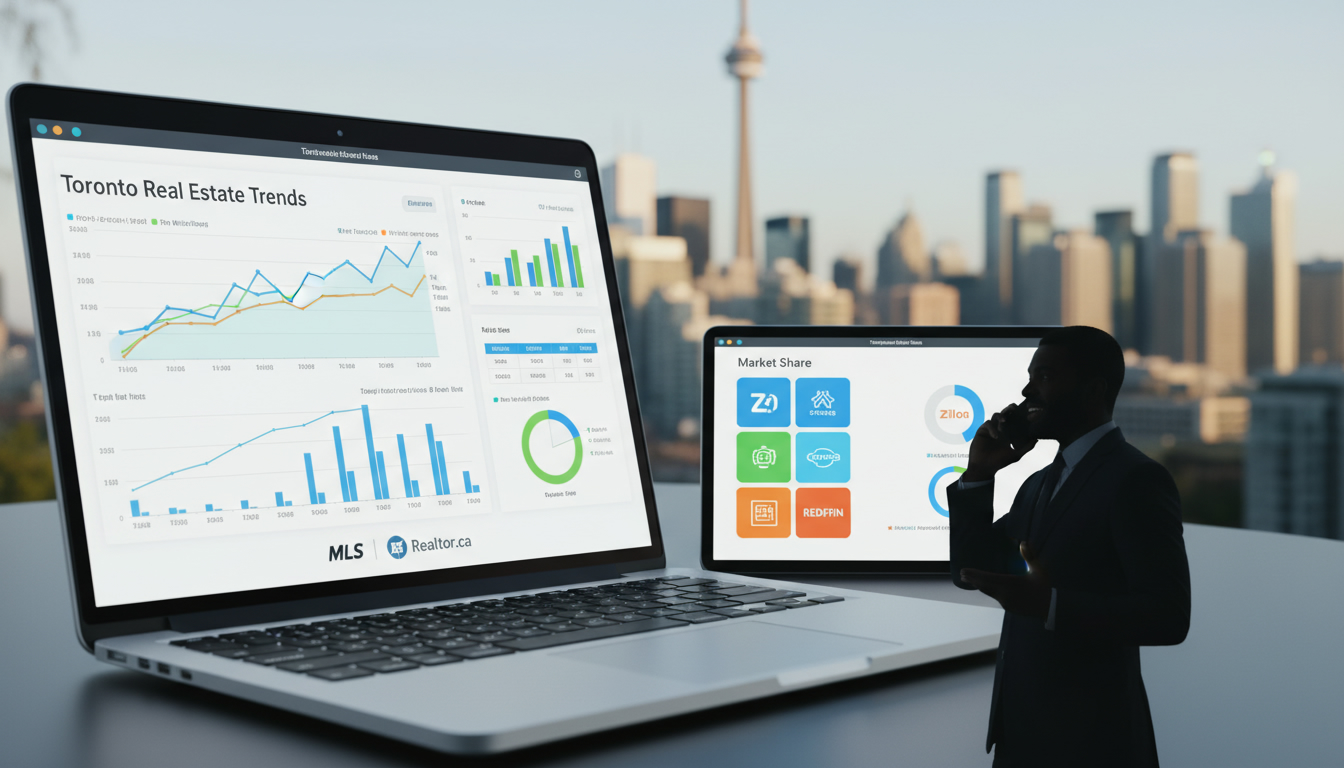
What websites provide accurate real estate data?
Want quick, accurate real estate data? Here’s where to get it fast.
The short answer
Use a mix: national data sites for context, local MLS and government sources for accuracy. That combo gives you reliable market trends, pricing, and inventory insights.
Best websites for accurate real estate data
- MLS / Local Board Sites — The most accurate, up-to-the-minute listings and sold data. For Toronto, use the regional MLS/board feeds. These power broker tools and agents use them for valuations.
- Realtor.ca / Canadian Real Estate Association (CREA) — Great national coverage in Canada, official stats, and searchable listings.
- TRREB / Local Board Reports — Local market reports that show median price, inventory, days on market, and new listings.
- Statistics Canada & CMHC — Macro indicators: housing starts, vacancy rates, and economic data that drive market trends.
- Teranet–National Bank House Price Index — Trusted Canadian price trends across regions.
- CoreLogic, ATTOM Data Solutions — Deep data products for professionals: ownership records, risk scores, trend analytics.
- Zillow & Redfin — Excellent for US markets and consumer-facing estimates. Use their trend tools, but verify locally.
- HouseSigma / Local PropTech Tools — Toronto-specific platforms offering historical sold prices and predictive analytics.
How to use these sites to read market trends
- Start local. Check MLS and your regional board report for sold prices, average days on market (DOM), and inventory.
- Cross-check with Realtor.ca or HouseSigma to confirm sold history and price per square foot.
- Add macro context from Statistics Canada or CMHC: employment, mortgage rates, and housing starts affect direction.
- Use CoreLogic or Teranet for validated long-term price indexes when you need historical accuracy.
- Watch leading indicators: new listings vs. active inventory, median sale price vs. list price, and DOM shifts.
Quick checklist for accuracy
- Prefer official MLS or government sources for sold data.
- Use multiple sources — one site can be delayed or estimated.
- Look for raw data downloads or export features to run your own checks.
- For investment decisions, use paid data tools or a local market expert.
Why trust a local expert
Data is powerful. Interpretation wins. A local agent who reads MLS trends, local board reports, and macro indicators will spot inflection points before national headlines do.
Need precise, local market analysis? I produce clear, numbers-based market trend reports for Toronto neighborhoods. Contact Tony Sousa at [email protected] or 416-477-2620, or visit https://www.sousasells.ca to schedule a consult.
Act now: cross-check the sites above and call for a tailored report that turns raw data into decisions.
Homes For Sale in Toronto
Browse current properties available right now. Click any listing to view photos, floor plans, or schedule a private tour.


