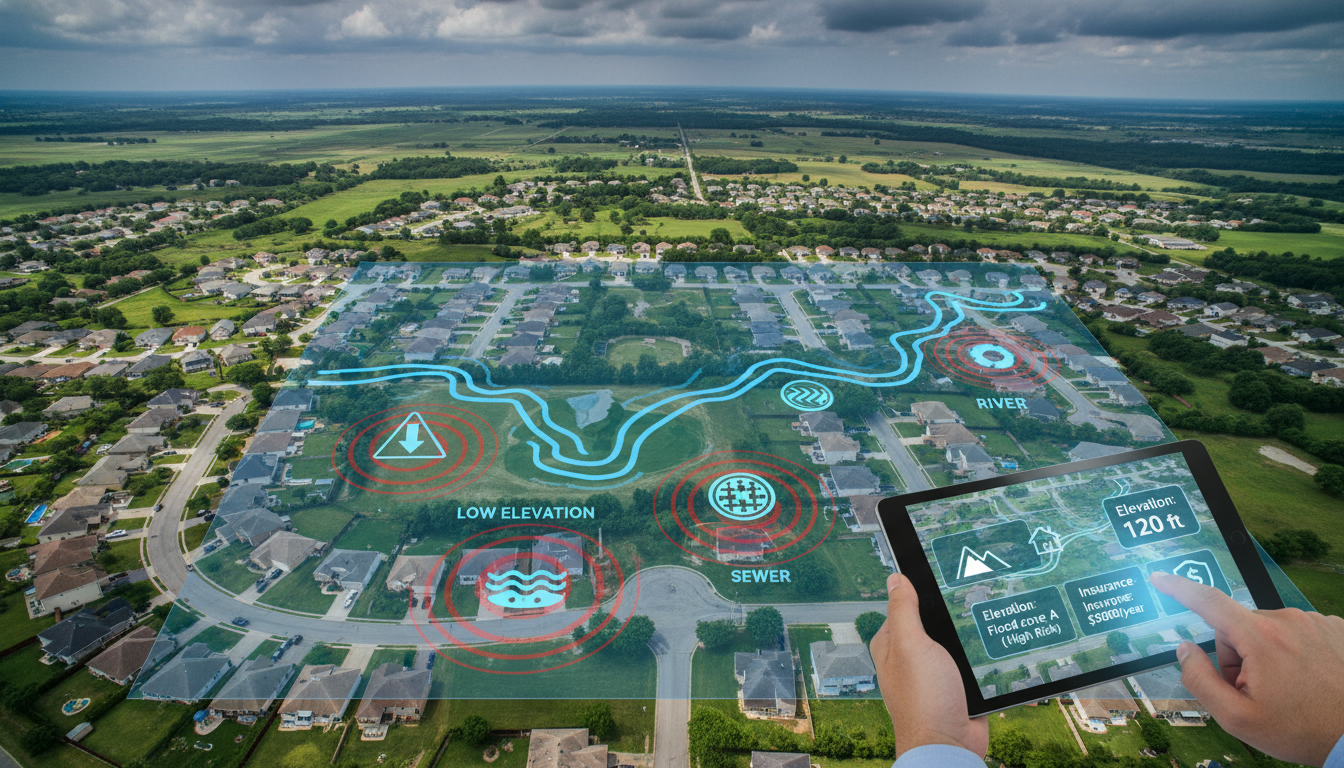
How do I assess flood and natural disaster risk?
Can your home survive the next flood or storm? Use this fast risk-check now and know where you stand.
Quick truth
Floods and natural disasters are now the biggest uninsured risk for homeowners. Start with facts, not fear. Below is a simple, actionable process to assess flood and natural disaster risk and protect value.
5-step flood and natural disaster risk assessment
- Check official flood maps and permits
- Use FEMA Flood Map Service, local municipality flood maps, and provincial mapping tools. These identify flood zones, floodways, and historical flood plains. Remember: about 20% of flood claims come from areas outside high-risk flood zones.
- Review property elevation and drainage
- Get an elevation certificate or check contour/LiDAR maps. Homes with ground floors below nearby river or sewer elevation are at higher risk. Look for poor grading, blocked swales, and nearby impermeable surfaces that push water toward the house.
- Inspect building features that matter
- Foundation type, basement presence, sill heights, window wells, and where utilities sit (furnace, electrical panel). A house with utilities in a basement pays much more in damage and downtime.
- Check historical incidents and local trends
- Ask neighbours, request municipal records of past floods, stormwater backups, and erosion. Climate change is increasing extreme rainfall and storm surge frequency — plan for higher-than-historical events.
- Calculate insurance exposure and gaps
- Review existing policies: home, sewer backup, and flood insurance (National Flood Insurance Program or private). Many standard homeowner policies exclude flood. Compare replacement cost vs. policy limits and note deductibles and waiting periods.
Mitigation checklist (do these now)
- Install backflow valves and sump pumps with battery backup.
- Elevate utilities and critical mechanicals above expected flood elevation.
- Regrade or install swales to divert runoff away from the structure.
- Use flood-resistant materials for basements and lower walls.
- Create an emergency kit and a documented evacuation plan.
When to hire a professional
If maps, elevation, or history show any exposure, get a certified floodplain manager, structural engineer, or experienced home inspector. A professional risk assessment costs far less than a single severe loss.
Why local expertise changes outcomes
Local market experts know micro-elevation quirks, storm sewer capacity, and recent mitigation projects that maps miss. I help homeowners and buyers interpret maps, quantify insurance cost impact, and coordinate trusted inspectors and engineers.
Contact me for a targeted property risk review: [email protected] | 416-477-2620 | https://www.sousasells.ca
Start with the five steps. Fix the easy mitigation items. Get a pro when in doubt. That sequence saves money, reduces risk, and protects property value.
Featured Real Estate Listings
Browse current properties available right now. Click any listing to view photos, floor plans, or schedule a private tour.


