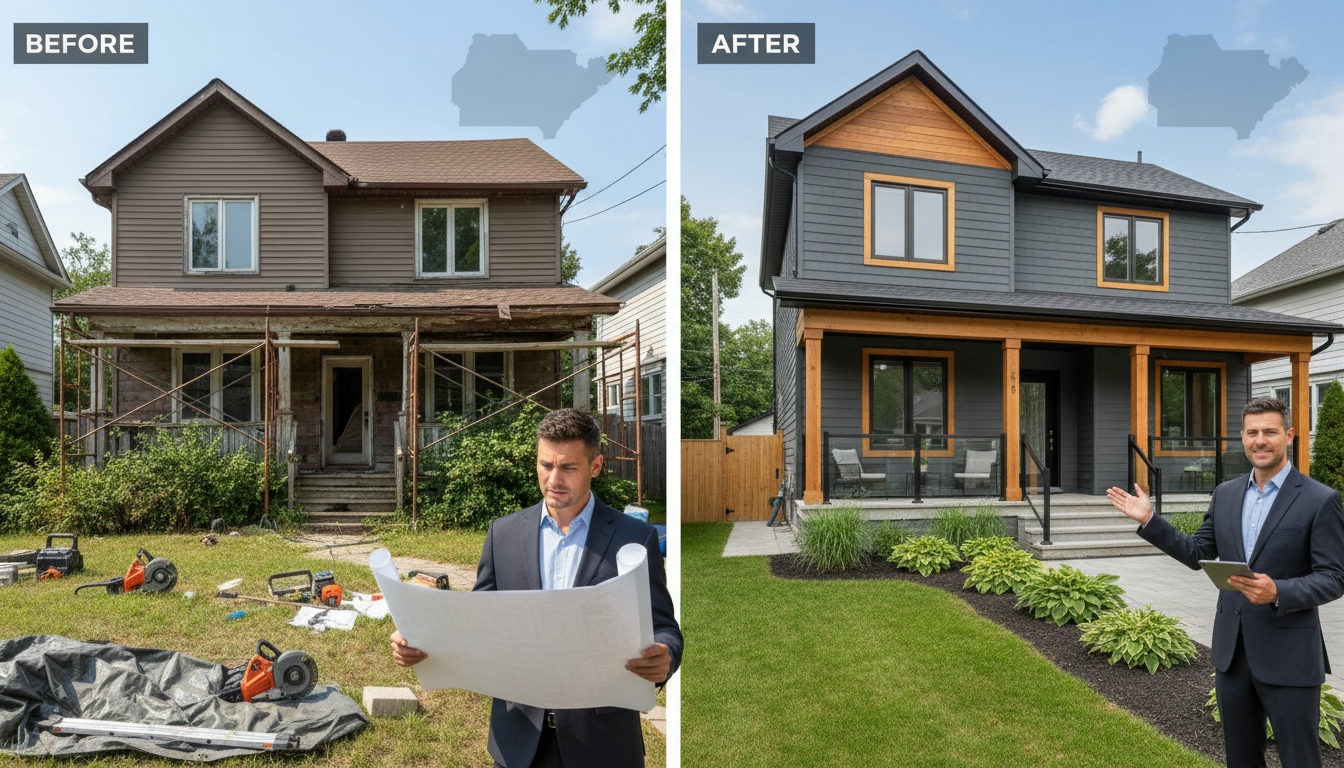
Should I buy a fixer-upper in Ontario?
Can a fixer-upper in Ontario turn your savings into a predictable profit? Read this before you sign.
Why a fixer-upper can win in Ontario
Fixer-uppers sell for less. Renovations add value. In Ontario’s hot markets, small, smart upgrades can push a property into a higher price band. That means instant equity if you buy right.
But this only works when you control three things: purchase price, renovation budget, and timeline.
Quick decision checklist (answer in 60 seconds)
- Purchase price at least 20% below comparable renovated homes.
- Renovation budget under 15% of post-renovation value (after repair value, ARV).
- Clear permits needed? Factor time and cost.
- Structural or major systems (roof, foundation, HVAC, septic) are inspected and priced.
If two of these fail, walk away.
Real cost breakdown — Ontario numbers you can use
- Minor cosmetic refresh: $15k–$40k (paint, floors, kitchen tweaks).
- Mid-level renovate: $40k–$120k (kitchen, bathrooms, windows, HVAC updates).
- Major rebuild: $120k+ (structure, full layout change, full mechanicals).
Estimate after-repair value (ARV) by comparing 3 sold comps in the same neighbourhood that have similar beds/baths and square footage. Your target buy price = ARV - renovation costs - 10% contingency - desired profit (10–20%).
Example: ARV $800k. Renovation $80k. Contingency $8k. Desired profit 12% ($96k). Buy price target = $800k - $80k - $8k - $96k = $616k.
Permits, contractors, and timelines (Ontario specifics)
- Permits: Toronto and many Ontario municipalities require permits for structural, electrical, plumbing changes. Budget time (2–8 weeks) and cost ($500–$4,000+).
- Contractors: Get 3 written quotes. Check WSIB and insurance. Use local trades with Ontario references.
- Timeline: Cosmetic flip 4–8 weeks. Mid-level 8–16 weeks. Major renos 4+ months.
When to walk away
- Uninspected major systems with unknown costs.
- Required heritage or zoning restrictions that block your plans.
- Seller won’t allow inspections or supply clear permits.
Action plan: next 7 days
- Order a professional inspection and septic/well check if needed.
- Pull 3 comps and calculate ARV.
- Get 3 contractor estimates and a permit checklist from your municipality.
- Run numbers with a clear buy-price formula (ARV - reno - contingency - profit).
Final verdict — should you buy?
Yes, if you can buy well and control renovation costs and time. No, if you’re guessing on major systems, ignoring permits, or paying near-comp prices.
For a fast, local reality check and accurate ARV in Toronto and surrounding Ontario markets, get direct help.
Contact: Tony Sousa — Local Realtor and renovation advisor. [email protected] | 416-477-2620 | https://www.sousasells.ca
Want a property reviewed? Send the address and I’ll run a quick ARV + renovation estimate.
Featured Real Estate Listings
Browse current properties available right now. Click any listing to view photos, floor plans, or schedule a private tour.


