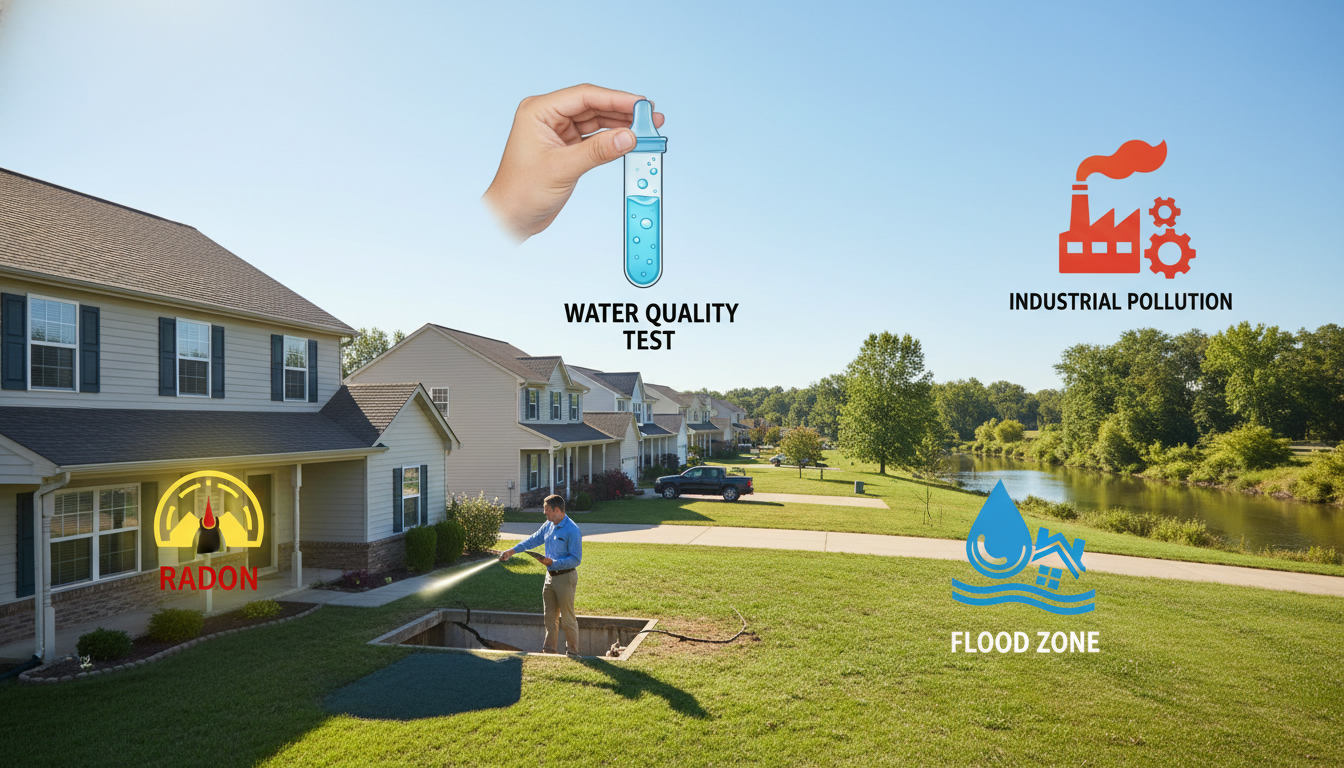
Are there environmental hazards in the area?
Is your neighborhood hiding environmental hazards? Read this first.
Quick answer
Yes — any neighborhood can have environmental hazards. The real question is how serious they are and what you can do before buying. I’ll show you a clear checklist to uncover risks like radon, flood zones, soil contamination, and poor air or water quality.
Why this matters for homebuyers
Environmental hazards reduce property value, add repair costs, and create health risks. Radon is the second leading cause of lung cancer in Canada after smoking and is responsible for a significant share of lung cancer deaths. Older properties near industrial sites can carry legacy soil contamination. Flood-prone areas have rising claims and insurance gaps. These aren’t hypothetical — they affect resale, financing, and your family’s health.
Fast, practical checklist to find hazards
- Municipal maps and floodplain data — Check the city or regional GIS for flood zones and recent flood history. If it’s in a floodplain, expect mandatory mitigation and higher insurance costs.
- Property disclosure and history — Ask the seller for environmental reports, past remediation records, and use municipal property history to spot former industrial, gas station, or landfill use.
- Radon testing — Order a 3-month alpha-track test or ask for one before closing. Radon is invisible — test, don’t guess.
- Well water and municipal supply — If the home uses well water, test for bacteria, nitrates, arsenic, and heavy metals. For municipal supply, check local drinking water reports.
- Phase I Environmental Site Assessment (ESA) — For properties near industry or older commercial sites, require a Phase I ESA. It flags potential soil or groundwater contamination and tells you if a Phase II (sampling) is needed.
- Indoor air and building hazards — Inspect for mold, asbestos (pre-1980 homes), lead paint, and HVAC issues. A certified inspector will document problems and costs.
- Air quality & proximity to emissions — Check local air quality indices and map proximity to highways, factories, or heavy industry that can affect long-term health and property desirability.
Examples and outcomes
- A suburban home tested high for radon — remediation via a sub-slab depressurization system reduced levels below Health Canada guidelines and preserved sale value.
- A lot near an old gas station required a Phase II ESA; remediation costs were negotiated into the sale price, protecting the buyer from surprise costs.
How I help buyers avoid hazards
I coordinate the right tests and specialists, interpret environmental reports, and negotiate repairs or price adjustments. You won’t be surprised after closing. I bring local market experience, reliable inspectors, and direct negotiation skills that save money and protect health.
Ready to verify a property’s safety? Contact me for a targeted environmental checklist and fast coordination of tests and assessments. I’ll read the reports, explain risks in plain language, and negotiate protections into your purchase.
Tony Sousa — Local Realtor Email: [email protected] | Phone: 416-477-2620 | https://www.sousasells.ca
Featured Real Estate Listings
Browse current properties available right now. Click any listing to view photos, floor plans, or schedule a private tour.


