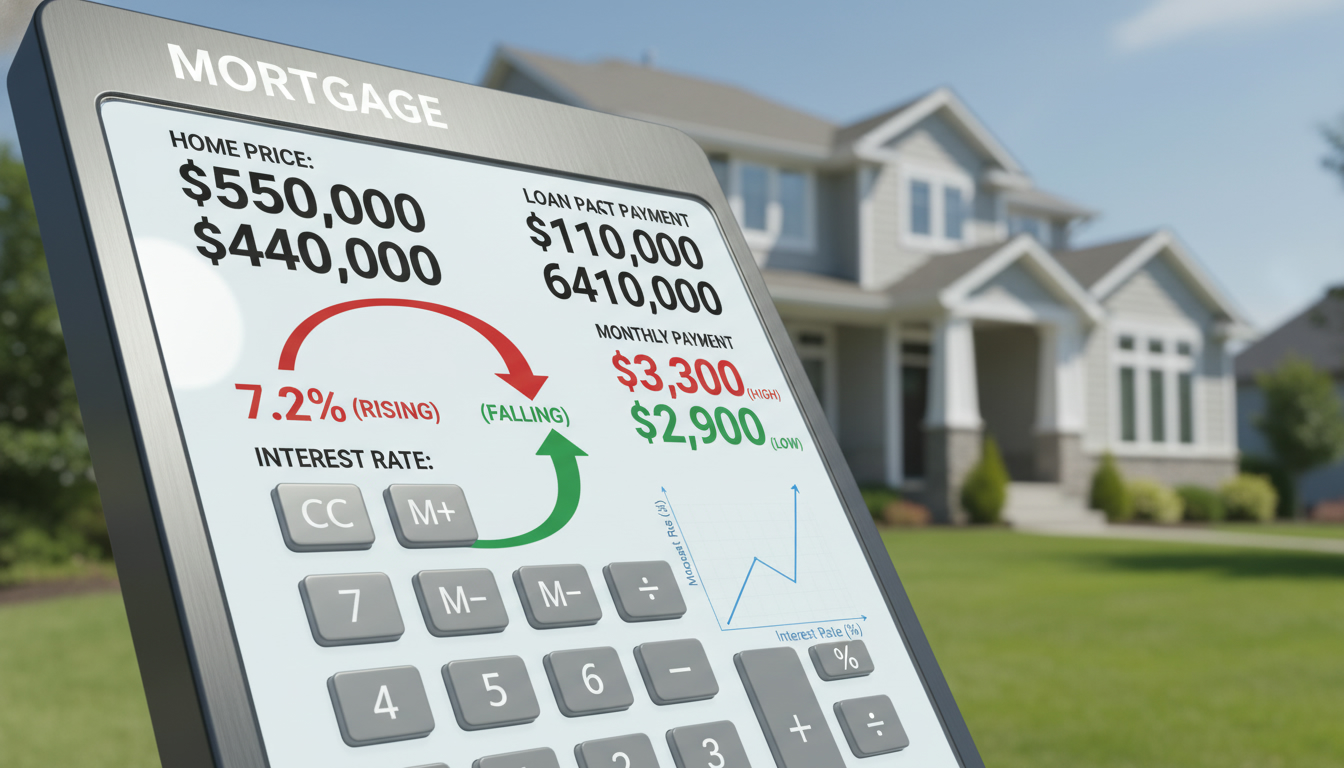
How do interest rates impact home affordability?
Will rising interest rates wreck your home purchase? Here’s how much buying power you really lose (and what to do now).
Why interest rates matter to home affordability
Interest rates dictate your mortgage rate. That single number controls your monthly payment, how much house you can afford, and whether lenders approve your loan. When rates go up, monthly payments rise. When payments rise, the amount of home you can buy falls.
The quick math — simple example anyone can use
Say you can afford $2,500 a month for a mortgage. With a 25-year amortization:
- At 3% interest (fixed): you can borrow about $527,400.
- At 5% interest (fixed): you can borrow about $427,400.
Same monthly payment. Same buyer. Interest rate difference knocks roughly $100,000 off purchasing power. That’s real, immediate impact.
Terms that change affordability
- Mortgage rate: The annual rate you pay on the loan. Small changes compound.
- Amortization: Longer amortization = lower monthly payments but more interest paid overall.
- Down payment: Higher down payment reduces the mortgage size and monthly payment.
- Qualification rules (DTI, stress tests): Lenders test affordability using higher rates, shrinking what you qualify for.
How rate changes hit different buyers
- First-time buyers: Most exposed. Less equity, tighter budgets.
- Move-up buyers: May delay or buy smaller to keep monthly payments steady.
- Investors: Higher rates reduce cash flow and yield; many step back.
What to watch in the market
- Central bank signals and inflation reports drive long-term mortgage direction.
- Fixed vs variable: Fixed locks a rate. Variable follows the bank prime. Each has trade-offs.
- Mortgage terms and penalties: If rates fall, switching costs matter.
Action steps that protect affordability
- Use an affordability calculator. Run scenarios at multiple rates (3%, 4%, 5%).
- Lock a short-term fixed rate if you expect rates to rise further.
- Increase down payment to restore buying power.
- Stretch the amortization cautiously — short-term pain may save interest long-term.
- Improve qualifying ratios: pay down high-interest debt and increase documented income.
Why local market knowledge matters
Interest rates are national. Market price and inventory are local. A local expert knows where values are stable, where you’ll get resale demand, and which neighborhoods stretch your dollar better. That matters when rates bite.
If you want precise numbers for your situation — mortgage amount, payment, and how much home you can afford at today’s rates — I’ll run the scenarios and show your best moves.
Contact Tony Sousa: [email protected] | 416-477-2620 | https://www.sousasells.ca
Keywords: interest rates, home affordability, mortgage rates, monthly payment, mortgage affordability, housing market, affordability calculator, mortgage qualification
Featured Real Estate Listings
Browse current properties available right now. Click any listing to view photos, floor plans, or schedule a private tour.


