Can my lawyer hold funds for repairs after closing?
Can Your Lawyer Legally Hold Repair Money After Closing? The Straight, No-BS Answer
Short answer
Yes — in many cases a lawyer can hold funds for repairs after closing through a holdback or escrow arrangement. This is common in real estate transactions to protect buyers and sellers when agreed repairs aren't completed at closing.
How a holdback works
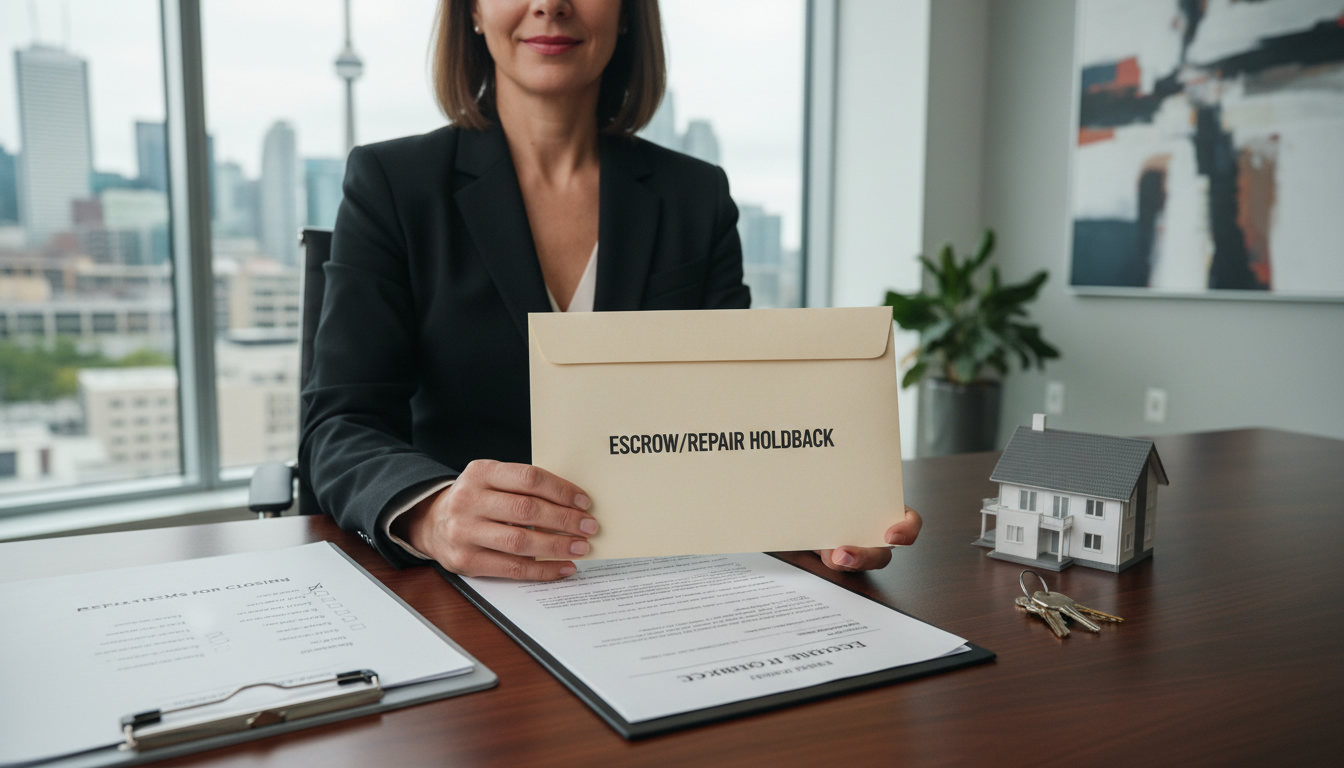
A holdback (repair holdback, escrow for repairs) is money withheld from closing proceeds and deposited with a lawyer or title company. Funds stay in trust until conditions are met: repairs completed, inspection passed, or a release agreement signed. The lawyer follows written instructions from buyer, seller and lender. The arrangement is legal and routine when documented in the Agreement of Purchase and Sale.
Common scenarios
- Agreed repairs incomplete at closing.
- Damage discovered on final walk-through.
- Lender requires outstanding work completed.
- Dispute over quality or timing.
Keywords: lawyer hold funds for repairs after closing, repair holdback, escrow, closing funds, real estate lawyer.
Legal and practical limits
A lawyer must follow explicit instructions in the contract. They cannot unilaterally decide to hold funds without authorization. Courts and provincial rules govern trust accounts. In Ontario and other provinces, the law requires precise documentation and timelines. If parties disagree, funds may be released to a court or held until resolution.
How to protect your money
- Put the holdback terms in writing in the purchase agreement. Specify amount, scope of work, timeline, and inspection criteria.
- Define who inspects and what evidence is required (photos, receipts, contractor affidavit).
- Limit the holdback to a reasonable amount tied to actual repair costs.
- Set a firm release date and dispute resolution process.
- Use a qualified real estate lawyer experienced in holdbacks and escrow.
Quick checklist before closing
- Confirm holdback amount and conditions in writing.
- Confirm lawyer’s trust account procedures.
- Get contractor estimates before agreeing to amounts.
- Ask for a release form template to review in advance.
Bottom line
Yes — lawyers can hold funds for repairs after closing when the contract allows it. It’s a powerful risk-management tool when used correctly. Put clear terms in the agreement and work with an experienced real estate lawyer or realtor who knows how to structure the holdback.
When disputes arise If buyer and seller can't agree on whether repairs were done, the lawyer holds funds until proof is produced or a judge rules. Alternative dispute resolution — mediation or arbitration — often settles faster than court. Include a clause that directs disputes to arbitration to avoid long holds.
Typical holdback amounts and timelines Holdbacks are usually between 1% and 5% of purchase price or a fixed estimate of repair cost. Timeframes vary: 30 to 180 days is common. Shorter timelines favor buyers who want quick fixes; longer timelines give contractors breathing room. Always match the dollar holdback to realistic quotes, not guesswork.
For expert guidance in Toronto and surrounding areas, contact Tony Sousa, top local realtor: [email protected] | 416-477-2620 | https://www.sousasells.ca
Featured Real Estate Listings
Browse current properties available right now. Click any listing to view photos, floor plans, or schedule a private tour.


