How does location affect home value in Mississauga?
What really drives a home’s price in Mississauga? The answer will surprise sellers and guide buyers to smarter offers.
Location is the single biggest value lever in Mississauga real estate
Location isn’t just a factor. It’s the factor. In Mississauga, two identical homes 5 km apart can sell for very different prices. Buyers pay premiums for convenience, schools, transit and future development. Sellers who position their home near these strengths get higher offers, faster.
Neighborhood desirability: street-by-street premiums
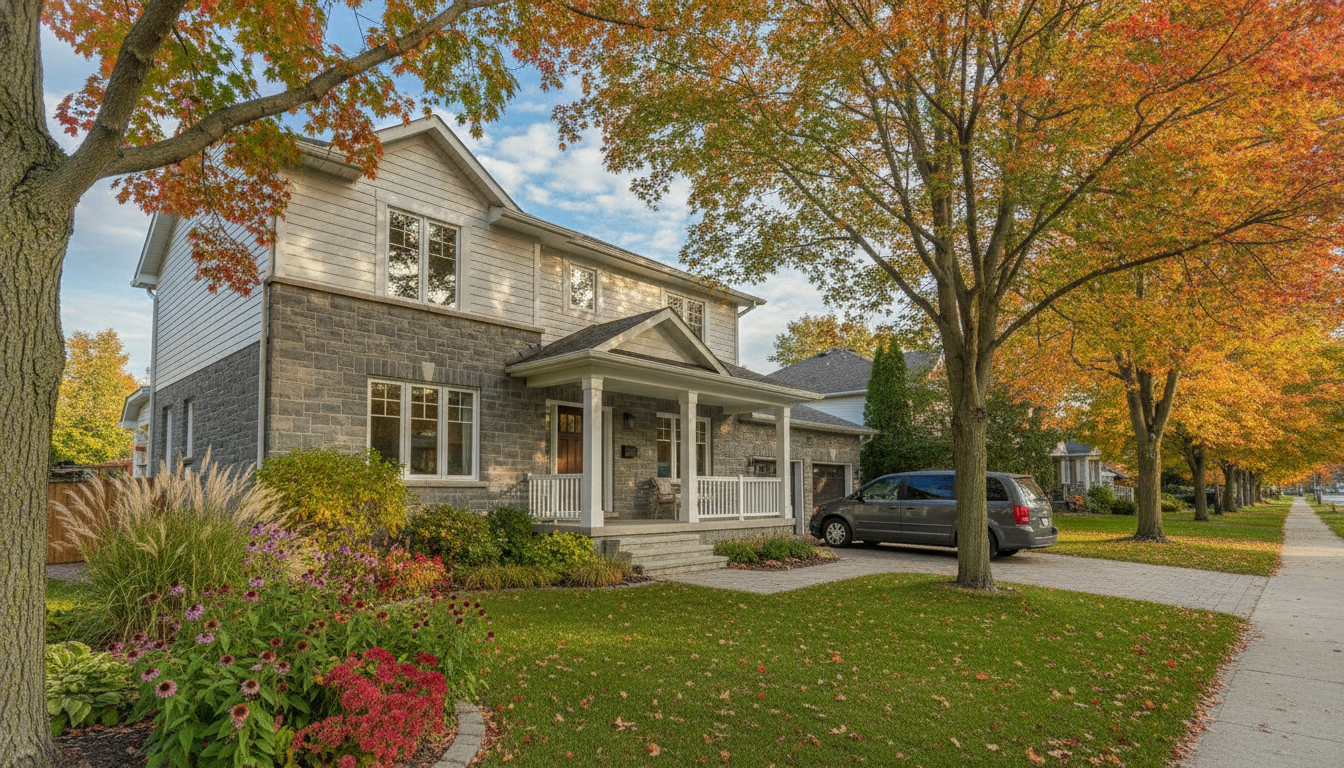
Desirable neighborhoods — Port Credit, Clarkson, Lorne Park, Erin Mills pockets — consistently outperform city averages. Why? Walkability, mature landscaping, safety and community identity. Expect a 5–20% premium in top pockets versus average Mississauga neighborhoods. Tip: small micro-location features (corner lot, quiet crescent, park-facing) can add 2–6%.
Proximity to amenities: grocery, transit, parks
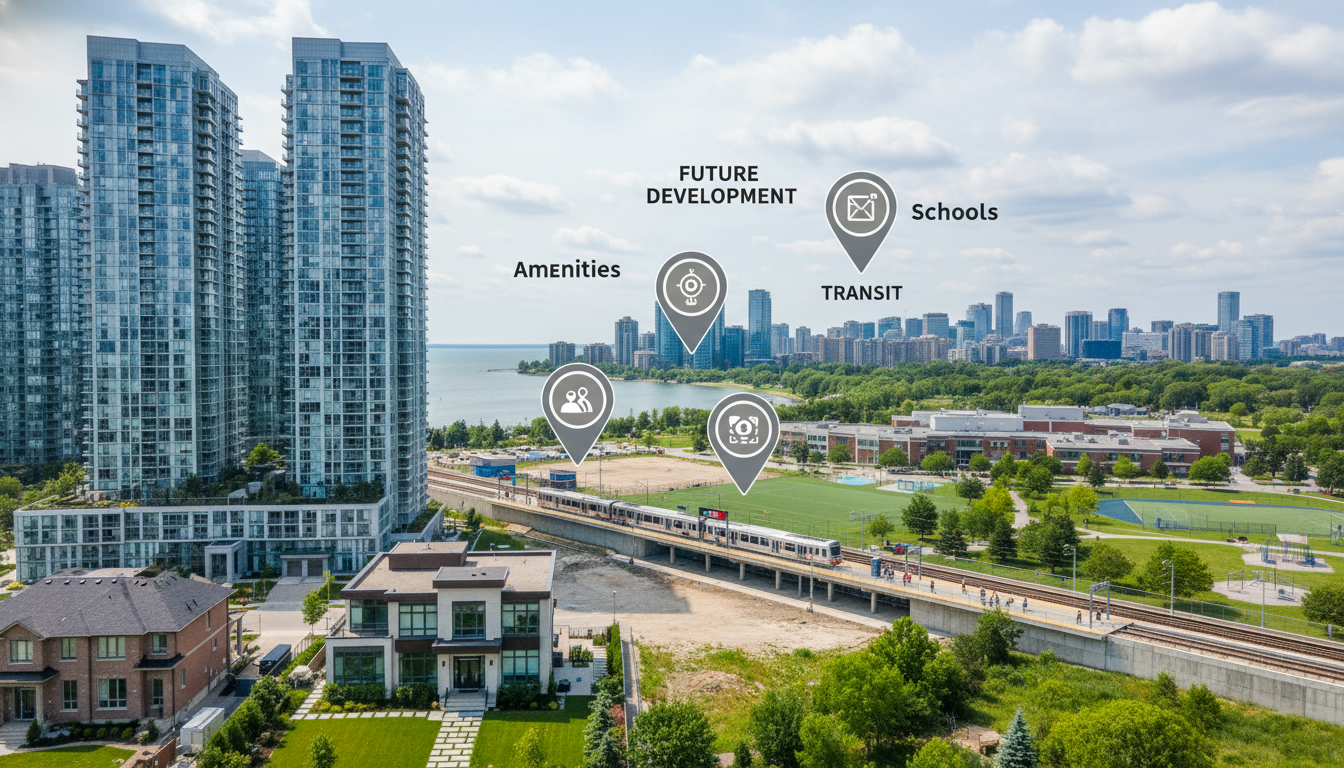
Close access to grocery stores, plazas and parks converts to value. A home within a 10-minute walk to a major grocery or a popular park often sells quicker and for more. Properties near waterfront areas (Lake Ontario) and waterfront trails command the highest lifestyle premiums.
Schools matter — measurable buyer preference
Great schools attract families and support long-term appreciation. Properties in high-ranking school catchments show sustained demand. In practical terms, homes in top school zones can outperform similar homes outside those zones by 5–12%.
Transit and commute: GO stations and highway access
Transit access is a major value multiplier. Homes within a 10–15 minute walk of a GO station or major bus hub see higher buyer interest. For commuters to Toronto, proximity to GO Transit or easy QEW/401 access can justify a 5–15% price premium depending on traffic savings.
Future development and municipal plans
Planned development — new transit lines, commercial centres, or high-quality mixed-use projects — changes value projections. A neighbourhood slated for upgraded transit or a new community hub can see speculative price increases before the project completes. Sellers who time listing windows around municipal announcements can capture that lift.
Practical examples
- A semi in a mid-range neighborhood near a GO station: sells 8–12% above similar properties with poor transit.
- A detached home in a top school catchment and near parks: 10%+ premium vs same model outside the catchment.
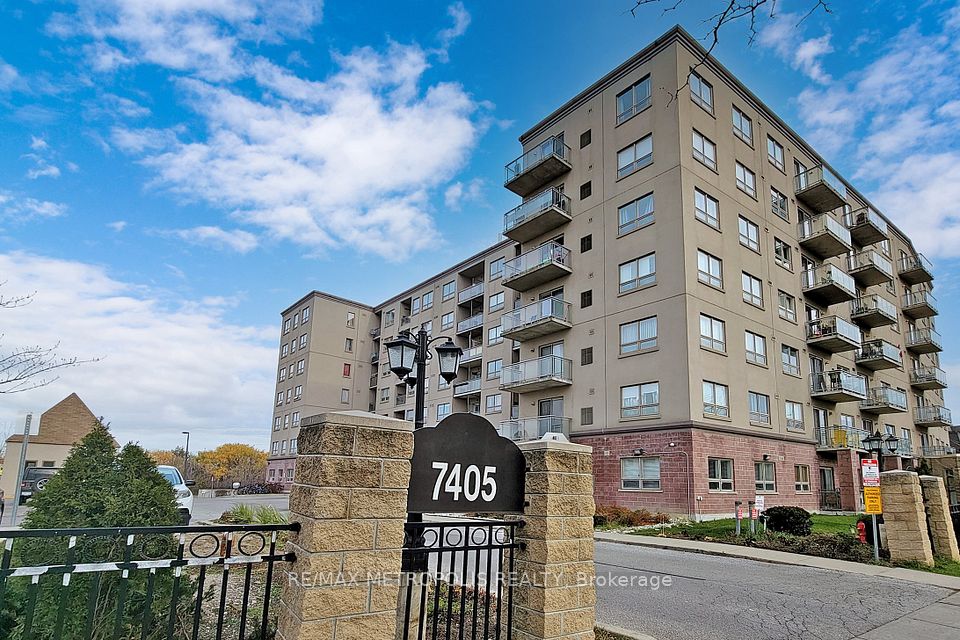
- Waterfront condo vs inland condo with same floor plan: waterfront often 15–25% higher.
Quick checklist for buyers and sellers
- Buyers: prioritize commute time, school catchment, and walkability. Pay for what you use daily.
- Sellers: highlight proximity to GO, schools, parks, and development plans in listings. Small staging fixes yield bigger returns in prime locations.
Why work with a local expert
Mississauga is granular. Street-level insights and timing matter. I track school boundary shifts, municipal plans and buyer trends so clients get max value. For a market valuation or strategy tailored to your address, contact me.
Tony Sousa, Local Realtor — [email protected] | 416-477-2620 | https://www.sousasells.ca
Homes For Sale in Mississauga
Browse current properties available right now. Click any listing to view photos, floor plans, or schedule a private tour.