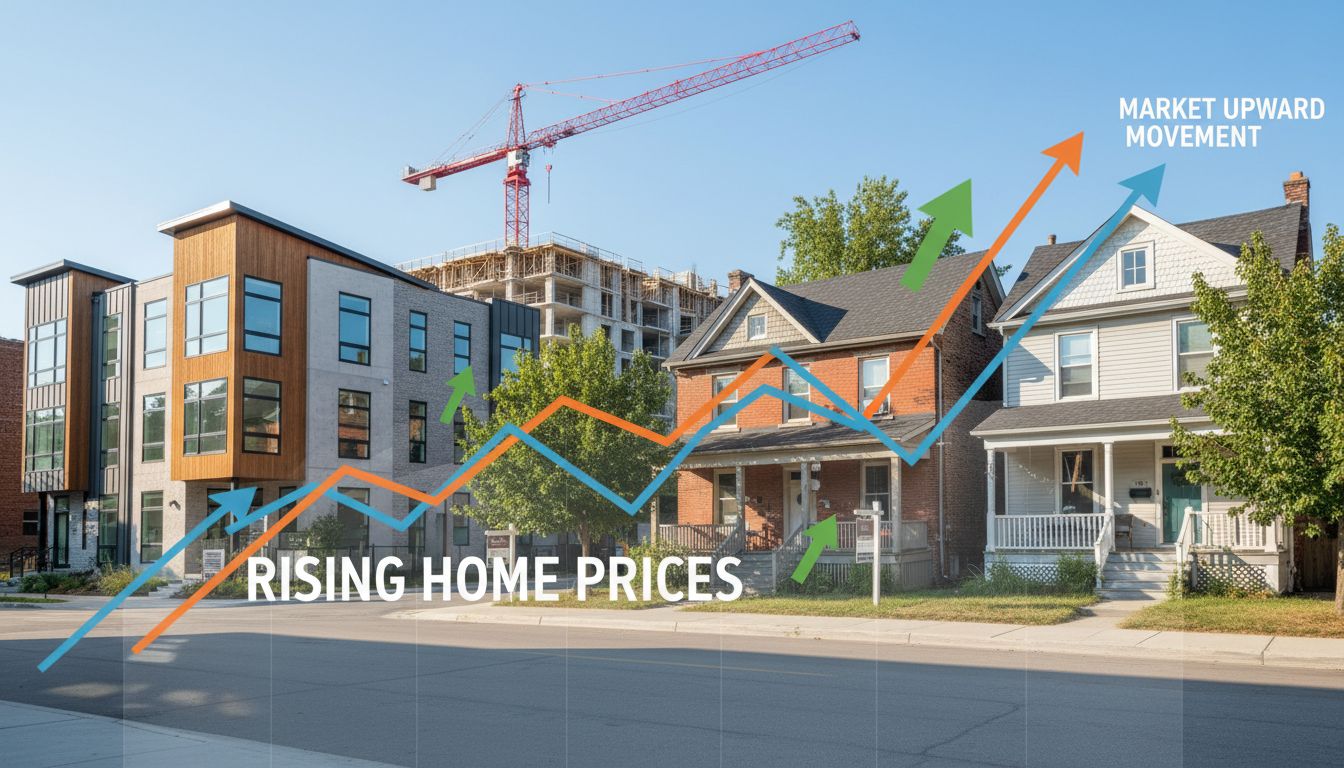
How does new construction affect prices in a neighborhood?
New Construction Pushing Neighborhood Prices Up — Here's the Real Impact
Quick, blunt answer
New construction changes prices by shifting supply, attracting higher-income buyers, and resetting comparable sales. Short-term it can cool old-home pricing in a micro-pocket. Medium-to-long term it forces appreciation if demand stays strong. In plain terms: new builds move the market — fast for hot areas, slow for weak ones.
Why it matters now (real estate market trends)
If you own, sell, or buy in a neighborhood with new development, this affects your equity, comps, and negotiating power. New construction is not just another house — it's a price anchor. That anchor rewrites comparable sales (comps), influences buyer expectations, and changes the mix of inventory. Use this to your advantage.
How new construction affects home prices — the mechanics
- Supply and demand: New units increase supply. If demand is higher than that new supply, prices rise. If supply outpaces demand, prices can dip until absorption catches up. Keywords: housing supply, absorption rate, demand.
- Price anchor: New builds often list at a premium. Nearby sellers reset asking prices upward. Appraisers use recent sales; a cluster of new-build sales can lift comps.
- Buyer profile shift: New developments attract buyers willing to pay for amenities and modern finishes. That pulls average neighborhood prices up.
- Renovation premium: Older homes that are updated can command bigger premiums as buyers compare them to new stock.
- Infrastructure and taxes: New construction can add amenities or increase local taxes. Higher quality infrastructure supports higher property values.
- Rental market effect: New rental stock can cool single-family rental demand, pushing some buyers to purchase and increasing owner-occupier prices.
Clear, actionable insights (what to do next)
- Sellers: Stage and price with new builds in mind. Highlight upgrades that beat new construction (lot size, character, mature landscaping). Price 3–5% above local comps if your home outperforms new builds in value-per-square-foot.
- Buyers: Use new builds as leverage. If a builder lists high, negotiate based on absorption rates and time-on-market. Ask for upgrades or closing cost contributions.
- Investors: Track absorption rate and pre-sale velocity. Fast pre-sales + low inventory = upside. Slow pre-sales = higher risk and longer holding costs.
- Agents: Recast CMAs to include new build sales and adjust depreciation curves for older properties.
Quick checklist to measure impact in your neighborhood
- Count new build closings in last 12 months.
- Compare average sold price per sqft vs. prior 24 months.
- Check time-on-market and absorption rate.
- Monitor property tax reassessments.
- Talk to a local market expert for hyperlocal comps.
Final, no-nonsense takeaway
New construction is a market accelerant. It can raise prices by resetting comps and attracting higher-income buyers — or it can create short-term softness if supply overwhelms demand. What matters is local context and speed of absorption.
Want a straight, data-driven read on how new builds are moving prices on your block? Contact Tony Sousa — the local market expert who turns market trends into clear action.
Email: [email protected] Phone: 416-477-2620 Website: https://www.sousasells.ca
Keywords: new construction, home prices, neighborhood, real estate market trends, property values, comps, housing supply, absorption rate, appreciation.
Featured Real Estate Listings
Browse current properties available right now. Click any listing to view photos, floor plans, or schedule a private tour.


