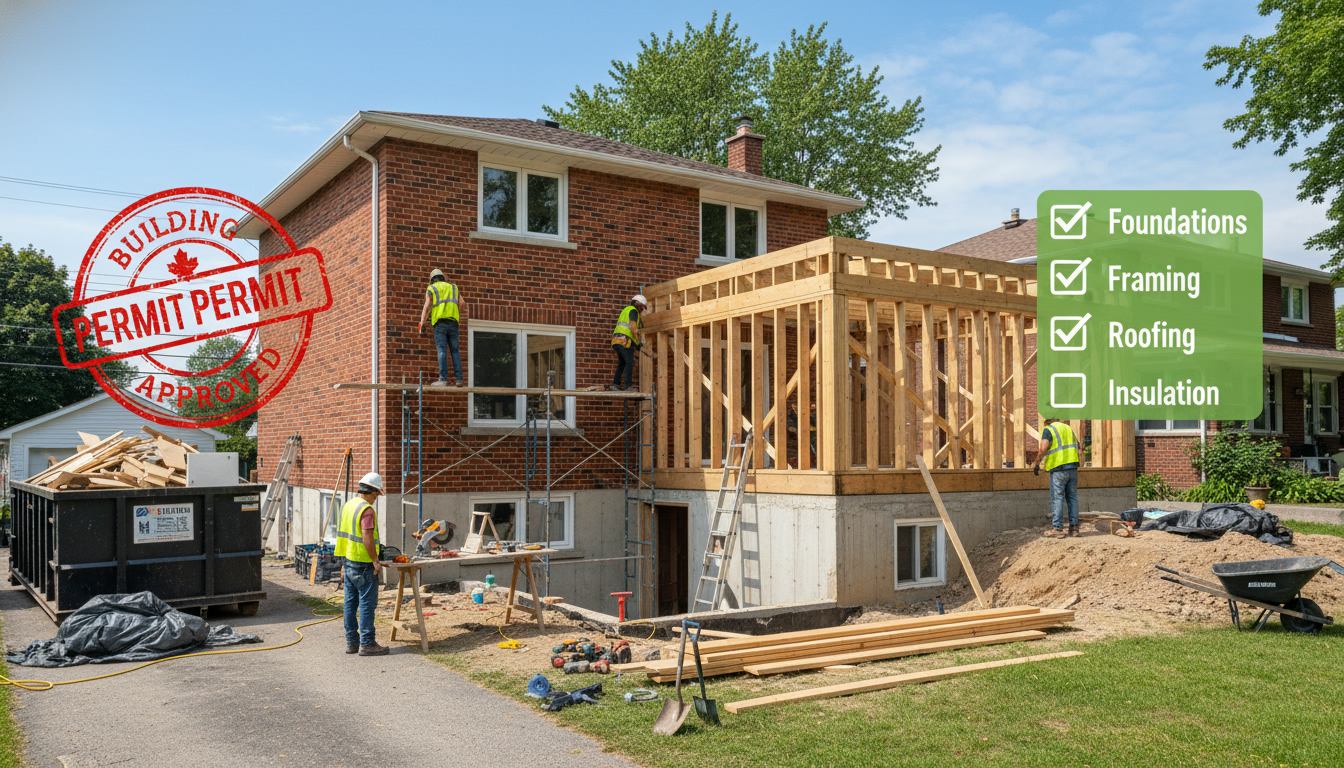
Are permits required for home renovations in Ontario?
Shocking truth: You might be breaking the law with that renovation — are permits required for home renovations in Ontario?
Quick answer
Yes — many home renovations in Ontario require a permit. The Ontario Building Code and local municipal bylaws govern permit requirements. If your project touches structure, safety systems, or changes use, you probably need one.
What typically needs a permit
- Structural changes: removing or adding walls, adding rooms, new windows or headers.
- Additions and new builds: room additions, second-storey builds, garages.
- Basement conversions: new bedrooms, full bathrooms, egress windows, suite conversions.
- Plumbing, HVAC and mechanical: adding or moving water lines, sewers, furnaces, ductwork.
- Electrical: major upgrades, new circuits, service changes (regulated by Electrical Safety Authority in Ontario).
- Pools and large decks: many municipalities require permits for pools and elevated decks.
- Demolition of structural elements.
Each municipality (Toronto, Mississauga, Ottawa, etc.) enforces the Building Code through its building department. That means the exact trigger for a permit can vary. Always check local rules.
Why permits matter — quick, clear reasons
- Legal compliance: permits prove your work meets the Ontario Building Code.
- Safety: inspections catch dangerous mistakes before they become disasters.
- Insurance protection: unpermitted work can void claims.
- Resale value: buyers and lenders want permits and inspection records. Unpermitted work lowers sale price and slows closing.
Common misconceptions
- "It’s just cosmetic — no permit needed." False. Cosmetic changes like paint don’t need permits, but cutting into walls or moving plumbing does.
- "It’s cheaper to skip a permit." Not true. Fines, forced undoing, or paying to bring work up to code later is more expensive.
How to get a permit (simple steps)
- Contact your local municipal building department or visit their website. Search "building permits [your city]".
- Prepare plans: clear drawings, scope of work, and contractor details.
- Submit application and pay the fee.
- Book inspections at required stages (foundation, framing, plumbing, final).
If you already started without a permit
Stop and call your municipal building department. You may need to apply for a retroactive permit and schedule inspections. Ignoring it risks a stop-work order, fines, or an order to remove or rebuild work.
Bottom line — be smart, protect value
Getting permits protects you, your family, and your investment. Renovations without permits create legal and financial risk. If you want a quick reality check on whether your project needs a permit in your neighbourhood, I can help.
Contact: Tony Sousa, Local Realtor & Renovation Advisor — [email protected] | 416-477-2620 | https://www.sousasells.ca
Need help with permits, finding a contractor who pulls permits, or understanding inspection steps? Reach out. I guide homeowners through the process so renovations add value, not headaches.
Featured Real Estate Listings
Browse current properties available right now. Click any listing to view photos, floor plans, or schedule a private tour.


