How do I protect my home against floods and natural disasters?
Beat the Next Flood: How Smart Homeowners Protect Their Home From Floods & Natural Disasters
Stop guessing. Start protecting.
If you ask "How do I protect my home against floods and natural disasters?" here’s a straight answer with steps you can use today. No fluff. No panic. Real actions that reduce damage, lower insurance claims, and keep your family safe.
Know your risk first
- Check local flood maps and elevation data. Use FEMA or your municipality flood maps. Know if you’re in a floodplain or zone with frequent storms.
- Check past claims for your address. That shows real risk, not theory.
Insurance: buy protection that actually pays
- Get flood insurance. Standard home insurance rarely covers flood. Buy National Flood Insurance Program (NFIP) or private flood policy.
- Add endorsements: sewer backup, sump pump failure, and overland water coverage if available.
- Keep an updated home inventory (photos, serial numbers). Store copies off-site and online.
Reduce where water can get in
- Seal foundation cracks and install perimeter drains. Look at waterproofing membranes and interior sealants.
- Install a backflow valve on sewer lines to stop sewage backups.
- Elevate utilities (furnace, water heater, electrical panels) above expected flood levels.
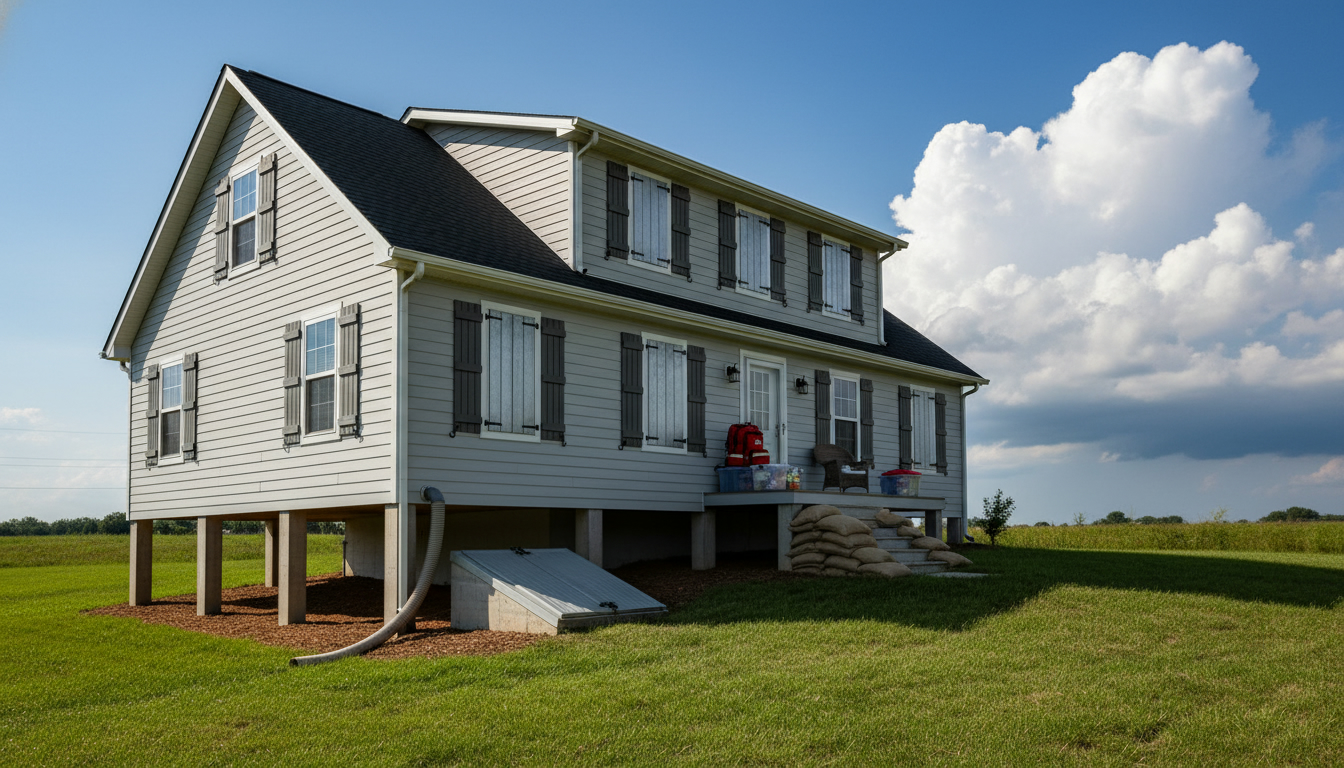
- Add flood vents to crawlspaces to equalize pressure and reduce structural damage.
Mechanical defenses that work
- Install a sump pump with battery backup and alarm. Test monthly.
- Consider a generator for long power outages.
- Use storm shutters and impact-resistant windows to reduce wind and debris damage.
Smart landscaping and grading
- Regrade soil away from the foundation. Create swales or berms to direct water away.
- Use permeable surfaces for driveways and patios to reduce runoff.
- Plant trees and shrubs strategically to block wind and absorb water.
Prepare an emergency plan and kit
- Create an evacuation plan with routes, meeting points, and emergency contacts.
- Build a grab-and-go kit: water, food for 3 days, flashlight, first-aid, important documents (waterproof), and phone chargers.
- Practice the plan with your family. Know how to shut off gas, water, and electricity.
Maintain and document
- Inspect roof, gutters, downspouts, and grading twice a year.
- Run insurance and pump tests annually. Keep receipts and service records.
- Photograph upgrades and store records online.
Quick checklist
- Flood map checked
- Flood insurance in place + endorsements
- Sump pump + backup
- Utilities elevated
- Backflow valve installed
- Emergency kit + plan
Protecting your home is predictable work, not luck. If you want a local, hands-on risk review and help finding the right insurance and contractors, contact Tony Sousa — trusted local realtor and risk advisor. He’ll walk your property, identify weak points, and connect you to proven contractors and insurance brokers.
Contact Tony Sousa: [email protected] | 416-477-2620 | https://www.sousasells.ca
Act now. A few upgrades and the right policy cut your damage and shorten recovery time when disaster hits.
Featured Real Estate Listings
Browse current properties available right now. Click any listing to view photos, floor plans, or schedule a private tour.