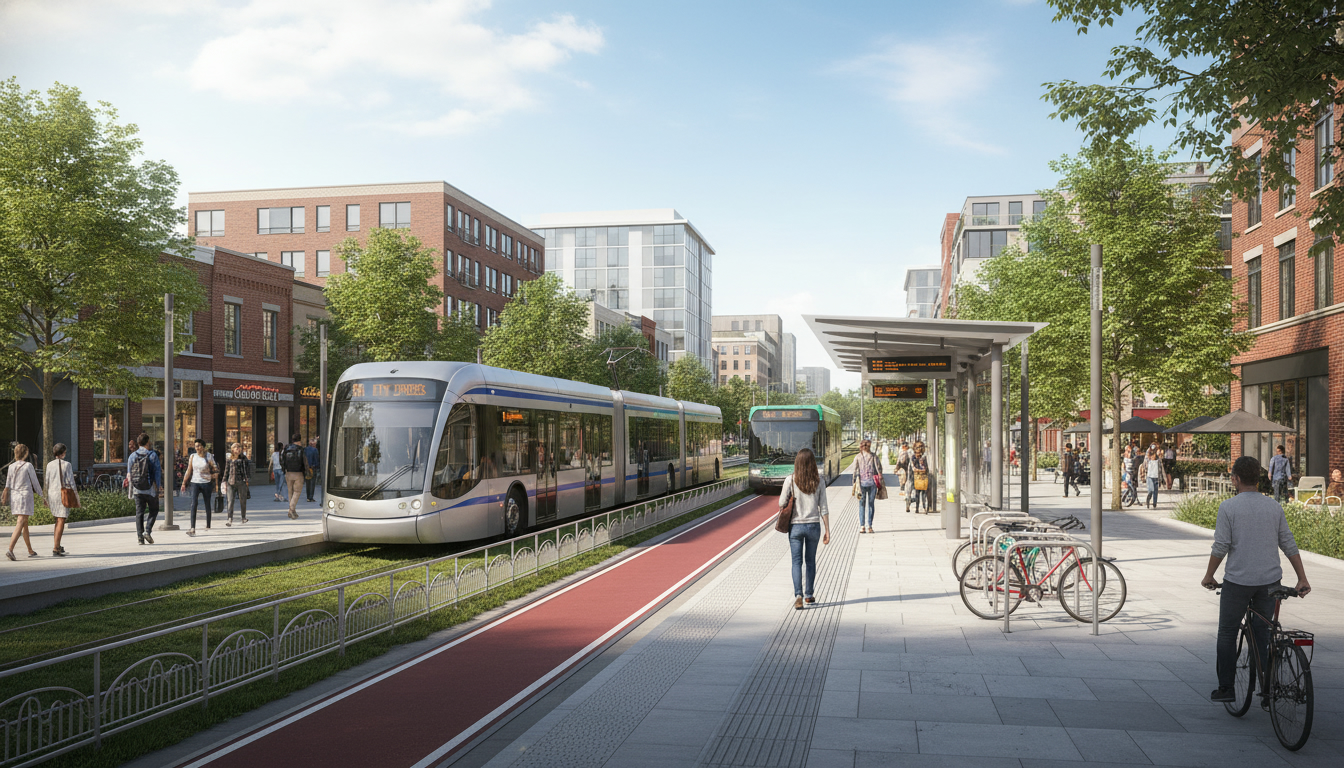
Are public transit options improving?
Are transit upgrades actually making your commute better — or just noise? Read this and know for sure.
Quick answer: Yes — public transit is improving, but not everywhere and not evenly.
Cities focused on neighborhood growth and location value are investing heavily in transit infrastructure. Since 2021, governments and transit agencies have prioritized frequency, reliability, and coverage. That means faster buses, new light-rail and subway projects, expanded bus rapid transit (BRT) lanes, and smarter scheduling powered by real-time data. These upgrades reduce commute times, boost neighborhood accessibility, and raise property desirability.
What’s changing right now
- Funding and policy: Large infrastructure bills and municipal budgets now emphasize transit upgrades and transit-oriented development. That money funds new lines, modern signalling, station accessibility upgrades, and dedicated bus lanes.
- Faster, more reliable service: Transit agencies target frequency and on-time performance. More dedicated lanes and signal priority for buses cut delays. Light rail and subway extensions add capacity where neighborhoods are growing.
- Technology and rider experience: Real-time apps, contactless fares, cleaner vehicles, and electrification improve the daily experience and lower operating costs.
- Neighborhood impact: Better transit raises walkability, shortens commutes, and increases demand for nearby housing — directly affecting location value.
How to tell if transit in your neighborhood is improving
- Planned projects: Check municipal transit plans for new lines or station upgrades. Projects like major urban light-rail or subway extensions are strong signals.
- Frequency and span: Look at schedules. More buses or trains per hour — and longer service windows — equal better access.
- Dedicated lanes and priority: Bus-only lanes and transit signal priority show agencies are serious about reliability.
- Ridership trends: Recovering or growing ridership after the pandemic indicates returning confidence in transit.
- Active investments: New stations, accessibility upgrades, and vehicle electrification mean long-term commitment.
What this means for buyers, sellers and neighborhood strategy
- For buyers: Properties near improved transit deliver better long-term value and rental demand. Shorter commutes expand workplace options.
- For sellers: Highlight proximity to upgraded transit when marketing. Neighborhood location and transit upgrades are high-conversion selling points.
- For investors: Transit-oriented neighborhoods often show stronger rent growth and resale premiums.
Bottom line — practical checklist
- Confirm nearby projects and timelines.
- Measure current door-to-door commute times, not just distance.
- Ask your realtor for neighborhood-level transit forecasts and how these influence price trends.
If you want a street-by-street transit impact report for your neighborhood, I provide clear, data-driven analysis you can act on. Contact Tony Sousa — local neighborhood & location expert — for a personalized review: [email protected] | 416-477-2620 | https://www.sousasells.ca
Keywords: public transit improving, transit upgrades, neighborhood transit, transit accessibility, commute times, transit-oriented development, bus rapid transit, light rail, subway expansion, frequency and reliability
Featured Real Estate Listings
Browse current properties available right now. Click any listing to view photos, floor plans, or schedule a private tour.


