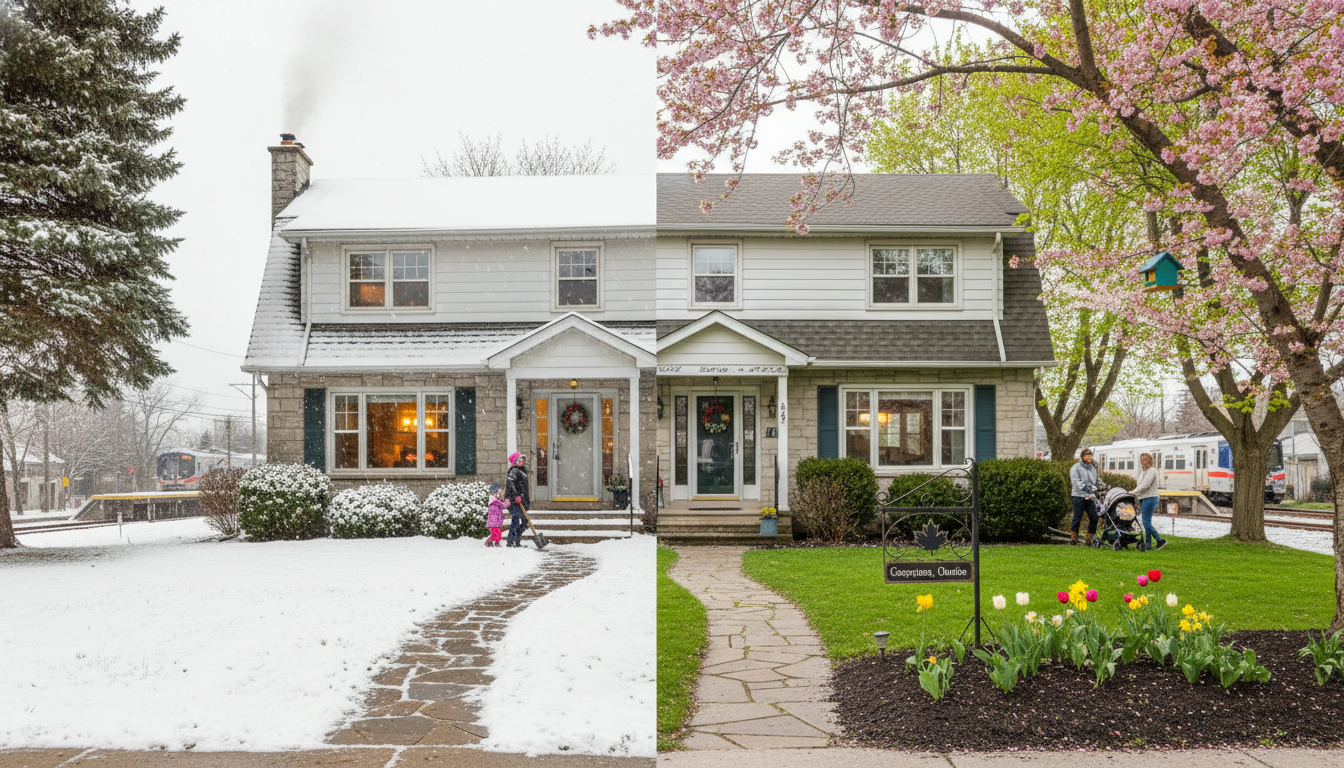
Should I sell in winter or wait until spring?
Sell in winter or wait until spring? Why the right timing can mean a faster sale and more money — and how to pick the right play for your Georgetown, ON home.
Why timing matters more than emotions
Most homeowners pick a season because it “feels right.” That’s a mistake. Real estate is a numbers game. Timing affects: price, buyer pool, days on market, and negotiating leverage. Georgetown, ON follows GTA patterns but moves on its own rhythm because it’s a commuter town with strong family demand. If you want to win, decide with data and a plan — not a calendar.
Quick answer: There is no universal “best” season
- Spring usually brings the most buyers and the most listings. That can push prices up when demand outstrips supply.
- Winter brings fewer listings and fewer buyers — but the buyers who show up are serious.
Decision checklist: if you need speed or have a unique, move-in-ready property, list in winter. If you can delay and want to maximize buyer competition (and are willing to prep), list in spring.
Local context: Georgetown, ON market realities
- Georgetown sits in Halton Hills with strong commuter ties to Toronto. That makes it sensitive to interest-rate shifts and Toronto job trends.
- Family buyers drive much of the local demand — they target spring and early summer so moves align with school calendars.
- Inventory often tightens in winter because many sellers hold off, which can create a supply advantage for sellers who list.
Bottom line: winter can be strategic in Georgetown — but only if you optimize marketing and pricing.
Data-driven insights every Georgetown seller must know
- Buyer traffic: Historically, buyer traffic ramps up in March–May. More buyers means more chance for multiple offers, but also more competing homes.
- Listing volume: Spring often has 20–40% more new listings than winter in many suburban Ontario markets. More listings mean you must stand out.
- Serious buyers: Winter buyers tend to be motivated — job relocation, financing timelines, or life events. That reduces lowball offers.
- Days on market: Listings in spring usually sell faster than those posted in mid-winter, but a sharply priced winter listing can sell faster than a poorly priced spring listing.
(Always check the latest MLS and TRREB monthly reports for real-time Georgetown/ Halton Hills trends before you decide.)
A simple decision framework: 5 questions to answer now
- What’s your timeline? Do you need to sell within 30–60 days? Or can you wait 3–6 months?
- How market-ready is your home? Is it turnkey or does it need repairs and curb work?
- Are you rate-sensitive? If mortgage rates are rising, buyer demand may soften.
- Is your property seasonal? Waterfront, cottages, and homes with spectacular spring landscaping perform better in warmer months.
- How important is maximizing price vs minimizing hassle?
If you answered “need speed” or “turnkey” — winter listing is often better. If you answered “maximize price” and can prep — wait for spring demand.
If you choose winter: how to make it win
Winter selling requires a different playbook. Do these five things:
- Price sharply and smart. Use comps from the last 60–90 days and price where you’ll get attention. Winter buyers shop with purpose; a clear value proposition gets offers.
- Invest in winter curb appeal. Clear walkways, remove snow promptly, keep lighting on for evening showings. Tidy front steps and a shoveled path matter.
- Highlight comfort and efficiency. Promote upgraded heating, insulation, new furnaces, and smart thermostats. Buyers care how the house handles winter costs.
- Use professional photos that embrace winter. Show dry, clean walkways and interior warmth. Consider twilight photos with warm lighting to sell emotion.
- Market for serious buyers. Use targeted digital ads, broker tours, and emphasize flexible showings for commuters. Virtual tours and floorplans close deals faster when buyers shop at odd hours.
Bonus: a pre-listing inspection in winter reduces surprises and speeds closing.
If you wait for spring: where to spend your prep budget
Spring gives you attention — use it.
- Do quick high-ROI fixes: fresh paint, new hardware, declutter, and deep clean. These change perception more than big renovations.
- Landscaping and curb reset. Mulch, trimmed hedges, fresh sod patches, and power-washed walkways create strong first impressions.
- Timing the market: list early in the spring cycle (late March to mid-April) when buyers return hungry and inventory hasn’t fully ramped.
- Stage for families. Highlight school routes, parks, and storage. Family buyers in Georgetown care about usable space and local amenities.
- Pre-market with a coming-soon campaign. Build online interest and schedule showings so buyers act quickly when you go live.
Pricing strategy that wins — winter vs spring
- Winter: lean slightly more competitive. You get fewer buyers, so the right price triggers offers from serious candidates.
- Spring: price to compete against multiple active listings. If you can create urgency (limited-time incentives, open-house blitz), you’ll improve results.
Never rely on “testing the market” with a high price. That costs time and creates stigma. Set the price for the outcome you want.
Marketing that actually gets offers in Georgetown
- Use targeted social ads aimed at Toronto commuters and local buyers within 30–60 minutes.
- Showcase schools, transit, and commute times — Georgetown buyers prioritize access.
- Video walkthroughs with neighborhood shots: parks, Main Street, and GO station. Visual context sells faster than bullet lists.
- Host broker previews. Local agents are the fastest route to qualified buyers.
Negotiation edge: how timing affects leverage
- In winter, leverage seriousness: buyers are often pre-approved and motivated. Push for firm dates and limit conditional clauses where reasonable.
- In spring, leverage competition: create offer deadlines and multiple-offer strategies to maximize price.
Always consult your agent about when to accept escalation clauses or unconditional offers.
Case scenarios: pick the play that matches your goal
- Need to relocate for work in 8 weeks: list in winter. Price to sell, use a pre-list inspection, and close quickly.
- Want top dollar and can wait 3–4 months: prep through winter, list early spring when buyer volume spikes.
- Selling an estate property with no urgency: list in spring after staging and minor renovations.
- Listing a unique custom home: consider winter if inventory is low and your home stands out.
Final checklist before you decide
- Pull recent Georgetown MLS stats for last 6 months.
- Get two competitive market analyses from local agents.
- Walk the house with a contractor and a stager.
- Map out your move timeline and costs of waiting vs selling now.
FAQ — Georgetown, ON timing & market strategy
Q: Does winter mean lower prices in Georgetown? A: Not automatically. Winter listings can sell for market value if priced right and marketed to serious buyers. Prices depend on condition, price strategy, and local demand.
Q: Will I get more buyers in spring? A: Yes. Spring typically brings more buyers. That increases the odds of multiple offers but also increases competition from other sellers.
Q: How does commuting to Toronto affect the sell timing? A: Georgetown’s commuter pool means buyers consider commute times heavily. List when commuters are active (spring and early summer) unless you target local buyers or remote workers.
Q: Should I do renovations before selling in spring? A: Focus on high-ROI updates: paint, minor kitchen updates, landscaping, and decluttering. Major renos often don’t return full cost unless they solve a key buyer objection.
Q: Is staging worth it for winter listings? A: Yes. Staging helps buyers feel the home’s warmth and flow. In winter, visual warmth and functional staging (coats off, organized entry) matter more.
Q: What if interest rates change before I list? A: Interest-rate shifts change buyer affordability. If rates rise, expect fewer buyers; if they fall, buyer demand can spike. Build contingency in your strategy and consult a mortgage-savvy agent.
Q: How long should I wait for spring if I can delay? A: If your timeline allows, aim to list in late March or early April. That captures returning buyers before peak inventory in May.
Final take: a clear path to your best outcome
Timing is a lever. Use it deliberately. If you need speed or your home is move-in-ready, winter can be a powerful time to list in Georgetown, ON. If you want maximum buyer competition and can invest in prep, wait for spring — but list early in the cycle and price to win.
Make the decision with data, not feeling. Pull local stats, get a pro CMA, and follow the checklist above.
Contact
Tony Sousa — Local Realtor, Georgetown, ON Email: [email protected] | Phone: 416-477-2620 Website: https://www.sousasells.ca
If you want a sharp, local market read and a no-nonsense action plan for your property, call or email now.
Featured Real Estate Listings
Browse current properties available right now. Click any listing to view photos, floor plans, or schedule a private tour.