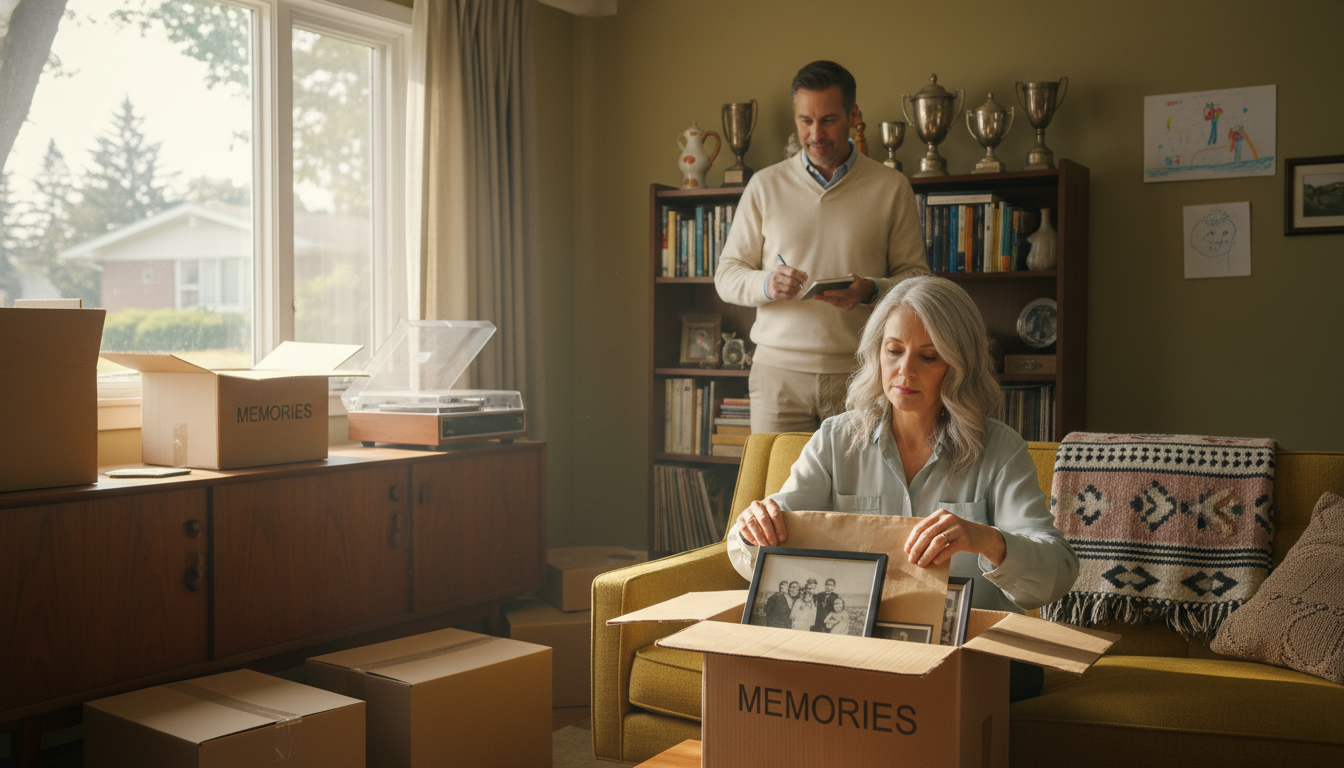
How do I handle emotional attachments when selling a childhood home?
How will you let go of a childhood home full of memories — and still get the best price?
Face it first: feelings are real, and they won't sell the house
If you grew up in a place, every room holds a chapter. That makes selling deeply personal. Step one: name the feelings. Grief, guilt, relief — call them out. Naming emotions reduces their power and helps you act like an owner, not a hostage.
A step-by-step plan to handle emotional attachments when selling a childhood home
- Decide the objective. Are you maximizing sale price, closing fast, or preserving family legacy? Clear goals keep emotion from hijacking decisions.
- Create a memory inventory. Photograph heirlooms, record short stories from family members, digitize letters and videos. You keep the memories; the market gets the house.
- Declutter with rules, not guilt. Use the 90/1 rule: keep items used in last 90 days or 1 item per year of life in the home. It’s simple, fast, and fair.
- Stage neutrally. Neutral staging helps buyers see their future, not your past. Hire a stager or follow a room-by-room checklist: remove personal photos, lighten colors, and highlight the house’s best features.
- Price objectively. Use market comps, not nostalgia. Emotional pricing stalls sales. A local realtor will give a data-backed range so emotions don’t dictate your list price.
- Set a timeline and accountability. Give yourself clear dates for donation, sale, and moving. Share them with someone who will hold you to the plan.
Practical tactics to reduce emotional friction
- Hold a ritual. A small goodbye dinner or photo session lets the family close a chapter before the open house.
- Use professional help. An experienced realtor negotiates tough conversations, protects price, and handles logistics so you can focus on family.
- Outsource decisions you can’t make. Packers, estate liquidators, and cleaners take the physical load and the emotional triggers with them.
What buyers need — and why that helps you
Buyers buy potential. Your job is to show the potential, not the past. Neutral paint, decluttered rooms, and updated lighting speed sales and increase offers. When the house reads like a canvas, buyers bid higher.
Quick checklist to move forward today
- Write one goal for the sale. 2. Take photos of keepsakes. 3. Book a consultation with a local realtor. 4. Schedule a goodbye ritual.
If you want direct, compassionate help selling a family home in Toronto that honors memories and maximizes value, call Tony Sousa. He specializes in sensitive home sales and gets results.
Contact Tony Sousa: [email protected] | 416-477-2620 | https://www.sousasells.ca
Need help now? Text or call — a short conversation can remove weeks of stress.
Featured Real Estate Listings
Browse current properties available right now. Click any listing to view photos, floor plans, or schedule a private tour.


