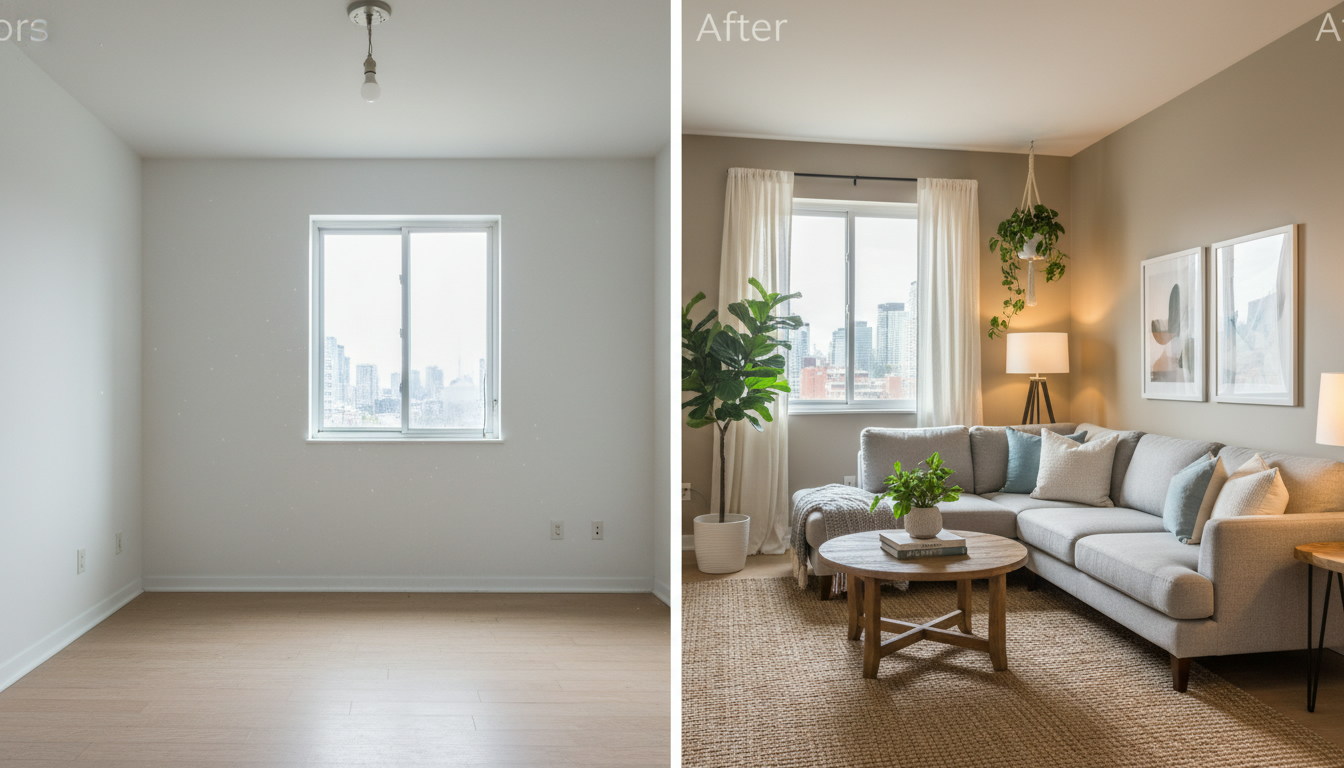
Is staging worth it for getting a higher price?
Want more money from your sale? Is home staging really worth the price? Here's the blunt answer.
Quick answer
Yes — often. But not always. Staging delivers value when it changes buyer perception and accelerates offers. The smart seller treats staging like a business investment and calculates the return, not an aesthetic expense.
Why staging moves the needle on price and days on market
Buyers buy feelings first, facts second. Staging turns empty rooms or cluttered homes into aspirational, neutral spaces that let buyers imagine living there. That translates to:
- Higher perceived value — better offers and stronger bids.
- Faster sales — less time on market means fewer price drops and lower carrying costs.
- Better listing photos — more views, more showings, more competition.
Market studies and local agents report consistent gains from staging. In many markets, staged homes sell faster and net a measurable premium. The exact lift depends on price point, condition, and market demand.
When staging is worth it (do this checklist)
- The home is vacant or outdated. Empty rooms photograph poorly.
- You’re in a competitive market (multiple buyers per listing).
- Your target buyer expects move-in-ready finishes.
- The staging cost is less than the expected net price increase.
If a modest staging job can lift your list price by 3–8% or shorten days on market enough to avoid a price cut, it’s worth it.
When skip staging
- You’re selling at a deep bargain where buyers plan to renovate.
- The home already shows professionally (designer finishes, spotless declutter).
- The staging fee exceeds the realistic price uplift for your price tier.
Tactical, data-driven way to decide (use this ROI formula)
- Estimate expected price uplift (use local comps or ask your agent).
- Subtract staging cost and extra holding costs if staging time adds days.
- Compare net uplift to alternative investments (minor repairs, targeted upgrades).
Simple formula: Expected Net Gain = (Expected Price Increase) - (Staging Cost + Additional Holding Costs) If Expected Net Gain > 0, staging makes financial sense.
Options that boost ROI
- Partial staging (key rooms only: living, kitchen, master).
- Virtual staging for vacant homes — lower cost for photos and online impact.
- Targeted declutter and minor upgrades (paint, lighting) alongside staging.
Local market edge: pricing and market value expertise
A smart pricing strategy combines staging with a precise Comparative Market Analysis (CMA). That’s where experience matters. I use local sales data, buyer behavior, and listing traffic to recommend the staging level that maximizes net proceeds — not just a prettier listing.
For sellers in Toronto and the GTA, a tailored staging plan often returns more than its cost when matched to the right buyer demographic and price bracket.
If you want a clear staging ROI for your property, I’ll run the numbers and show options that make economic sense.
Contact Tony Sousa, Local Realtor: [email protected] | 416-477-2620 | https://www.sousasells.ca
Featured Real Estate Listings
Browse current properties available right now. Click any listing to view photos, floor plans, or schedule a private tour.


