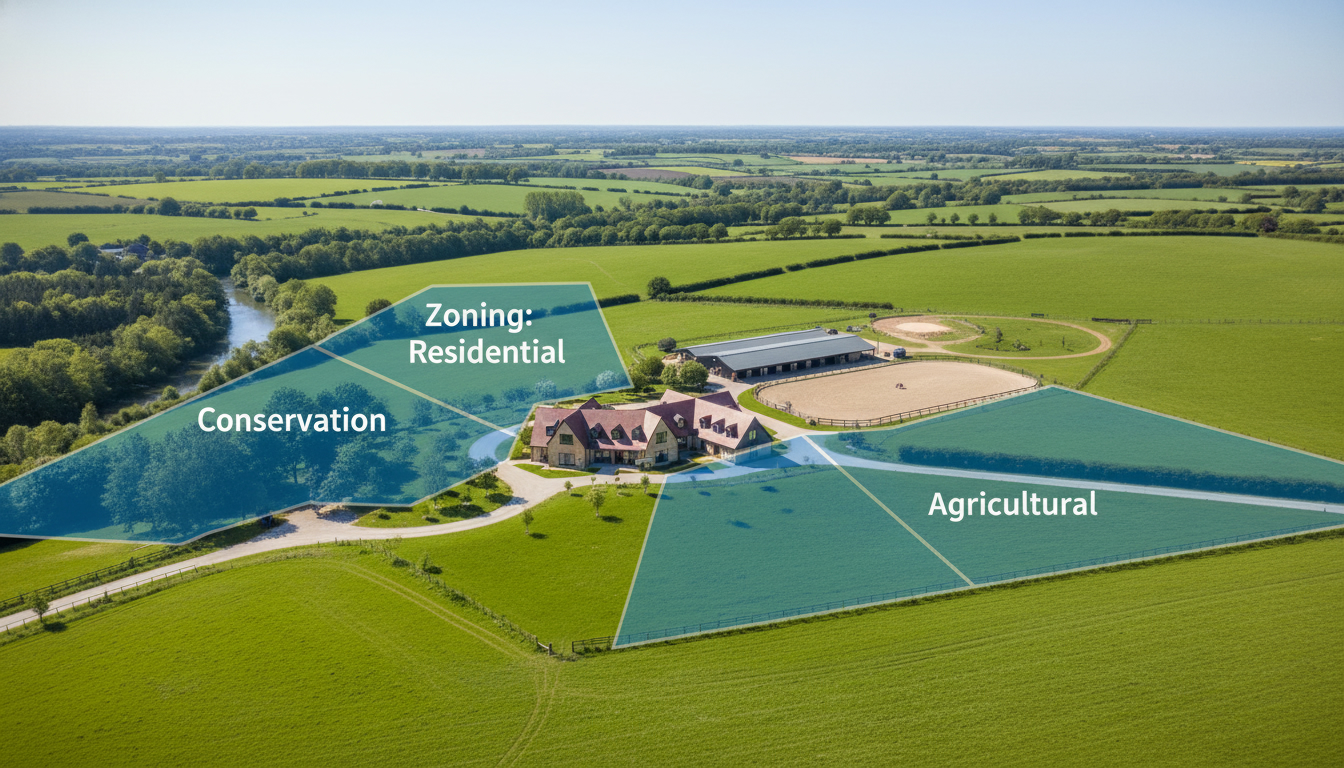
How do zoning laws affect my rural property sale?
Can zoning kill your rural property sale? Here’s the hard truth buyers ignore.
Quick answer
Zoning laws shape what a buyer can and cannot do with land. For rural, luxury, and unique property sales, zoning often determines price, buyer pool, financing options, and timelines. Ignore zoning and you risk lower offers, failed deals, or costly delays.
Why zoning matters for rural real estate
Zoning is local law defining land use: agricultural, residential, commercial, conservation, and special-use categories. It controls lot splits, building size, accessory structures, short-term rentals, and business uses. In rural areas, zoning also interacts with conservation rules, environmental setbacks, and septic/well regulations.
Key impacts:
- Value: A parcel zoned for development is worth more than the same parcel restricted to agricultural use.
- Marketability: Luxury buyers want certainty. Zoning restrictions shrink the buyer pool and scare off lenders.
- Financing: Banks underwrite based on permitted use. If zoning prevents intended use, mortgage or construction financing can fail.
- Timeline and cost: Rezoning, variance or permit appeals add months and legal fees.
Specifics for luxury and unique properties
Luxury and unique properties often hinge on lifestyle or specialized use: equestrian facilities, guest cottages, helipads, vineyards, or private event venues. Zoning controls those uses. Even if the home is extraordinary, zoning that forbids commercial events or additional dwelling units can tank sale value for buyers who planned revenue or multi-family use.
Unique parcels also trigger environmental or heritage overlays. Those layers add conditions: protected wetlands, heritage designations, or habitat buffers. That reduces usable acreage and affects price per acre.
What to check before listing (practical checklist)
- Confirm current zoning and permitted uses with the municipality.
- Obtain municipal mapping and any overlay restrictions (conservation, floodplain, heritage).
- Verify building permits, septic/well capacities, and access rights.
- Check parcel history for previous variances or enforcement actions.
- Ask about future municipal plans (rezoning corridors, infrastructure projects).
- Confirm tax classification—agricultural tax status can affect buyers and closing timelines.
How to protect value and close faster
- Package zoning facts in the listing. State permitted uses, recent inspections, and permit history. Transparency reduces buyer friction.
- If a buyer needs a change, get a pre-listing feasibility check for rezoning or variance likelihood.
- Work with an agent who knows rural zoning, lenders for unique properties, and local planners.
Why expert representation matters
Experienced rural property agents translate zoning into value. They know which buyers will pay for permitted uses and which won’t. They vet financing issues early and line up feasible solutions to preserve price and close time.
For confident guidance on rural, luxury and unique property sales, contact Tony Sousa at [email protected] or 416-477-2620. Visit https://www.sousasells.ca for listings and expertise tailored to rare properties.
Featured Real Estate Listings
Browse current properties available right now. Click any listing to view photos, floor plans, or schedule a private tour.


