What is an easement and how does it affect
ownership?
“What is an easement and how does it affect ownership?” — Think you own land outright? Think again. Here’s the fast truth you need before you buy, sell or renovate in Milton, Ontario.
Why this matters now
Stop wasting time on vague assurances. Easements are legal rights attached to land. They can let someone cross your yard, run utilities through your basement wall, or prevent you from building on part of your lot. In Milton—where older farm parcels meet new subdivisions—easements are common. They can cut value, block projects, and complicate financing.
This guide explains, in plain language, what an easement is, how it affects ownership in Milton, ON, and the exact steps every buyer, seller and property owner should take to protect value and avoid surprises.
What is an easement? Simple definition
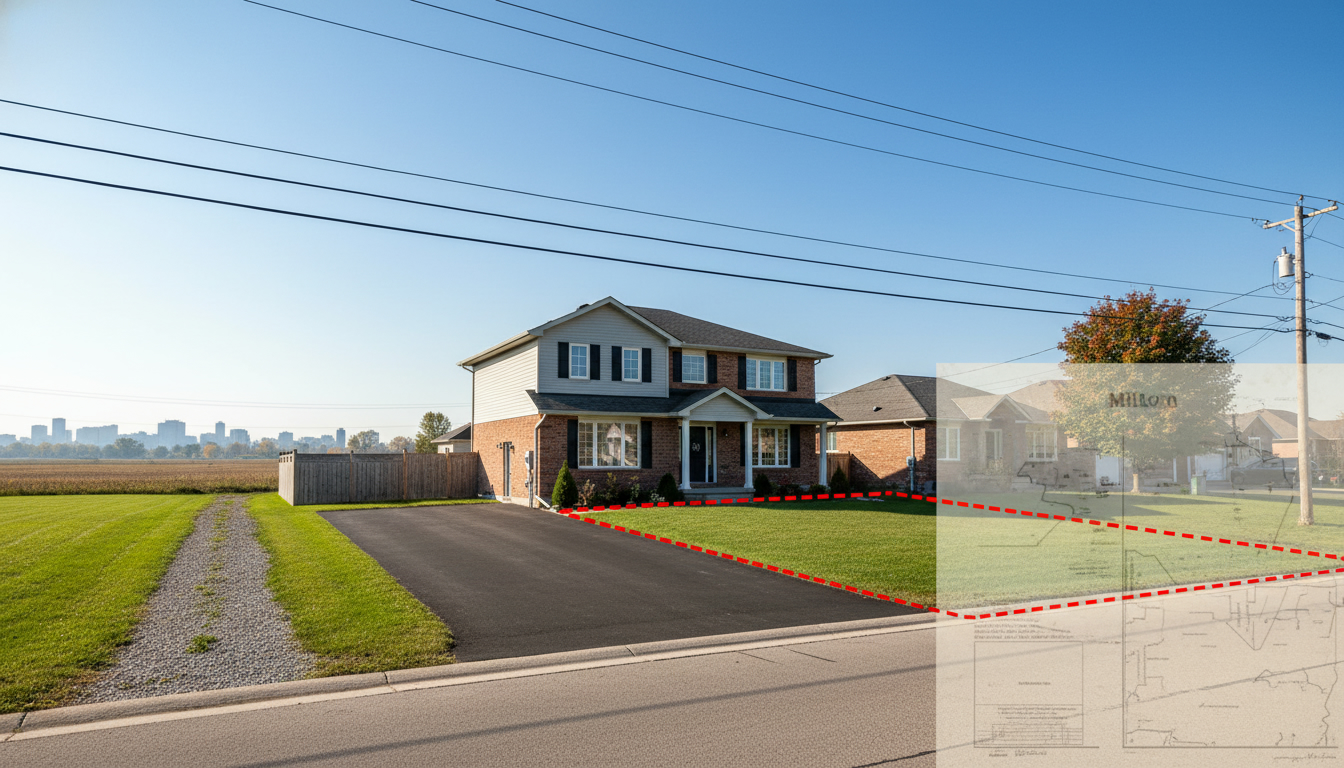
An easement is a legal right that gives someone limited use of land owned by someone else. The land stays in your name. But the easement grants another party the right to do something on — or stop you from doing something to — that portion of land.
Types of easements you’ll see in Milton:
- Right-of-way (pedestrian or vehicle access across a lot)
- Utility easement (hydro, gas, water, sewer lines)
- Conservation or municipal easement (restrictions for environmental protection or road allowances)
- Easement by necessity (access for a landlocked parcel)
- Easement by prescription (longstanding use that becomes legal)
- Easement appurtenant (benefits a neighboring property) vs. easement in gross (benefits a person or company)
How easements are created in Ontario
- Express written agreement and registered on title at the Land Registry / Ontario Land Titles.
- By statute or municipal by-law (ex: road allowances).
- By necessity or prescription through court decisions.
If an easement is registered on the title, it’s visible on the Parcel Register. Unregistered rights can also exist, but they’re riskier to rely on.
How an easement affects property ownership — the practical impact
- Use limits: You may be barred from building, landscaping or using part of your yard.
- Value: Homes with burdensome easements often sell for less. Some easements have minimal impact; others kill development potential.
- Sale and financing: Lenders review title. Major easements may affect mortgage approval or require disclosure and special conditions.
- Maintenance and liability: Easement agreements can allocate maintenance duties and liability. Who fixes the road? Who insures the buried pipe?
- Marketability: Clear, registered easements with defined terms are easier to sell than ambiguous ones.
In short: Your deed says you own the land, but the easement defines who can use it and how.
Milton-specific issues to watch for
- Older farm properties converted into residential lots often carry legacy easements for access, drainage, or shared services.
- New subdivisions in Milton may have utility corridors or communal access routes registered against individual lots.
- The Town of Milton and Halton Region hold easements for stormwater management, road widening, and services. These show up when you pull the parcel register or municipal drawings.
- Conservation Halton or Niagara Escarpment rules can produce environmental easements or restrictions.
- Hydro One, Enbridge Gas, and local utilities commonly register easements in gross for lines that cross private lots.
Local tip: When a listing in Milton mentions “easement,” ask for the instrument number and the parcel register. Don’t rely on a vague MLS note.
What to do before you buy or sign
- Always insist on a full title search and certified parcel register from the Land Registry Office.
- Read the easement instrument word-for-word. It tells who benefits, what they can do, and who pays for maintenance.
- Order a current survey or reference plan. Confirm physical boundaries and the actual location of any access or utility lines.
- Get a real estate lawyer experienced in Milton and Halton Region. They’ll confirm enforceability and advise on negotiations.
- Consider title insurance that covers undisclosed or mistaken easements.
- If the easement is negotiable (some are), negotiate indemnities, maintenance responsibilities, or even buy-out options.
For sellers in Milton: how to protect sale value
- Disclose all easements early. Surprises slow or sink deals.
- Provide copies of the easement instruments and the survey to the listing agent and prospective buyers.
- If an easement is causing value loss, document maintenance and usage history to show it’s not burdensome.
- Work with your lawyer to explore modification or extinguishment if feasible—municipal or court applications can sometimes alter old easements.

Renovations, building, and permits
An easement can block a backyard addition, garage, fence or pool. Before you invest:
- Verify setback and easement lines with a survey.
- Contact the holder of the easement (municipality or utility) to get consent in writing.
- Confirm the permit office in the Town of Milton will accept plans that intersect an easement.
Don’t assume “it’s only a small strip.” One poorly placed foundation can trigger legal disputes and removal orders.
Common negotiation moves that work in Milton
- Buy-back or release: Offer money to remove or relocate an easement when feasible.
- Maintenance agreement: Allocate upkeep and split costs to limit buyer concern.
- Time-limited exclusivity: Convert vague rights into defined, limited-use windows.
- Insurance-backed indemnity: Seller or developer provides insurance to protect buyer against the easement holder’s claims.
These moves require lawyers and, sometimes, municipal approval. They often pay off by restoring value.
How your agent and lawyer should handle easements
- Your agent must flag easements in MLS, request documents, and explain buyer impact in plain terms.
- Your lawyer must pull the land registry, read the instrument, advise on enforceability and title issues, and help negotiate releases or indemnities.
A local expert who knows Milton’s municipal patterns and the typical utility players will spot trouble faster and close deals cleaner.
Quick checklist before you sign
- Parcel register pulled within 30 days
- Current survey or reference plan
- Copy of the easement instrument(s)
- Written confirmation of who maintains and insures the area
- Title insurance quote that lists easement risks covered
- Lawyer’s written opinion on marketability and financing impact
If any item is missing—delay the transaction until you have it.

Why experienced local representation matters
Easements are legal documents and local practice matters. The Town of Milton, Halton Region, utility companies and conservation authorities each have their own procedures. A specialist who closes deals here regularly will know the standard language, typical restrictions, and which easements are harmless versus deal-killers.
If you want a quick consult on a Milton property, you need someone who knows the local land registry patterns, municipal files, and developer practices. That’s the difference between buying a house and buying a future legal problem.
Contact for Milford area property advice and closing help:
- Tony Sousa, Broker
- tony@sousasells.ca | 416-477-2620 | https://www.sousasells.ca
(Ask for a title checklist and sample easement questions to give to your lawyer.)
FAQ — Easements & Property Ownership in Milton, Ontario
Q: How do I find out if my Milton property has an easement?
A: Order a parcel register and certified copy of the deed from the Ontario Land Registry (Land Titles). Review the registered instruments. Ask your local real estate lawyer to interpret them and order a current survey.
Q: Can an easement stop me from building a deck or garage?
A: Yes. If the easement covers the area you plan to build, the holder’s rights will limit or prevent construction. Get written permission from the easement holder and municipal approval before you build.
Q: Are easements always registered?
A: No. Some rights arise by long use (prescription) or necessity and may not be registered. Unregistered rights are harder to enforce or defend; title insurance and legal advice are crucial.
Q: Will an easement affect my mortgage application in Milton?
A: Lenders review title. A standard utility easement usually isn’t a problem. A restrictive or ambiguous easement that affects access, use or marketability can complicate mortgage approval.
Q: Can I remove an easement?
A: Sometimes. Removal usually requires the agreement of the easement holder or a court order. Municipal easements and utility easements are harder to remove. Legal counsel will advise on the cost and likelihood.
Q: Who maintains an easement area?
A: The easement instrument often states maintenance responsibility. If it doesn’t, the owner may bear maintenance unless the holder assumes it. Clarify this before buying.
Q: Are there local Milton resources to check easements?
A: Yes. Town of Milton Planning and Building Services, Halton Region GIS and land files, Conservation Halton for environmentally sensitive areas, and the Ontario Land Registry for title documents.
Q: Should I get title insurance for a house with an easement?
A: Yes. Title insurance can protect against undisclosed or incorrectly registered easements. Read the policy exclusions carefully.
Q: What if a neighbour claims a right-of-way but there’s nothing on title?
A: This could be a prescriptive easement. A lawyer will review evidence of long-term use, notices, and historical records to evaluate the claim.
Q: How common are easements in Milton?
A: Quite common. Rural-to-suburban transitions, legacy farm access routes, and utility corridors make easements frequent in Milton and across Halton Region.
Make no mistake: an easement can be a minor note on a title or a legal barrier that kills your plans. Get the facts early, pull the right documents, and use local experts.
If you need a clear opinion on a Milton property, get a focused consultation. I coordinate title searches, surveys and legal contacts to remove surprise risk. Reach out: tony@sousasells.ca | 416-477-2620