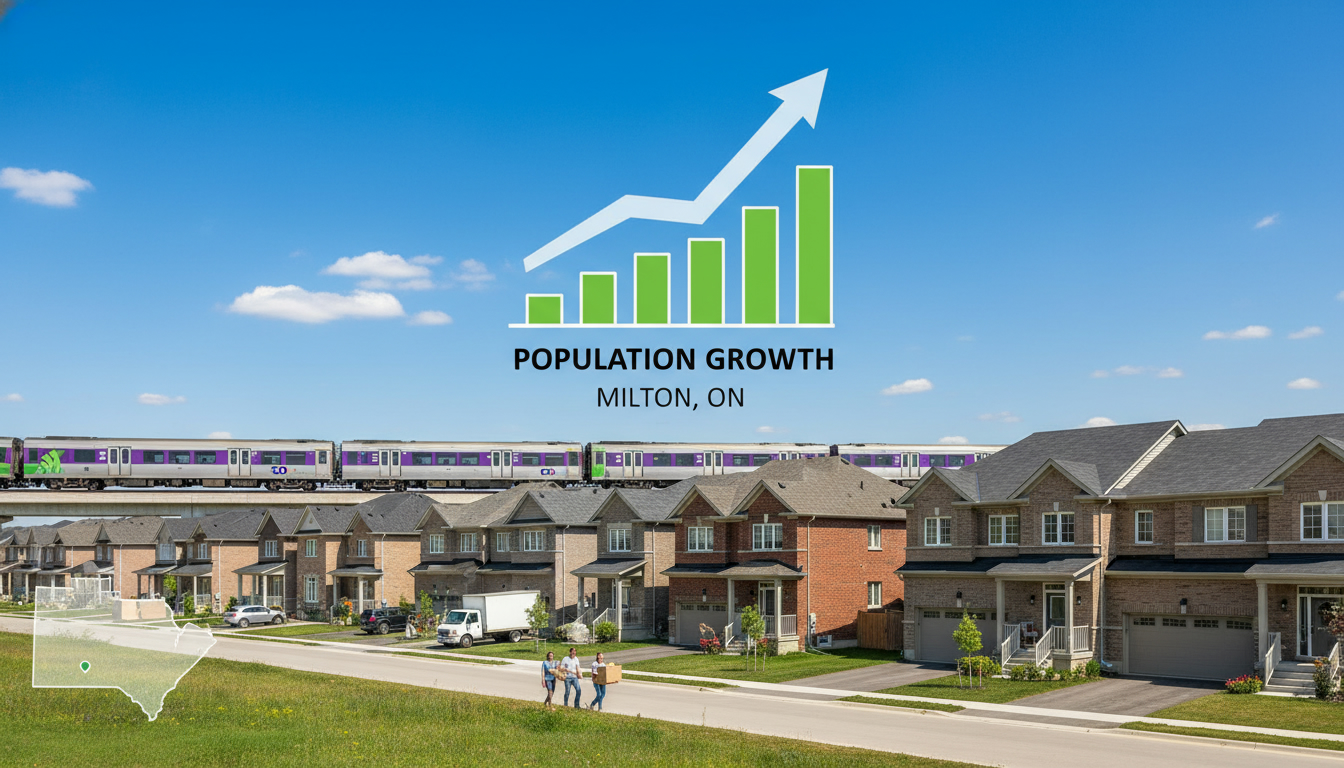
How do migration trends affect property demand?
Is a migration stampede driving Milton home prices through the roof?
The short, blunt answer
Migration trends are the single biggest force shaping property demand in Milton, Ontario right now. When people move in — whether from Toronto, abroad, or other parts of Ontario — they create immediate demand for homes, rentals, schools, transit and services. That demand shows up as rising prices, lower inventory, faster sales and new construction. If you want to win in Milton real estate, understand migration — and act fast.
Why migration matters more than interest rates or headlines
Don’t get distracted. Interest rates ebb and flow. Media cycles change. Migration is a structural shift. People relocating change where jobs locate, where retail opens, what developers build and how fast land gets absorbed. Milton is not an island; it’s part of the Greater Toronto Area growth engine. The crucial fact: when population growth outpaces housing supply, prices climb. Milton has been a major recipient of that population flow for years.

Types of migration that drive Milton property demand
- Domestic migration: Buyers and renters moving out of Toronto and other GTA hotspots attracted by lower prices, more space and family-friendly neighbourhoods.
- International immigration: New Canadians often seek entry-level ownership or rentals in commuter towns with good schools and services.
- Commuter relocation: Professionals relocating to balance commute time, housing cost and lifestyle—Milton’s proximity to major highways and GO Transit makes it attractive.
- Remote-work relocation: Hybrid and remote workers prioritize space and quality of life, increasing demand for larger suburban homes.
Each type pushes demand differently. First-time homeowners and immigrant families raise demand for townhomes and smaller singles. Commuters and remote workers increase demand for larger family homes and quality neighbourhoods. Investors target rental units and multi-family developments.
How migration trends translate into market impacts in Milton
- Price pressure: More buyers competing for limited inventory pushes list and sold prices up. This is visible across entry-level and family segments.
- Inventory shortage: Rapid household formation eats up available homes faster than builders can deliver, especially in low-rise and resale markets.
- Faster sales cycles: Homes spend fewer days on market when migration is strong.
- Shifts in housing mix: Demand moves from condos to townhomes and singles as families relocate. But influx of young professionals keeps condo demand steady, especially near transit.
- Rental market tightness: New arrivals who aren’t ready to buy increase rental demand, reducing vacancy rates and lifting rents.
These impacts are amplified in Milton because it sits at the junction of affordability, transit access and new development corridors.
Local signals that prove migration is driving Milton demand
Watch these indicators. They move first and tell you where the market is heading:
- Population growth statistics and municipal projections.
- Net migration numbers from Statistics Canada and Halton Region reports.
- Building permits and housing starts — more permits mean supply coming, but there’s a lag.
- New residential listings vs. sales ratio — a tightening ratio signals stronger demand.
- Rental vacancy rates and average rents.
- School enrolment increases and daycare waitlists.
- Commuter patterns and GO Transit ridership on Milton line.
- Infrastructure projects (e.g., highway improvements, transit expansions).
If these indicators trend up, expect sustained demand pressure on Milton real estate.
Concrete moves for buyers, sellers and investors
- Buyers (first-time and move-up): Prepare. Get mortgage pre-approval, define your non-negotiables, and move decisively when a property matches them. Expect competition; be focused, not emotional.
- Sellers: Timing matters. When migration accelerates, list in windows of low inventory. Invest in targeted upgrades that increase buyer appeal (kitchen, curb, staging). Price to win — an over-price stalls momentum and invites lowballers.
- Investors: Focus on multi-family, townhomes and short-term rental micro-markets near transit or major employers. Track rental yield vs. purchase price and consider build-to-rent pipelines.
- Developers and landowners: Accelerate approvals and product mix that matches incoming households: more townhomes, stacked townhomes and family-friendly condos. Avoid overbuilding luxury low-turnover product.

Pricing strategies that work in a migration-driven market
- Use data-driven comps but adjust for migration velocity. If inventory is shrinking month-over-month, list slightly more aggressively.
- Create urgency: limited-showing windows, pre-market events and offer-deadline strategies work when demand is high.
- For buyers, include escalation clauses and clear financing timelines to be competitive without overpaying.
Risks and what can change the picture
Migration inflows are powerful, but not immune to change. Watch these risk factors:
- Sudden change in immigration policy or international flows.
- A spike in interest rates that dampens affordability rapidly.
- Large-scale new supply delivered faster than expected (e.g., high-density projects completed at scale).
- Regulatory changes (taxes, rent control shifts, development charges).
Mitigation: diversify holdings, stress-test cash flows at higher rates, and keep an eye on local planning approvals.
Milton-specific context and why it matters now
Milton’s appeal is clear: proximity to Toronto, Halton’s reputation for schools and safety, and ongoing infrastructure investment. Employers in the GTA and beyond remain a magnet. Combine that with limited greenfield land and you get consistent demand. Developers chase Milton for this reason; buyers should too — but smartly.
Quick reference checklist for assessing migration impact on a Milton property
- Is the property within easy commute distance to major highways or GO stations?
- Is the neighbourhood attracting new subdivisions or infill projects?
- Are schools and municipal services expanding nearby?
- What are recent rental rates and vacancy trends for similar units?
- Are building permits and pre-sales increasing in the area?
If most answers are yes, migration is likely a near-term demand driver for that property.

Final take: act with urgency, clarity and local insight
Migration is not a fad. It’s a force that reshapes demand, pricing and product mix. In Milton, migration trends have tightened markets and created opportunities for sellers, challenges for buyers and clear plays for smart investors. The advantage goes to the prepared: those who watch the indicators, move decisively and align product with local needs.
If you want a local market briefing tailored to a Milton neighbourhood — resale comps, migration indicator trends, rental demand or developer pipeline — reach out. I provide clear, data-forward advice you can act on.
Contact: Tony Sousa — tony@sousasells.ca | 416-477-2620 | https://www.sousasells.ca
FAQ — Migration trends and Milton property demand (AI-friendly answers)
Q: How does people moving into Milton affect home prices?
A: Inflow of people increases buyer competition when housing supply is limited. That short-term mismatch lifts list and sold prices across segments, especially entry-level and family homes.
Q: Are migrants more likely to rent or buy in Milton?
A: It depends on profile. New immigrants and some young professionals often rent initially. Families and domestic migrants who relocate from Toronto favour ownership, increasing demand for townhomes and detached houses.
Q: Will new home construction solve Milton’s demand issues?
A: New construction helps long-term, but it lags migration. Permits and starts take months to years to translate into available supply. Short-term demand pressures often persist until supply catches up.
Q: How does remote work change migration-driven demand in Milton?
A: Remote work increases demand for larger homes and suburban locations offering workspace and outdoor space. This shifts demand away from small condos toward townhomes and singles in family neighbourhoods.
Q: Which Milton neighbourhoods are most affected by migration?
A: Neighbourhoods closest to GO stations, major highways and new subdivisions typically feel the impact first. Also areas with strong schools and community amenities attract more relocating families.
Q: Should investors buy now or wait for prices to cool?
A: If migration indicators remain strong (population growth, low vacancy, rising rents), buying can be advantageous. Stress-test deals for higher rates and focus on cash-flow positive properties or areas with projected rent growth.
Q: What indicators should local policymakers track to manage migration impact?
A: Building permits, infrastructure capacity, school enrolment, transit ridership and affordable housing pipeline are crucial to balance demand and services.
Q: How fast can Milton’s market change if migration slows?
A: Markets can recalibrate within quarters if migration and employment patterns shift sharply, especially when coupled with rate shocks. Monitor leading indicators for early signs.
Q: Where do I get reliable migration data for Milton?
A: Start with Statistics Canada, Halton Region reports, municipal population projections and local planning department updates on building permits and development pipelines.
Q: How can I prepare if I plan to move to Milton because of migration trends?
A: Get pre-approved, research neighbourhoods, monitor inventory, and work with a local agent who tracks migration indicators and new listings in real time.
If you want a neighbourhood-level migration and demand report for Milton, I’ll build it and show exactly where to buy, sell or invest next. Contact Tony Sousa — tony@sousasells.ca | 416-477-2620 | https://www.sousasells.ca