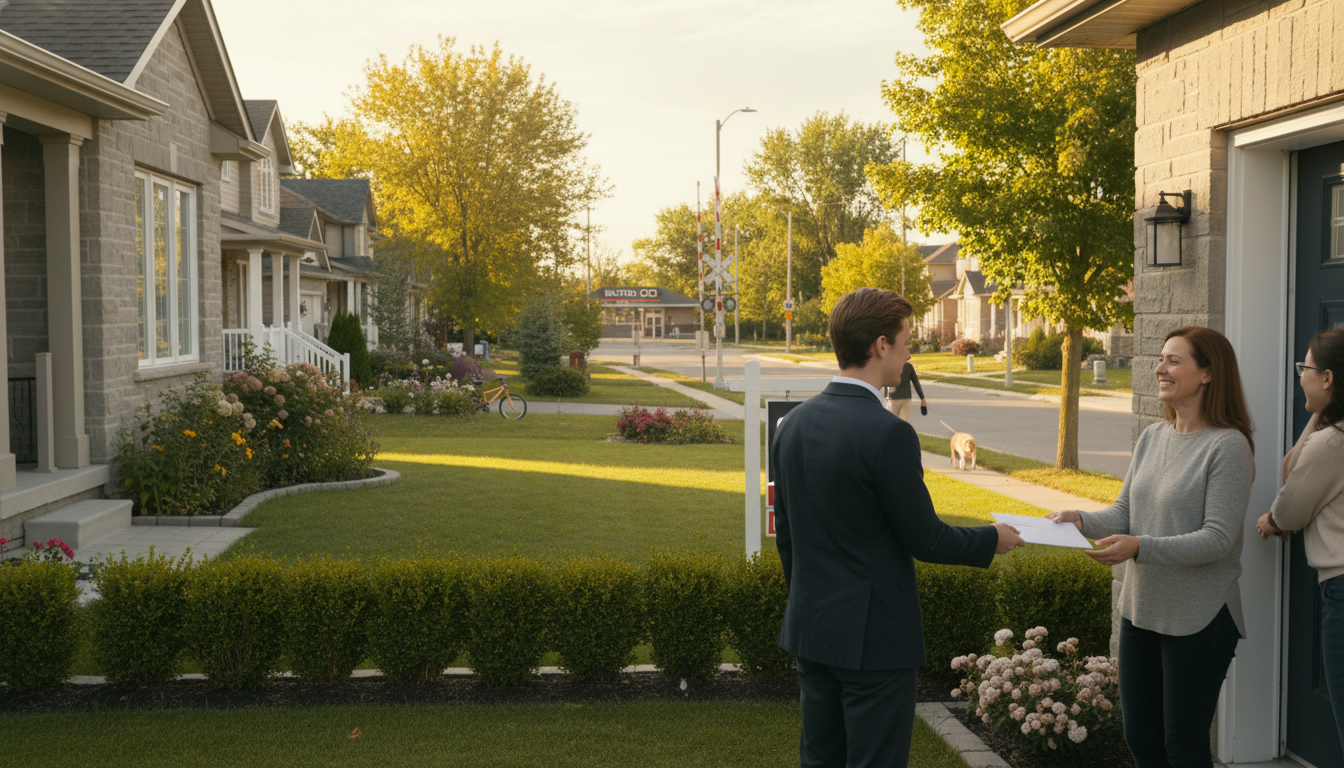
Should I include a personal letter with my
offer?
Should I include a personal letter with my offer? Read this before you write one — it can make or break your bid in Milton, ON.
Short answer: sometimes. But know exactly when and how.
If you’re buying in Milton, Ontario right now, you’re in a market where emotions meet competition. Homes near the GO, good school zones, or newer subdivisions draw more buyers than listings can handle. A clean offer backed by proof of funds and a strong deposit wins the checks-and-balance race. A personal letter wins the heart. Use both together, or don’t use the letter at all.
Here’s how to decide, how to write one that actually helps, and how to avoid legal and negotiation landmines.
Why a personal letter works — and why it sometimes hurts
- Sellers in Milton are often emotionally tied to their home. They raised kids here. They renovated. They remember neighbours. When a seller is attached, a letter that shows respect and intent can tilt a close decision.
- But letters can hurt when they reveal details that trigger bias or violate fair housing concerns. Don’t give the seller a reason to pick or reject you for anything other than the strength of your offer.
- Some listing agents will ignore letters because they want a clean auction. Others will read them carefully. Your agent should ask the listing agent the seller’s preference first.
Milton market realities you must factor in
- Commuter demand: proximity to Milton GO and Highway 401 makes many listings attract multiple offers. Speed and certainty beat sentiment if the seller needs a clean close.
- Seller type: empty-nesters and families often value a buyer who will care for the house. Investors or developers care only about price and terms.
- Inventory swings: when supply is low, emotional letters matter more. When supply grows, sellers focus on price and conditions.
If you’re bidding against multiple offers, your offer structure matters first. The personal letter is a multiplier — useful only when the seller is choosing between similar offers.

Checklist: Should you include a letter? Ask these questions first
- Has your agent confirmed the seller is open to letters? (Ask the listing agent.)
- Is your financial position solid? (Pre-approval, proof of funds, strong deposit.) If no, don’t rely on a letter to replace money.
- Is the seller likely emotionally tied to the home? (Long-time owners, family photos visible in photos, custom renovations.)
- Are you in a multiple-offer situation with similar terms? If yes, a letter can be the tiebreaker.
- Are you willing to remove conditions quickly? Some sellers prefer unconditional offers over sentimental letters.
If most answers are “no,” skip the letter.
How to write a personal letter that actually helps (template included)
Keep it short — 150–300 words. Use clear, non-personal, respectful language. Tone: grateful, focused, local.
Dos:
- Mention why you love the house (specific features: big backyard, bright kitchen, walkable street) rather than personal identity details.
- Promise practical care: quick closing, willing to accommodate a move-out date, commitment to maintain the property.
- Keep it Ontario-safe: avoid mentioning religion, family size, national origin, or protected characteristics.
Don’ts:
- Don’t plead or beg. Don’t reveal weak financing. Don’t disclose personal info that could be discriminatory.
- Don’t use the letter to explain an inferior offer.
Sample buyer letter — Milton-friendly
Dear Seller,
We toured your home and felt immediately at ease. The garden and large kitchen are exactly what we’ve been searching for. We love how close the GO station is and how peaceful the street looks — we can picture weekend coffee on the back deck.
We are fully approved and ready to close on the date you prefer. We intend to care for the home and honour the renovations you’ve made. We hope you’ll consider our offer.
Thank you for your time and for maintaining such a beautiful home.
Sincerely,
[Buyer Name]
Use the template, but personalize only the features of the house, not the buyers.
How to pair the letter with a winning offer strategy
- Price and terms first: your offer must be competitive. A letter won’t overcome a weak price in a bidding war.
- Proof of funds and mortgage pre-approval should be attached to the offer.
- Bigger deposit and shorter subjects increase appeal. Consider a higher irrevocable period in hot markets.
- Escalation clauses can work in tight markets, but get legal and agent input before using one.
- If the seller wants a quick close, match it. Timeframes beat sentiment in many Milton deals.
Work with a local negotiation expert — why it matters
Milton’s neighbourhoods behave differently. A letter that wins in Old Milton might be irrelevant in a new subdivision near Trafalgar. You need someone who knows where sentiment matters, where investors rule, and how listing agents in Milton react.
That’s not theory. That’s local knowledge. You want an agent who reads the seller’s signals, contacts the listing agent, and tailors the offer — letter included — to that specific seller’s priorities.

Legal and fair housing cautions — play it smart
- In Ontario, you must avoid content that could introduce human rights risk. Do not reference protected characteristics (race, religion, family status, disability, gender, or age).
- If in doubt, have your agent or lawyer review the letter. Simple, neutral wording protects you and keeps the focus on the house.
- Some agents and sellers prefer no letters to avoid bias claims. Respect that choice.
When a letter is essential
- The home shows signs of emotional attachment: family photos, custom features, gardening. These sellers care about legacy.
- Offers are otherwise identical on price and conditions.
- The seller’s agent confirms they will present personal notes to the seller.
In these cases, a short, professional, property-focused letter can swing a deal.
When to skip the letter
- The seller is an investor or quick-flip developer.
- The market is hot and the seller prioritizes price and unconditional terms.
- The listing agent says “no letters.”
If the seller says no, don’t waste time. Use the leverage where it counts: better terms, higher deposit, stronger financing evidence.
Real examples — what worked in Milton
- Family home in a school zone: buyers included a letter referencing the park and schools (no personal details). Seller picked them because the offers were equal and the seller wanted the home cared for.
- Newer subdivision near GO: letter ignored. Investor seller took the highest price.
- Detached home with garden: short letter focused on the garden and care won over a marginal price difference.
These patterns repeat: letters matter when sellers are emotional. They don’t matter when sellers are transactional.
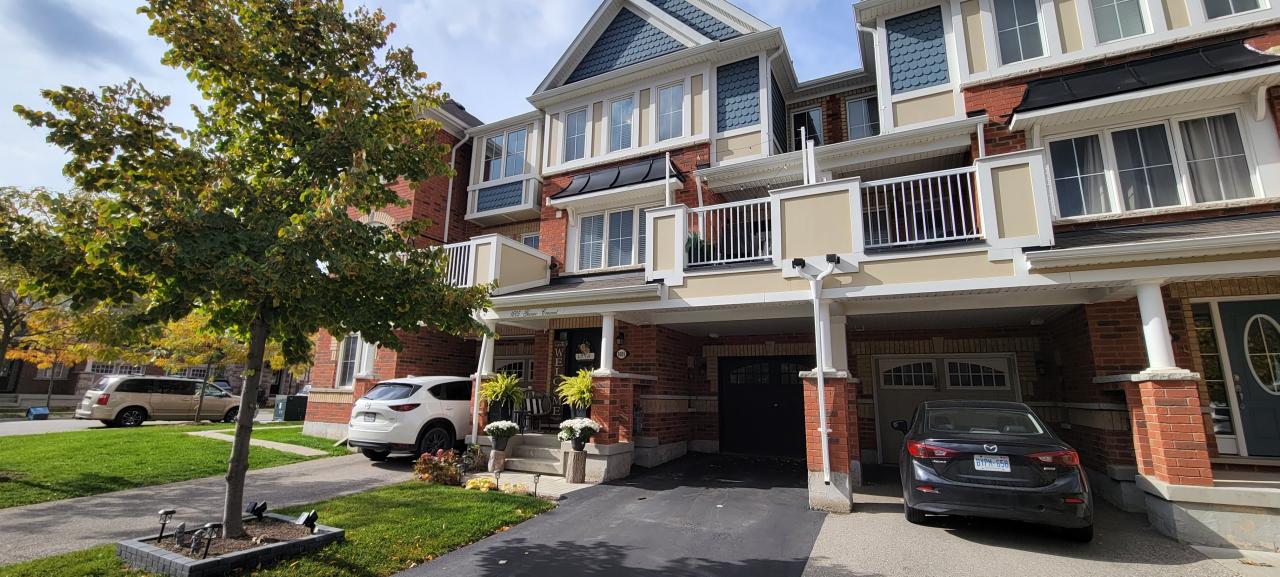
Rapid checklist for buyers in Milton
- Confirm listing agent’s stance on letters.
- Attach pre-approval and proof of funds.
- Offer clean terms: strong deposit, reasonable closing date.
- If letter helps, keep it short, property-focused, and non-discriminatory.
- Work with a Milton negotiation expert to present the package.
Final verdict
Include a personal letter only when it adds to an otherwise competitive, solid offer. In Milton, the letter can be the tiebreaker — but it’s never a substitute for strong terms, financing, or a smart negotiation strategy.
If you want the letter to help, it must be surgical: short, specific, and paired with evidence of ability to close.
FAQ — Offers, Negotiation, and Personal Letters in Milton, ON
Q: Will a personal letter legally influence a sale in Ontario?
A: A letter can influence a seller’s decision. Legally, it’s allowed, but you must avoid discriminatory content. Consult your agent or lawyer for clarity.
Q: Can a seller be sued for choosing an offer based on a personal letter?
A: Lawsuits are rare. The greater risk is human rights exposure if selection is based on protected characteristics. Sellers and agents avoid those issues by focusing on non-protected reasons.
Q: Should I mention my family or children in the letter?
A: No. Avoid family or demographic details. Focus on the home: features you appreciate and your plans to care for it.
Q: Does a letter help in Milton’s high-demand neighbourhoods?
A: Only if offers are otherwise similar and the seller is emotionally attached. In investor-driven offers, letters rarely matter.
Q: How long should the letter be?
A: 150–300 words. Short, specific, polite.
Q: What if the listing agent says ‘no letters’?
A: Respect it. Redirect effort to better price, deposit, or subject removal strategies.
Q: Can a Realtor present my letter in a way that looks biased?
A: Presenting a letter is standard practice. A good Milton Realtor will present it professionally, alongside the financials and terms.
Q: Should I include personal photos?
A: No. Photos increase risk of bias and rarely add value.
Q: Who should I talk to for local negotiation strategy?
A: Work with a Milton negotiation expert who knows local listing agents and buyer patterns.
If you want a bulletproof offer strategy tailored to Milton — and a tested letter that won deals without legal risk — contact Tony Sousa. Tony knows which sellers in Milton respond to sentiment and which respond only to cash and terms. Email: tony@sousasells.ca | Call: 416-477-2620 | https://www.sousasells.ca
Need a custom letter? Ask for a proven template based on your specific property and the seller type. Get it right once and win the house.