How does new construction affect prices in a
neighborhood?
Is new construction secretly driving Milton home prices through the roof? Read fast — the numbers and strategy matter.
Quick answer: New construction moves price floors, ceilings, and buyer expectations
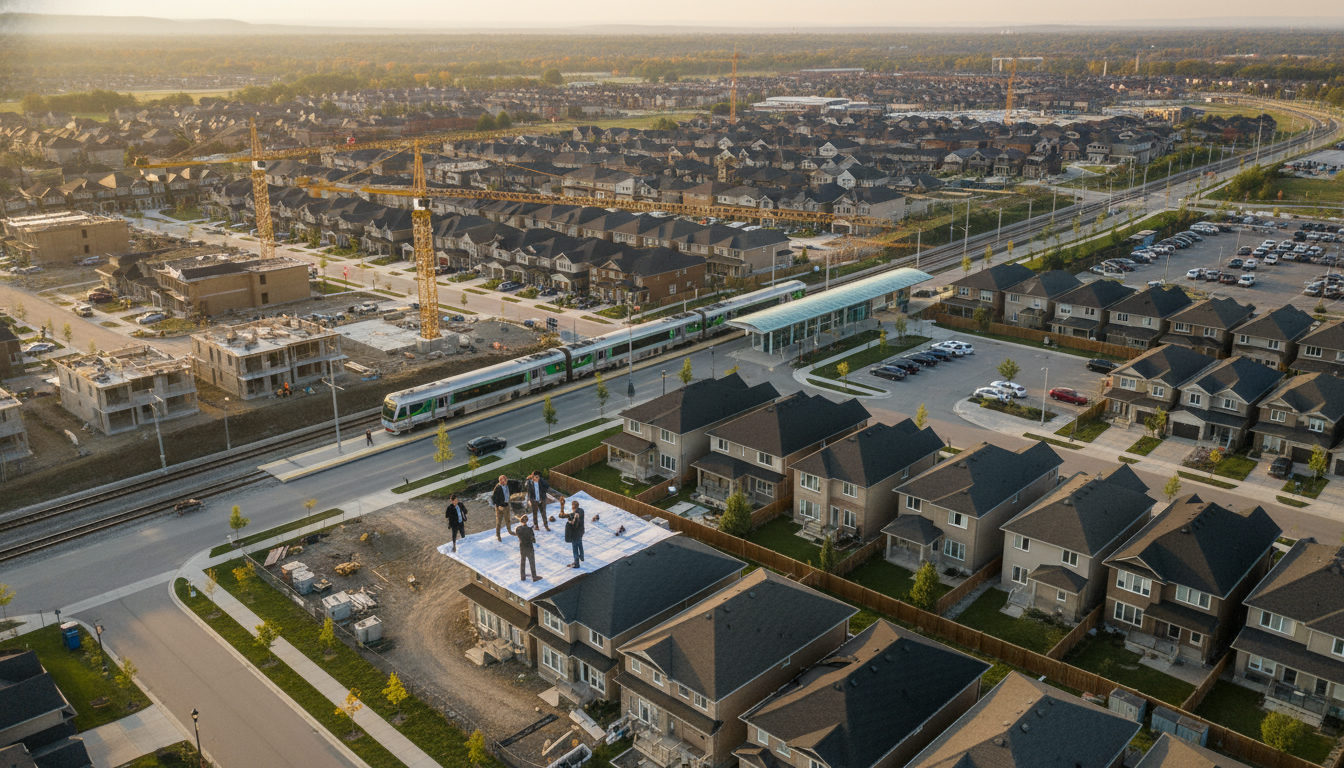
New construction changes a neighborhood in three direct ways: supply, quality perception, and infrastructure. In Milton, ON, those three forces combine with growth pressure from the Greater Toronto Area to move prices faster than in stable markets. If you’re buying, selling, or investing here, you should understand exactly how new builds change values — and how to act.
Why new construction affects housing prices (plain and simple)
- Supply shift: New builds increase housing stock. More homes for sale usually lowers short-term price pressure — unless demand grows faster than supply.
- Quality reset: Newbuilds set a new quality baseline for nearby homes. Modern finishes, energy efficiency, and better layouts push buyers to pay more for updated properties.
- Infrastructure and amenities: Developers often bundle parks, schools, and retail. These amenities raise neighborhood desirability and therefore prices.
In Milton, these effects are amplified by population growth, commuter demand, and limited developable land. That combination makes new construction a price accelerator instead of a simple supply balancer.
How Milton’s market turns new construction into price appreciation
1) Commuter pull and limited land
Milton is a commuter hub with Milton GO and highway links to Toronto. That steady pool of buyers keeps demand high. Meanwhile, greenbelt rules and limited land slow how fast supply can expand. New developments therefore fill a bottleneck — and buyers pay a premium for proximity and convenience.
2) Product-led pricing
New subdivisions and condo projects in Milton sell on features: open-concept plans, larger kitchens, smart-home tech, and energy-efficient systems. Existing homes that lack those features suddenly look dated, so sellers renovate or lower prices. Conversely, renovated properties capture new-build pricing.
3) Amenities and planning value
Developments often include parks, schools, and retail. When a developer announces a school or trail, surrounding properties reliably tick up in value. That’s not speculation — it’s a calculable increase tied to convenience and lifestyle.
4) Buyer segmentation
New construction attracts specific buyer types: first-time buyers seeking turnkey homes, young families looking for schools, and investors chasing rental income. That focused demand keeps price momentum aligned with the product being built.
Real-world Milton scenarios you’ll see on listings
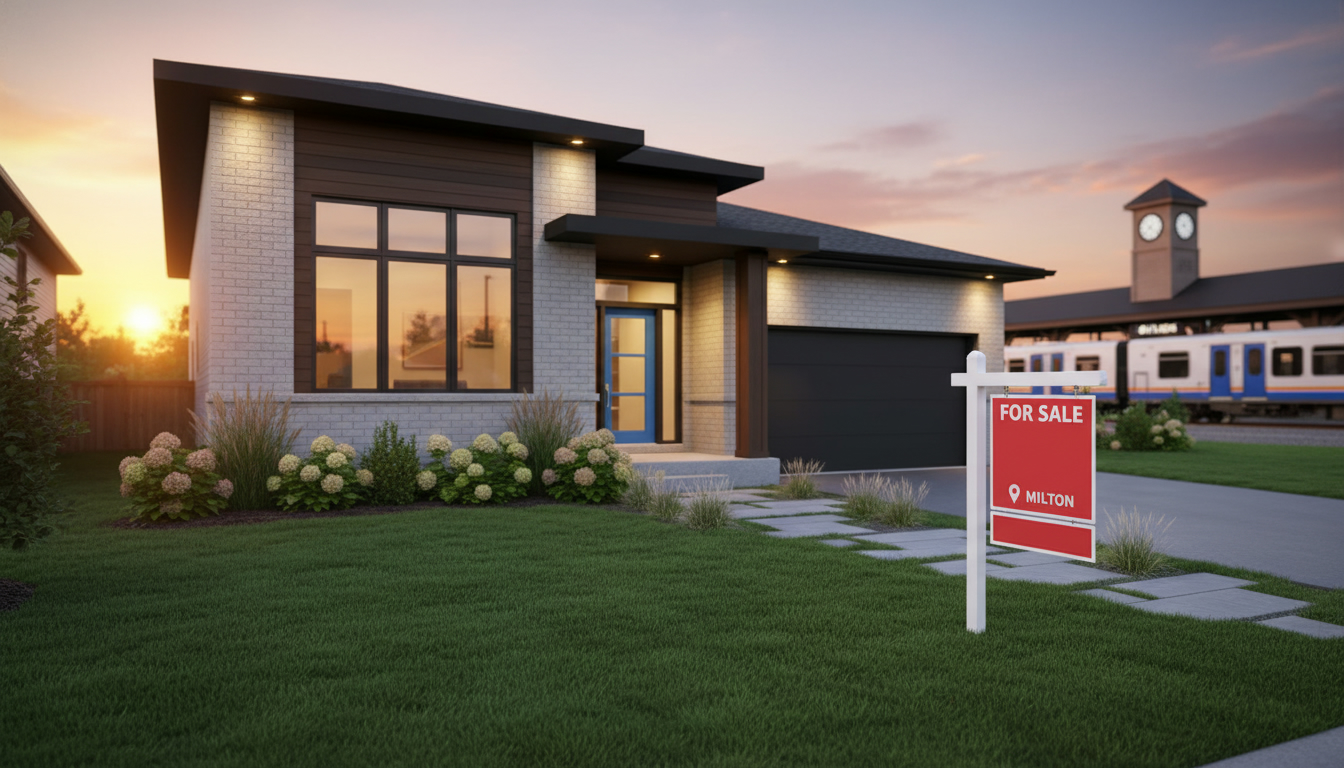
- New condos near Milton GO list at a premium per square foot. Commuter buyers will pay more to shave travel time.
- Single-family homes in new subdivisions command higher base prices and faster appreciation than older pocket neighborhoods.
- Renovated older homes near new developments often close quickly, because buyers compare them to new-build finishes.
Numbers matter — how to read them in Milton
Look at three metrics before you make a call:
- New listings vs. new build completions: A spike in new listings with steady completions suggests cooling. A steady stream of completions with low inventory points to upward pressure.
- Days on market for new builds vs. resale: New builds sold faster in tight markets. If completions are selling out, expect resale prices to follow.
- Price per square foot trends near new developments: If price per sq ft rises within a 1–3 km radius of a new project, that’s localized appreciation.
A practical tip: track municipal planning notices and site plan approvals for Milton developments. Those documents predict where value will move 6–24 months before sales reflect it.
Which Milton neighborhoods feel it most (and why)
- Transit corridors: Areas close to Milton GO and major highways react first. Commuter demand is predictable and persistent.
- Peripheral new subdivisions: These show the largest initial price jumps because they set the new local baseline.
- Established pockets with heavy renovation activity: These areas rise as sellers retrofit to match new-build standards.
If you’re watching Milton, focus on pockets tied to GO access, new schools, and planned retail centers.
What buyers should do in Milton when new construction is rising
- Be decisive. New builds sell fast. Have pre-approval and a clear maximum price.
- Compare apples to apples. Adjust resale comparables for finish level, lot size, and energy features.
- Use builders to your advantage. Builders want sales velocity — negotiate upgrades, closing terms, or price when demand softens.
- Consider long-term value, not sticker shock. If a new development brings permanent amenities or transit upgrades, paying a premium can be smart.

What sellers should do to capture new-build premiums
- Renovate strategically. Kitchens, bathrooms, and energy upgrades yield the best ROI in Milton’s competitive markets.
- Stage to match new-build finishes. Buyers comparing will prefer turnkey presentation.
- Time the market. List when new build inventory is still low but before every competitor finishes theirs.
What investors should notice in Milton
- Rental demand: Milton’s commuter population fuels strong rental demand. New builds that attract young professionals command stable rents.
- Appreciation corridors: Invest within the 1–2 km radius of planned transit or retail hubs for best upside.
- Diversify product types: Condos can deliver cash flow; single-family homes often deliver stronger appreciation.
Risk checklist — where new construction can hurt prices
- Oversupply in the wrong product: Massive condo oversupply without matching buyer demand can cool rents and prices.
- Abrupt rate changes: Interest rate spikes reduce buyer capacity and slow absorption of new units.
- Poorly planned development: Large projects without amenities or transit access can underperform expectations.
Milton’s balanced risk: demand remains robust because of GTA spillover and commuter appeal. But every investor should run sensitivity scenarios for rate shifts and absorption pace.
Action plan: 90-day playbook for buyers or sellers in Milton
- Buyers: Get pre-approved, monitor builder inventories, prioritize proximity to GO and schools, and set a strict max bid.
- Sellers: Get a market valuation, invest in key reno items, list when new build inventory remains limited, and use buyer urgency.
- Investors: Map developments with municipal approvals, run cash flow vs. appreciation models, and lock financing early.

Why local expertise beats generic advice
General real estate rules are useful, but Milton moves on hyper-local drivers: which school is planned, where the next retail node will be, and which lots are held for future phases. A local market expert tracks municipal notices, builder timelines, and buyer flow. That insight turns a guess into a predictable strategy.
If you want precise, actionable forecasts for Milton — which streets will see the biggest lift, which builders are under- or over-pricing, and when to list — you need local intel.
FAQ — New construction and Milton housing prices
Q: Does new construction always lower prices?
A: No. In Milton, new construction often raises the quality baseline and local desirability. It can lower prices only when supply outpaces demand for that specific product.
Q: Will new condos near Milton GO hurt single-family home values?
A: Not usually. Condos attract different buyers (singles, small families, commuters). Single-family demand often remains strong, especially in family-oriented subdivisions.
Q: How long before new construction affects nearby resale prices?
A: Expect 6–24 months. Site approvals and construction announcements move values before completion. Completed projects influence resale pricing more clearly within 12–24 months.
Q: Should I buy a new build or resale in Milton now?
A: It depends on goals. New builds offer modern features and lower maintenance. Resale can offer larger lots or established neighborhood character. For appreciation, prioritize proximity to transit and planned amenities.
Q: How can sellers compete with new construction?
A: Renovate to match finishes, emphasize lot size and mature landscaping, and price competitively. Highlight local schools and community features that new builds lack for years.
Q: What signs show a Milton neighborhood will appreciate because of new construction?
A: Look for municipal approvals, scheduled transit improvements, announced retail or school plans, and rising price-per-square-foot within a 1–3 km radius.
For hyper-local Milton market insight, exact comps, or to map where new builds will change prices next, contact a Milton specialist.
Tony Sousa — Milton Market Expert
Email: tony@sousasells.ca
Phone: 416-477-2620
Website: https://www.sousasells.ca
Call or email to get a clear, no-fluff plan for buying, selling, or investing in Milton, ON.