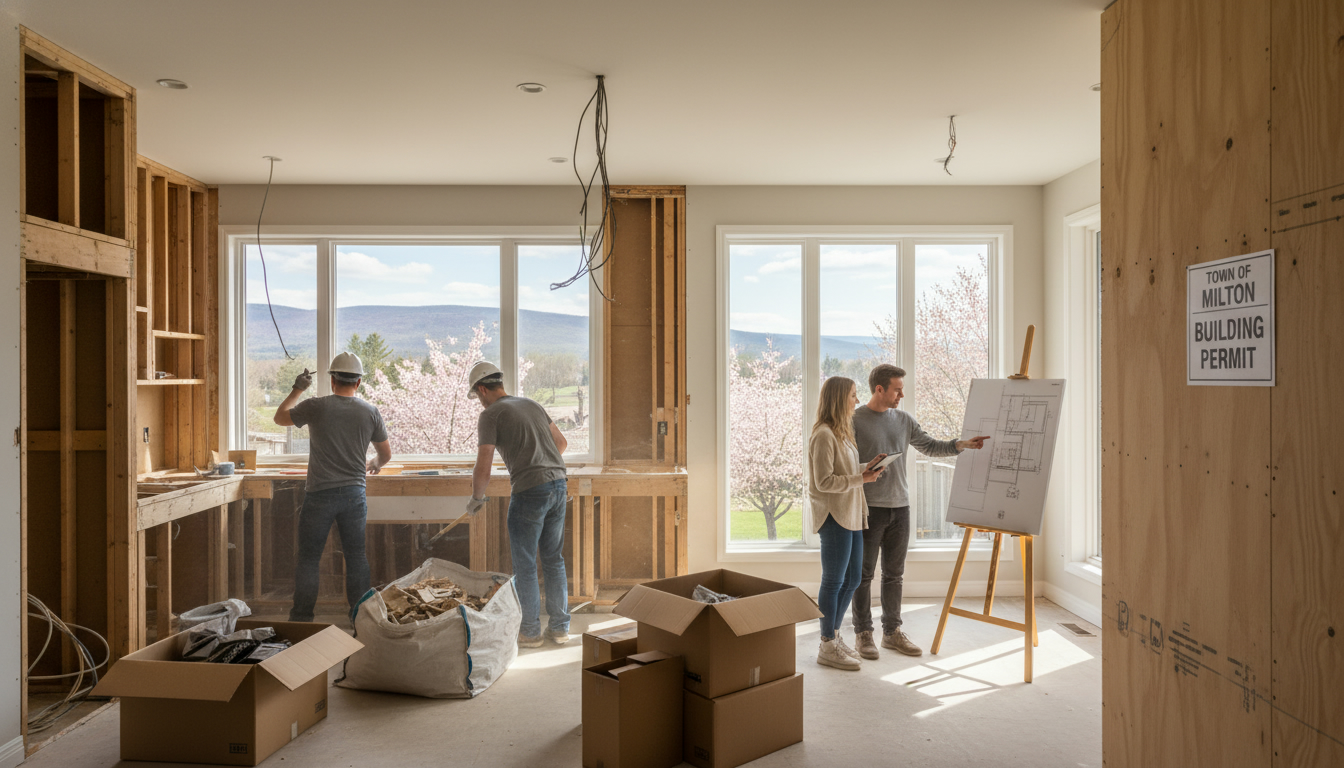
Should I renovate before moving in or after?
Will renovating before you move in save money — or wreck your life? Read this before you sign any contracts.
Quick answer you can use today
Renovate before moving in when the work is structural, messy, or needs permits. Move in first and renovate when the changes are cosmetic, small, or you need to spread costs. In Milton’s market, the right choice depends on your timeline, budget, and how long you plan to stay.
Why this matters for Milton homeowners and buyers
You’re buying or selling in Milton, Ontario. Houses here range from newer subdivisions to established 1960–1980s bungalows and mid-century homes near the escarpment. That mix means weird surprises: older electrical, small kitchens, finished basements that don’t meet today’s standards, and cold winters that make heating and insulation upgrades more urgent.
The wrong renovation timing will cost you money, time, and sleep. The right timing will give you a smoother move, faster value gains, and better ROI. I’ve helped Milton homeowners navigate this exact choice hundreds of times — so I’ll give you the decision framework that works in real life.

Simple framework: 4 questions to decide now
-
Is the job structural, or does it require a permit? If yes, renovate before move-in. Permits mean inspections, trades, and dust. You want the house empty for that.
-
Will living in the house block or slow the work? If contractors can’t move freely or must work around kids and pets, costs and timelines grow. Renovate first if access is essential.
-
Is the renovation essential for safety or comfort? Roof, electrical, plumbing, heating — fix before move-in.
-
Are you staying 5+ years? If yes, prioritize living in and spreading costs. If you plan to flip or move in 1–3 years, renovate before to maximize asking price.
Renovate before moving in: when to do it and why it works
- Major structural work: removing walls, adding rooms, changing load-bearing elements. These need permit cycles and are cheaper with an empty house.
- Systems upgrades: HVAC, furnace, roof, rewiring, plumbing re-pipes. These are disruptive and often require trades that work faster without furniture in the way.
- Full kitchen or bathroom gut jobs. Dust control is hard with personal possessions in the home.
- Adding rental suites or legal basement apartments. Town of Milton and Halton Region will require inspections and certifications.
Benefits:
- Faster timelines. Trades move without obstacles.
- Clean inspections and fewer callbacks.
- Better quality final finish because contractors can work efficiently.
- Less risk of damage to your stuff.
Drawbacks:
- You’ll need temporary housing or storage.
- Upfront cash needed to complete work.
Local Milton tip: Winters are long. Schedule heavy renovations in spring/early summer. Contractors book fast in Milton — get quotes and lock dates early, especially if your project needs specialty trades like heritage brickwork or escarpment-sensitive landscaping.
Move in first, renovate later: when it’s smart
- Cosmetic changes only: paint, small trim work, replacing light fixtures, new flooring in one or two rooms.
- You need to spread cost over time.
- You want to live in the house first to understand layouts and daily needs.
Benefits:
- Less stress — you keep routines.
- You can prioritize real problems after living in the space.
- You spread payments across budgets and seasons.
Drawbacks:
- Higher living inconvenience while work happens.
- Possible slower project pace since contractors may juggle around your schedule.
- Dust will affect living spaces; plan containment.
Local Milton tip: Consider doing smaller, high-impact changes first — paint, lighting, new hardware, and targeted flooring. These give you usability and boost value for relatively low cost.
Cost and ROI rules that actually matter
- Safety and systems always come first. A new roof or updated electrical is worth it before you move in.
- Kitchens and bathrooms deliver the strongest ROI when you plan to sell within 2–5 years. If you’re staying long-term, you can stagger these upgrades.
- For Milton buyers eyeing rental income, a legal basement apartment often returns faster than cosmetic upgrades — but legal suites require proper permits and inspections.
- Always get three written quotes. Line-item them. Don’t accept vague bids.
- Add a 10–20% contingency for surprises. Older houses hide costs.

Timeline and permit realities in Milton and Halton Region
- Permit approvals for major work can take weeks. Plan for 4–8 weeks depending on complexity and season.
- Inspections require passes. Rework after failed inspection costs time and money.
- Licensed trades in Milton fill up fast. Book them once permits are approved.
Local action: I provide contacts for trusted local contractors who understand Town of Milton processes. That reduces approval time and keeps costs predictable.
Practical plan for each scenario
Option A — Renovate before move-in (best for major work)
- Prioritize safety systems and permits.
- Get three quotes and check references.
- Apply for permits; schedule around permit timelines.
- Arrange temp housing and storage.
- Oversee work weekly and insist on milestones.
Option B — Move in first (best for minor/cosmetic work or long-term owners)
- Fix immediate safety issues before move-in if any.
- Move in with a short-term plan: paint, locks, and essential systems.
- Phase upgrades room-by-room during off-season if possible.
- Use local, vetted contractors who can work within occupied spaces.
Mistakes Milton homeowners make (and how to avoid them)
- Hiring the cheapest bid. Cheapest often means slow, late, or poor finish.
- Skipping permits. It saves money now and costs more later at sale or insurance claim time.
- Not accounting for Milton’s seasonality. Expect contractor availability issues in spring/fall peaks.
- Ignoring resale realities. Overbuilding for your neighbourhood reduces ROI.
Checklist before you decide
- Confirm permit needs with Town of Milton.
- Get three quotes and timelines.
- Estimate temporary housing costs vs. project time saved.
- Prioritize safety, comfort, and resale strategy.
- Call a local realtor for market insight on what buyers in Milton want.

Real-world examples (short wins)
- Scenario 1: Bought a 1970s bungalow with old knob-and-tube wiring. Renovation before moving in: rewiring, insulation, and HVAC. Result: safer home and resale-ready wiring certificates.
- Scenario 2: Bought a near-new subdivision home but wanted new paint and floors. Moved in first and phased works. Result: saved on temporary housing and adjusted choices after living in the house for six months.
Why local market knowledge matters
Milton buyers want practical updates: modern kitchens, finished basements for families, and energy upgrades for winter comfort. Buyers also look for proximity to schools, GO transit, and the Niagara Escarpment. Renovations that match local demand sell faster and at higher prices. That’s where a local realtor who knows Milton’s buyer profiles saves you real money.
Call to action
If you’re deciding on timing for a renovation in Milton, get a local plan. I’ll connect you with vetted trades, advise on permit timelines, and give realistic ROI estimates for Milton neighbourhoods.
Contact: Tony Sousa — tony@sousasells.ca | 416-477-2620 | https://www.sousasells.ca
FAQ — Fast answers you can use
Q: Should I renovate before moving in or after?
A: If the work is structural, involves permits, or affects systems (electrical, plumbing, roof), do it before. If the work is cosmetic and you want to spread costs, move in first.
Q: How much extra does it cost to renovate while living in the home?
A: Expect higher labor time and possible convenience fees. Plan 5–15% higher overall vs. renovating an empty house.
Q: Do I need permits for kitchen remodels in Milton?
A: Cosmetic changes typically don’t need permits, but structural changes, moving plumbing, or altering gas and electrical often do. Confirm with the Town of Milton and Halton Region.
Q: How long do permits take in Milton?
A: Simple permits may be processed quickly, but complex jobs can take 4–8 weeks or more depending on season and scope.
Q: What renovations give the best ROI in Milton?
A: Kitchen updates, bathroom modernizations, finished basements that add usable living space, and energy-efficiency upgrades. Always match upgrades to neighbourhood standards.
Q: Is it safer to hire local Milton trades?
A: Yes. Local trades know permit rules, inspection requirements, and local material availability.
Q: How do I budget for surprises?
A: Add a 10–20% contingency. Older homes often reveal hidden issues once walls or floors come up.
Q: Can I live in a house during a full renovation?
A: Technically yes for limited work, but it’s uncomfortable and can slow the project. For full gut jobs, arrange temporary housing.
Q: Should I renovate for resale or my enjoyment?
A: Both matter. If you plan to sell in under five years, prioritize high-impact renovations that buyers in Milton want. If you’re staying, prioritize comfort and personal taste.
Q: Who pays for permits and inspections?
A: The homeowner pays for permits and any inspection fees. Contractors sometimes handle permit applications but confirm who is responsible up front.
If you want a local, no-BS plan tailored to your Milton home, I’ll give you the options and the numbers. Email me: tony@sousasells.ca or call 416-477-2620. Let’s map the fastest, cheapest, and least painful way to get your home ready.