Are there plans for new roads or highways
nearby?
Is Milton getting new highways nearby — and will your property shoot up in value?
Quick answer: Yes — improvements are coming. Here’s what to expect and why it matters.
Milton, Ontario isn’t a sleepy town anymore. It’s one of Canada’s fastest-growing communities. Growth drives traffic. Traffic forces planning. Planning creates new roads, widenings and strategic infrastructure upgrades. Those projects reshape commute times, development patterns, neighbourhood values and lifestyle choices. Read this if you own property in Milton, plan to buy, or invest in the area.
What’s already in place and why new roads are on the table
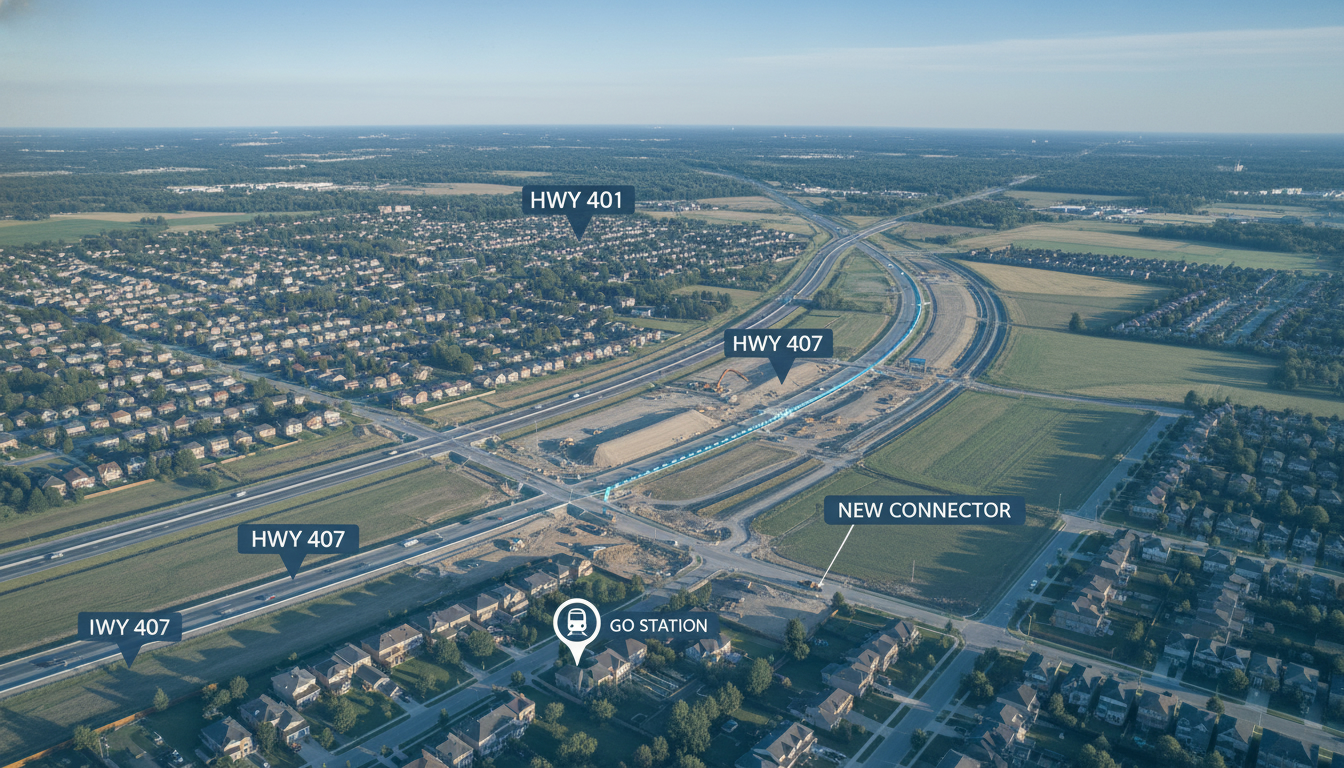
Milton sits at the western edge of the Greater Toronto Area (GTA). It’s anchored by major corridors: Highway 401 to the south and the 407/403 network to the east and south-east. The town also relies on the Milton GO rail corridor for commuter transit into Toronto. But the basics explain the push for more roads:
- Rapid population growth: Milton grew sharply over recent census cycles and continues to add tens of thousands of residents. That growth creates demand for new housing, retail, and roads.
- Development lands: New subdivisions and employment lands need access. Town and region planners add arterial roads and connector streets as communities are built.
- Commuter pressure: More residents equals longer peak traffic. Short-term fixes (turn lanes, traffic signals) are not enough. Strategic road widenings and new link roads are required.
That combination is why municipal, regional, and provincial planners regularly update transportation plans and capital budgets that include road projects affecting Milton.
Which projects to watch (what planners are saying)
Planning is done at three levels: Town of Milton, Halton Region, and the Province of Ontario. Each publishes transportation plans and capital projects. The most relevant project types for Milton are:
- Arterial road extensions and new collector streets within Milton’s growth areas. These are municipal projects that create new neighbourhood access and relieve local congestion.
- Regional road widenings and upgrades managed by Halton Region. These projects increase capacity on key east-west and north-south corridors that carry inter‑municipal traffic.
- Provincial highway improvements nearby (maintenance, targeted widenings, interchange upgrades) on major corridors like Highway 401 and 407.
- Transit-focused infrastructure: improvements to the Milton GO corridor, bus-rapid transit connections, and interchange designs that link transit with roads.
Town and Region documents and recent council capital budgets show consistent investment in these categories. Expect a steady pipeline of local roads and targeted regional upgrades over the next 5–15 years rather than a single headline-grabbing new provincial highway through Milton.

How these road projects affect Milton’s real estate market (data-driven logic)
1) Short-term construction can suppress buyer demand in affected pockets
When a major arterial is built or widened, nearby streets can be noisy and less accessible during construction. That can slow sales or produce bargain buys in adjacent pockets. These are time-limited effects; post-construction values typically rebound.
2) Long-term value uplift for well-connected properties
Properties near improved arterial links and new interchanges capture faster access to jobs and amenities. Faster and more reliable commutes expand a home’s effective market: a buyer willing to commute 15 minutes instead of 25 suddenly has more options. Studies in comparable GTA suburbs show that improved road connectivity can add a measurable premium — especially for suburban single-family homes and houses marketed to commuters.
3) Land value and development intensity increase near new connectors
When a new collector or arterial road opens up undeveloped parcels, developers move quickly. That means earlier servicing and development approvals, more housing supply, new retail nodes, and eventual increases in nearby rents and home prices.
4) Transit-road integration changes demand mix
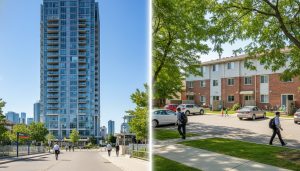
If road projects come with better GO access or bus-rapid transit links, demand shifts toward higher-density housing near transit nodes. That raises values for townhomes and condos while tempering single-family home demand in immediate walk-shed areas.
5) Opportunity for investors and sellers
Savvy sellers list properties six to 18 months after major road upgrades when perceived nuisance has passed but premium benefits are clear. Investors identify parcels adjacent to planned new connectors for land-banking or pre-development purchases.
Lifestyle impacts beyond home prices
- Commute predictability: Better roads reduce average travel time variability. Predictability is more valuable than small time savings for daily commuters.
- Business attraction: Improved access brings retail, services and local jobs. That cuts the need for long commutes.
- Active transportation: Modern road projects increasingly include sidewalks, bike lanes and multi-use trails — boosting quality of life and neighborhood walkability.
- Environmental trade-offs: More roads can mean more traffic and emissions. Recent plans try to offset that with transit upgrades and complete‑street designs.
What this means for buyers, sellers and investors in Milton
Buyers:
- Prioritize commute reliability, not just distance. Ask for traffic studies and timelines for nearby road projects.
- Near-term purchases in construction zones can be discounted. If you plan to hold long-term, those discounts can turn into gains.
Sellers:
- Time listings for after major projects complete. That’s when neighborhood appeal and prices typically peak.
- Use planned or completed upgrades in marketing. “Minutes faster to Hwy 401,” or “New arterial connects to shopping and GO” are strong value propositions.
Investors and developers:
- Map planned arterial connectors and target parcels that gain direct access. That’s where highest value creation happens.
- Factor in levies and servicing costs tied to road construction when modeling returns.
Local businesses:
- New connections change customer flows. Plan site selection based on planned interchanges and collector streets more than current traffic counts.
Practical steps to verify specific road projects near your address
- Check the Town of Milton capital projects page and growth-area maps for municipal road extensions.
- Review Halton Region’s Transportation Master Plan and capital budgets for regional road widenings that affect Milton.
- Watch Metrolinx and Ontario Ministry of Transportation (MTO) announcements for highway or GO projects that change regional connectivity.
- Call your local councillor or planning department. They can point to timelines, environmental assessments (EAs), and construction windows.
- Ask your realtor for local traffic-impact studies and recent comparables adjusted for infrastructure changes. A knowledgeable agent will show before-and-after value shifts.

Risk factors and what could delay or cancel projects
- Funding changes: Provincial or regional budget cuts can push projects back.
- Environmental assessments and public opposition can lengthen timelines for sensitive corridors.
- Land acquisition or utility relocation issues add delay and cost.
These risks are real. They make the pipeline of municipal projects stronger predictors of near-term market impact than speculative provincial highway promises.
Bottom line: realistic timelines and what to expect
- Expect a rolling pipeline of local and regional road projects in Milton over the next 5–15 years. Most are municipal or regional.
- Major provincial highways through Milton are unlikely in the short term; provincial projects focus on upgrades and targeted interchanges on existing corridors.
- The most immediate real estate impacts come from arterial extensions, collector roads, and interchange tweaks that change commute patterns.
If you want a practical strategy: identify properties within the newly planned arterial catchment, buy contrarian during construction, and list once the road is completed and the market recognizes the improved access.
Why trust this advice
I analyze local planning docs, transportation master plans, and market behavior across the GTA. I pair that with boots-on-the-ground observation: traffic flow changes, new subdivisions being serviced, and how buyers respond to improved access. The result: clear, local-first advice that cuts through speculation.
For a no-nonsense review of how specific planned roads affect any Milton address, email tony@sousasells.ca or call 416-477-2620. I’ll share maps, recent sales data, and a timeline that matters to your move or investment.
Frequently Asked Questions (FAQ)
Q: Are there any new provincial highways planned to go through Milton in the next five years?
A: Not likely. Provincial projects near Milton focus on upgrades and interchange work on existing corridors. Most new road capacity inside Milton will be municipal and regional projects.
Q: Will a new road make my house more valuable?
A: If the road improves access and reduces commute time, yes — typically a measurable premium. If it adds noise or traffic right next to your house, values can dip temporarily.
Q: How can I find the exact timeline for a planned road near my property?
A: Check Town of Milton project pages, Halton Region capital budgets, and contact your ward councillor or planning staff. Your realtor can pull the relevant public documents.
Q: Are road projects more beneficial than transit improvements?
A: They serve different markets. Road upgrades improve reliability for drivers; transit improvements boost demand for higher‑density housing and can raise values near stations. Integrated projects that do both create the largest market shifts.
Q: Should I buy near a planned arterial if I want to rent the property?
A: Yes. Improved access attracts renters and employers. Expect faster occupancy and stronger rental growth once the road is complete.
Q: What if funding for a planned road gets cut?
A: That delays the value pick-up. Focus on projects with secured funding in regional or municipal capital budgets for shorter-term impact.
Q: How do environmental assessments affect road timelines?
A: EAs can add months or years. They may also change project design to include noise mitigation or protected natural features.
Q: How will better roads affect local businesses?
A: Better access increases catchment areas and potential customer volume. Businesses near new interchanges typically see sales growth; small retailers along construction routes may face temporary disruption.
Q: Where can I see the maps and traffic studies used in this analysis?
A: I can send the exact maps, traffic studies and planning documents for any address in Milton. Email tony@sousasells.ca or call 416-477-2620 to request them.
For localized, actionable guidance on how planned roads and highway upgrades affect your Milton property, reach out. I’ll show you the projects on the ground, the realistic timelines, and the price moves you can expect.
Tony Sousa
Local Realtor
tony@sousasells.ca | 416-477-2620
https://www.sousasells.ca