
When should I start packing?
When should I start packing? — The brutal truth Milton movers won’t tell you
Stop guessing. Start packing on this exact timeline
You want a simple answer: when should I start packing? Here it is: start packing as soon as your moving date is set — but act in phases. The exact day depends on three things: size of home, moving distance, and the Milton market cycle. Don’t play catch-up. Use a plan.
Why timing matters in Milton, Ontario
Milton moves fast. It’s part suburban, part commuter hub and part gateway to the Escarpment. Inventory sells quick. Movers book up in peak season (May–August). Narrow streets, HOA rules, and municipal parking can slow down a move if you leave planning to the last minute.
Get this right and you save time, money, and stress. Get it wrong and you’ll be paying rush fees, losing staging opportunities when selling, or trying to cram an entire house into a moving truck on a rainy Saturday.

Real timeline — the one that works for busy Milton residents
I break this into four phases. Follow them.
-
8–12 weeks out — Plan, purge, book
-
Confirm moving date and closing date. If either is tentative, use the earlier date.
-
Book your mover or truck now. In Milton’s peak season, top movers fill weeks in advance.
-
Inventory every room. Take photos. Make a moving estimate list.
-
Declutter: sell, donate, toss. Use local resources like Milton Goodwill, Milton ReStore, or community Facebook groups.
-
4–6 weeks out — Gather supplies and pack non-essentials
-
Buy quality boxes, tape, markers, and bubble wrap. You’ll regret cheap supplies.
-
Pack items you rarely use: off-season clothes, books, decor, rarely used kitchenware.
-
Label boxes with room and a short content list. Use color-coded tape for each floor.
-
Start an inventory spreadsheet. Number boxes and note fragile items.
-
1–3 weeks out — Pack the rooms that can wait, confirm logistics
-
Pack bedrooms, guest rooms, and entertainment rooms.
-
Prepare an essentials box per household for the first 72 hours in the new home.
-
Confirm parking and permits for your move day. Milton may require permits for commercial moving trucks or large vehicles in residential areas. Call the Town of Milton or check the municipal website.
-
Notify utilities, schools, banks, and the post office of your move.
-
Final 48–72 hours — Daily items and final checks
-
Pack kitchen essentials last. Leave one set of dishes and basic cooking tools.
-
Disassemble large furniture the night before. Keep hardware in labeled bags taped to furniture.
-
Check your mover’s ETA and payment method. Keep documents and valuables with you.
-
Do a final walk-through: attic, garage, shed, storage closets.
Quick rules to avoid moving day chaos
- Start earlier than you think. Add 20% to any packing estimate you make.
- Box one room at a time. Don’t mix rooms.
- Label top and side of every box.
- Keep an essentials bag per person. Include chargers, paperwork, meds, and a change of clothes.
- Photograph electronics before unplugging so reassembly is faster.
Local Milton tips few people use
- Movers book early: Milton’s growing fast. Book movers 6–8 weeks ahead if moving in summer.
- Parking permits and street access: Some Milton streets are narrow. Check with the Town of Milton about temporary no-parking signs or permits for moving trucks.
- Donate smart: Milton ReStore (Habitat for Humanity) and local thrift stores pick up larger items. Use them to avoid a trip to the dump.
- Weather-proof your schedule: Milton weather is unpredictable. Have an indoor backup plan for rainy moving days.
- Use local student help: Wilfrid Laurier and other nearby campuses have students for hire who can move boxes and save on labor costs.
Packing strategies that save time and money
- “One-touch packing”: pick up, decide, pack, label, done. No revisiting.
- Pack heavy items in small boxes. Pack light in big boxes.
- Use towels and linens to wrap fragile items. Save bubble wrap for the real breakables.
- Keep valuables and documents with you: passports, wills, jewellery, closing papers.
- Sell or donate before the last month. Fewer items = cheaper move.

Checklist: What to pack when (by room)
- Kitchen (start 2–3 weeks out): pack unused appliances, extra dishes, specialty gadgets.
- Bedroom (3–4 weeks out): off-season clothes first, then books and decor.
- Living room (4 weeks out): decor, extra cushions, rarely used electronics.
- Garage & shed (6–8 weeks out): tools, seasonal gear, holiday decorations. Dispose hazardous materials per Milton guidelines.
- Papers (always): scan and keep originals in a secure folder with you.
How to estimate how long packing will take
Rule of thumb:
- Studio/1-bedroom: 1–3 days of focused packing
- 2–3 bedroom: 3–10 days
- 4+ bedroom: 10–21 days
Multiply estimates by 1.2 if you’re a procrastinator or packing solo.
Hiring movers vs DIY in Milton
Hire movers when:
- You have large furniture or tight staircases.
- You’re short on time during peak season.
- You value time over money.
DIY when:
- You’re moving small loads locally and have flexible time.
- You can borrow a truck and friends.
Either way: get 3 written quotes, check insurance, and ask for references. Verify movers are licensed and insured for Milton moves.
Day-before moving pro checklist
- Confirm mover arrival time and contact info.
- Pack essentials box and place in your car.
- Disassemble any furniture not needed until move day.
- Tape box bottoms and label clearly.
- Clear paths for movers; remove rugs and obstacles.

Why working with a local expert matters
Milton moves pose unique challenges: narrow roads, frequent construction, limited street parking in older neighborhoods, and a heavy seasonal market. A local expert knows which moving companies are reliable, where to get last-minute supplies, and how to handle municipal requirements. That reduces surprises and helps you keep your sale and move on schedule.
If you want someone who knows Milton’s market and moving logistics inside out, call Tony Sousa. He helps clients plan the move, recommend vetted movers, and coordinate timelines so your move isn’t an emergency.
Contact: tony@sousasells.ca | 416-477-2620 | https://www.sousasells.ca
FAQ — Milton moving and packing questions answered
When should I start packing if I’m selling my house in Milton?
Start 8–12 weeks before your closing date. Declutter and stage early. Buyers want space; the less clutter, the better the offers.
What if my closing date changes last minute?
Use a rolling plan. Pack room-by-room in prioritized phases. If it moves earlier, accelerate non-essentials first.
How many boxes will I need for a 3-bedroom home?
Roughly 60–120 boxes depending on volume and how much you declutter. Book movers or reserve trucks based on lower-end estimates then add 20%.
Do I need a parking permit for a moving truck in Milton?
Check with the Town of Milton. Some streets require temporary permits or parking restrictions for large commercial vehicles. Arranging this ahead avoids fines and delays.
Where can I donate large furniture in Milton?
Habitat for Humanity ReStore, Goodwill, and local charity pickup services accept larger items. Check pick-up schedules and condition requirements.
What’s the best time of year to move in Milton?
Late spring to early fall is busiest. For lower rates and more availability, move in late fall or winter if you can handle cooler weather.
How do I protect floors during a move?
Use rosin paper or moving blankets and secure with painter’s tape. Don’t use duct tape on finished floors.
How should I pack fragile items?
Use small boxes, layer cushioning, and mark as fragile. Wrap plates vertically like records; pack glasses in rows.
Final, direct advice
Start the minute your moving date exists. Break packing into phases. Use local resources. Book movers early. Don’t guess.
If you want a Milton insider who will map your timeline, recommend vetted movers, and remove the guesswork, contact Tony Sousa. He’ll give practical steps and the local contacts you need.
Contact: tony@sousasells.ca | 416-477-2620 | https://www.sousasells.ca
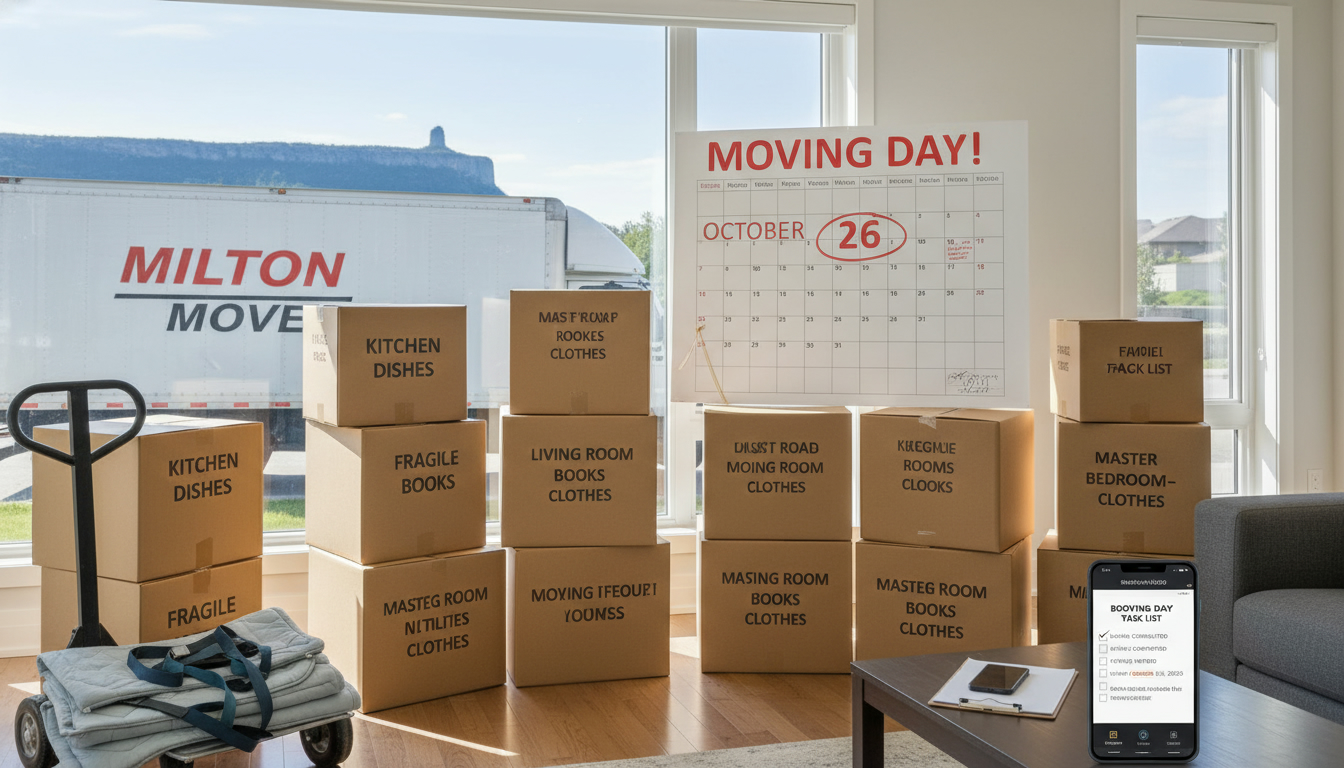
Image: Clear staging photo of packed boxes with calendar and Milton skyline subtly visible in the background. Ensure high contrast and crisp labels on boxes for readability.