
How long should I hold a property for good ROI?
Want a clear answer — how long should you hold a Milton property to get great ROI? Read this and act.
Quick Hook: The Real Question Rewritten
How long do you actually need to hold a property in Milton, Ontario to make real money — not hope? Here’s a plain answer, then a proven plan.
Short Answer (Read First)
- If your goal is pure appreciation: hold 7–12 years.
- If your goal is steady income plus appreciation (rental): hold 10–20 years.
- If you plan to flip (renovate-resell): 0–2 years, only with strong margins and low market risk.
These ranges are not guesses. They reflect how Milton‘s market works: commuter demand, limited developable land, and steady population growth. Keep reading for the math, local insights, and an action checklist you can use today.

Why Milton, Ontario Changes the Timeline
Milton sits at the edge of the GTA. That location drives three consistent forces:
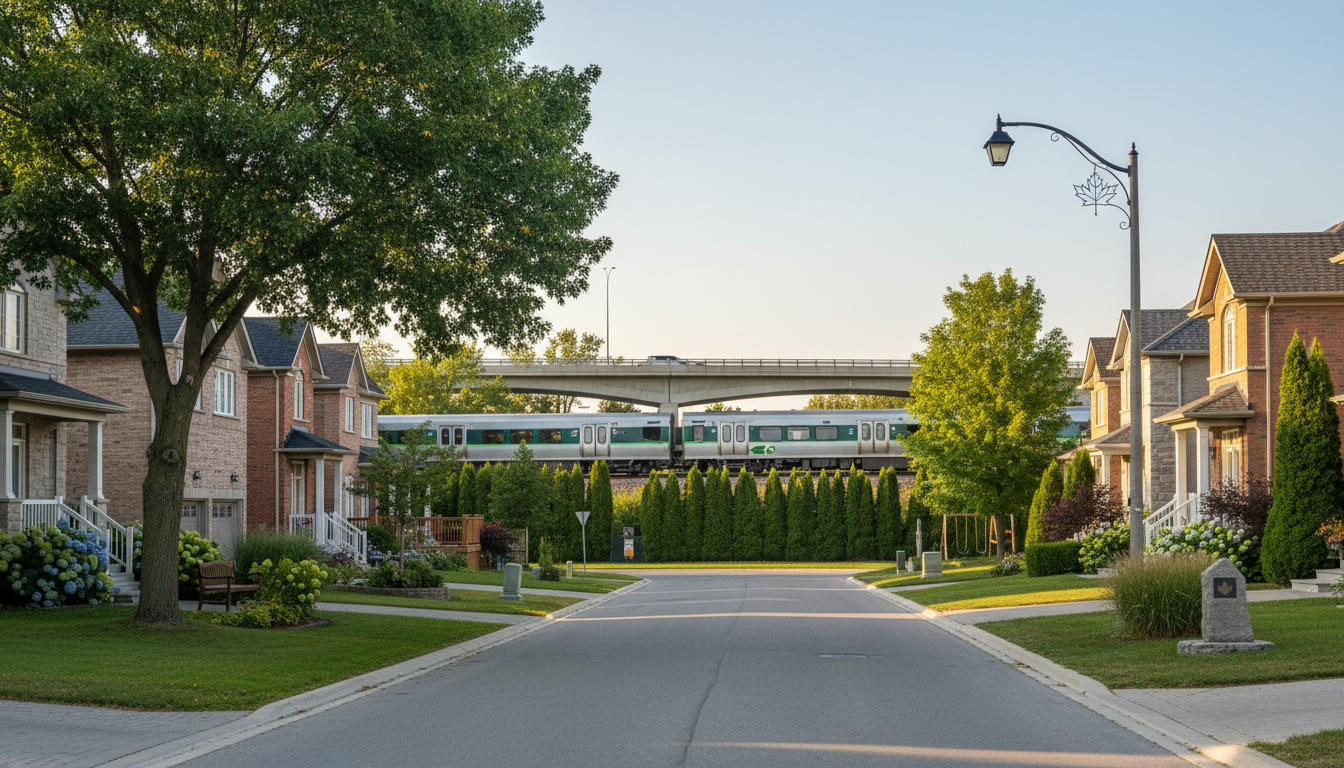
- Commuter demand from Toronto and Oakville via highways and GO transit.
- Population growth and new home developments that absorb available inventory.
- Development limits on greenfield land that tighten supply long-term.
Translation: Milton rewards patient investors. Quick flips can work, but long-term hold captures both rental income and appreciation as infrastructure and demand grow.
The Math You Must Use (Clear, No Fluff)
Stop guessing. Calculate these three metrics for any property.
1) Annualized Appreciation (Compound Annual Growth Rate — CAGR)
- Example: If a home was $600,000 and 10 years later sells at $900,000, CAGR = ((900/600)^(1/10)-1) = 4.14%.
- Target for Milton: historically 3–6% CAGR for detached homes over long cycles. Newer suburbs can surge higher in short windows.
2) Cash-on-Cash Return (for rentals)
- Net annual rental income / initial cash invested.
- Example: $18,000 net rent / $150,000 down and closing = 12% cash-on-cash.
- Aim: 6–12% range for a healthy Milton rental, after conservative vacancy and maintenance budgeting.
3) Total Return (Annualized) = CAGR + Rental Yield (if rented) – Expenses
- Add appreciation and net yield, subtract tax, insurance, maintenance, vacancy, and mortgage interest.
If Total Return beats alternative investments (e.g., dividend stocks, GICs) adjusted for risk, you’re on the right path.
Practical Holding Periods By Strategy
Use your goal, not a rule of thumb.
-
Flip / Short Turn (0–2 years)
-
Works only with clear arbitrage: buy under-market, credible renovation plan, and low market risk.
-
Costs: higher transaction taxes, selling commissions, renovation overruns.
-
Milton tip: focus on highest-ROI updates (kitchen, bathrooms, curb appeal) and know local resale comps.
-
Medium Hold (3–7 years)
-
Good for spec builders and those who buy in transitioning neighbourhoods near new GO stations or infrastructure.
-
Expect variable results: you can lock 6–10% annualized in strong windows, but risk of flat years exists.
-
Long Hold (7–20+ years)
-
Best for buy-and-hold investors and buyers who want both cash flow and appreciation.
-
Milton’s growth drivers make this the safest path to outperform inflation and taxes.
Local Data Points to Watch in Milton
Track these monthly or quarterly to time decisions:
- Months of Inventory: <3 months = seller’s market; >6 months = buyer’s market.
- Average Days on Market: rising DOM signals cooling.
- New listings vs. sales ratio: momentum indicator.
- Local employment growth and commuting times: faster commutes increase buyer pool.
- Infrastructure projects: new GO service, highway upgrades, school builds.
Use the local real estate board and municipal reports. Tony Sousa monitors these daily and uses them to advise clients on hold vs sell timing.
Transaction Costs You Cannot Ignore
Every buy or sell has drag. Factor these into your timeline.
- Realtor commission: ~4–5% on sale (negotiable).
- Legal and closing fees.
- Home staging and repairs before sale.
- Capital gains tax (50% inclusion in Canada) on principal-residence rules and investment properties.
- Holding costs: property tax, insurance, utilities, maintenance.
A quick sale can wipe out short-term gains after these costs. Longer holds dilute transaction cost impact.
Scenario Analysis — Two Real Milton Examples
Numbers are illustrative. Run your own with actual offers.
Scenario A: Detached family home bought for $800,000, rented, sold after 10 years
- Purchase down payment: $160,000. Mortgage and monthly cash flows net positive.
- Average annual appreciation: 4% → value ~ $1,185,000 after 10 years.
- Net rental yield after expenses: 3–5%.
- Total annualized return: 7–9% after costs.
- Outcome: Strong ROI, taxes manageable when planned.
Scenario B: Renovation flip bought for $700,000, sold after 9 months
- Renovation and carrying costs: $80,000.
- Sale price needed to break even after 5% commission and closing: > $800,000.
- Risk: market softens, carrying cost extends, profit evaporates.
- Outcome: High reward but high risk. Only do with margin and contingency.
Action Plan: How to Decide Right Now
Follow this checklist before you buy or decide to sell in Milton.
- Define your goal: income, growth, or short-term profit.
- Run the numbers: CAGR, cash-on-cash, total return, break-even sale price.
- Project holding costs for 3, 7, and 12 years.
- Monitor local indicators weekly: inventory, DOM, new builds, transit updates.
- Have an exit plan: sale price target, rental plan, refinance timeline.
- Use a local expert for comps and timing. Milton moves on micro-trends.
If you want help with steps 2–5, contact Tony Sousa for a free property analysis tailored to Milton.
Tax and Finance Rules to Factor In (Canada-specific)
- Capital Gains: 50% of the gain is taxable for investment properties. Plan for this on sale.
- Principal Residence Exemption: applies only if you and your family lived in the home for the designated years.
- Mortgage Porting and Refinancing: can reduce cash-out triggers and improve cash-on-cash returns.
Talk to an accountant/financial planner before major changes.

Renovate, Rent, or Sell — Decision Matrix
Use this rule: if you can deliver >8% annualized return after costs by renovating and renting, hold. If not, sell.
Renovate when:
- You can raise rent by more than incremental carrying and renovation costs.
- Neighborhood fundamentals are improving.
Rent when:
- Market is neutral and rental demand is strong.
- You want cash flow and tax-deferred wealth growth.
Sell when:
- You hit your price target after transaction costs.
- Local indicators shift to buyer advantage (rising inventory, longer DOM).
Common Mistakes Milton Investors Make
- Ignoring local transit expansions and overpaying in low-demand pockets.
- Underestimating holding costs and vacancy.
- Trying to flip during market cool-downs.
- Not factoring capital gains properly into net return.
Avoid these and your timeline will track the math, not emotions.
Contact and Local Support
For a tailored analysis of your Milton property — price projection, hold vs sell decision, and a step-by-step exit plan — contact:
Tony Sousa, Local Milton Realtor
Email: tony@sousasells.ca
Phone: 416-477-2620
Website: https://www.sousasells.ca
Tony provides market-ready comps, a three-scenario financial model (sell now, hold 7 years, hold 15 years), and an action plan you can execute immediately.
FAQ — Milton Property Investment & Resale Value
Q: Is Milton a good place to invest long-term?
A: Yes. Milton benefits from GTA spillover, commuter transit, and limited developable land. Long-term holds (7–20 years) historically outperform short flips, especially for detached and semi-detached properties.
Q: How much annual appreciation can I expect in Milton?
A: Expect 3–6% CAGR over a full market cycle for established homes. Micro-markets and new transit access can push that higher for specific pockets.
Q: When should I consider selling instead of renting?
A: Sell if your after-cost annualized return if held is lower than your alternative investments or if local indicators shift to a buyer’s market. Also sell if you need freed-up equity for a better opportunity.
Q: How do taxes affect my resale value?
A: Capital gains tax on investment properties increases the cost of selling. Factor 50% inclusion of gains in your taxable income and plan for that when calculating net proceeds.
Q: Should I flip or rent a Milton property I just bought?
A: Flip only if you have clear purchase discount, reliable renovation cost control, and a short timeframe. Rent if you want steady cash flow and lower market timing risk.
Q: How often should I review my holding strategy?
A: Quarterly. Re-run your numbers and monitor local inventory, DOM, and infrastructure reports.
Q: Where can I get accurate Milton comps and market data?
A: Use the local real estate board, municipal planning reports, and a trusted Milton realtor who tracks micro-market shifts daily.

Final Command
Decide with math. Hold for time when your numbers show advantage. Sell when they don’t. If you want the numbers built for your exact property in Milton, reach out to Tony Sousa at tony@sousasells.ca or 416-477-2620 for a no-BS property analysis and action plan.