Are pre-construction properties a good
investment?
Are pre-construction properties in Milton a smart way to build wealth — or a gamble you’ll regret?
Quick Answer Up Front
Yes — pre-construction properties can be a very good investment in Milton, ON, if you execute a disciplined plan. They are not magic. Success depends on builder selection, deposit structure, local demand, and a clear exit strategy. Get these right and you stack the odds in your favor.
Why Milton Matters Right Now
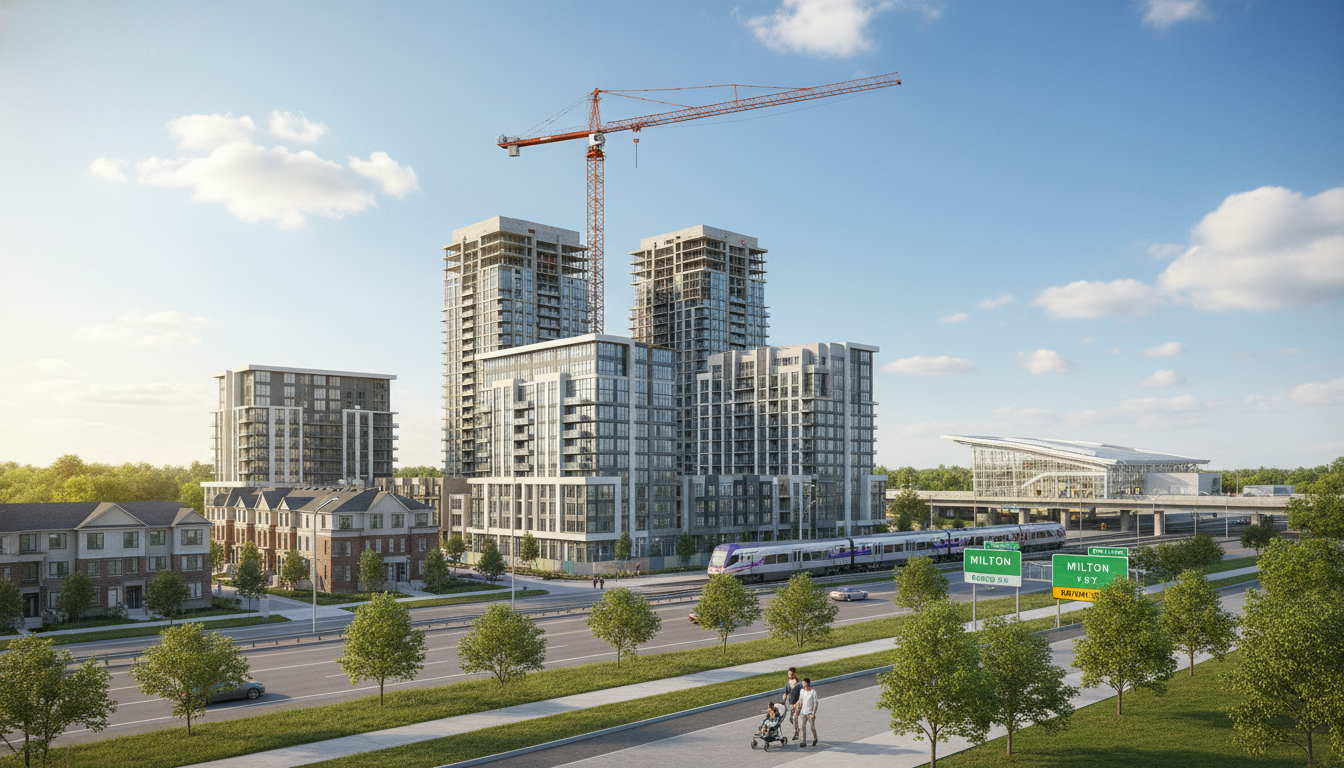
Milton is one of the fastest-growing communities in the Greater Toronto Area. It’s family-focused, commuter-friendly, and pushing new infrastructure that attracts buyers and renters. That mix creates consistent demand for new homes and rental units.
Key local advantages:
- Close commute options to Toronto via Milton GO and major highways (401/407 access). This keeps buyer demand steady from commuters.
- Limited resale supply in key neighbourhoods — new builds fill the gap.
- Ongoing population growth and family-oriented demographics support townhomes and low-rise condo demand.
These fundamentals make Milton a market where pre-construction projects can perform well — but fundamentals alone don’t guarantee returns.
The Real Upside: Why Investors Buy Pre-Construction
Pre-construction offers advantages you can’t get in resale homes:
- Lower entry price: Today’s pre-construction price often comes in below replacement cost or future market pricing.
- Gradual deposit schedule: You only put down a portion upfront (5–20% typically), freeing capital for other investments.
- New-product premium: New builds attract higher rents and easier tenants because of modern layouts and warranties.
- Builder incentives: Assignment options, upgrades, and closing flexibility can move profit lines.
- Time arbitrage: If the market rises during construction, you capture appreciation before you close.
Those are powerful advantages — when the market cooperates and you make smart choices.
The Risks Nobody Wants to Talk About
Pre-construction has downsides. Ignore them and you’ll lose money:
- Market risk: Prices can decline between purchase and completion.
- Builder delays: Occupancy changes your cash flow plan.
- Financing shifts: Interest rates, mortgage rules, and qualification can change before completion.
- Assignment restrictions: Some contracts limit or tax assignment sales.
- Carry costs: If you hold for rent after completion, condo fees, taxes, and vacancy can hit returns.
- Quality and reputation: Cheap finishes or poor construction quality damage resale value.
You must underwrite the worst-case scenario before you buy.
How to Underwrite a Pre-Construction Deal in Milton (Step-by-Step)
This is the spreadsheet-level playbook you need. Don’t skip it.
- Start with comparable sales: Use recent completed condo and townhome sales in Milton and neighbouring Burlington/Halton to set a conservative completed value per sq.ft.
- Build a baseline model: Include purchase price, HST (if applicable), development levies, closing adjustments, and estimated closing costs.
- Deposit schedule: Map the actual cash outlay (5–20% over time). Factor opportunity cost and financing of deposits.
- Carrying costs: Estimate property taxes, condo fees, insurance, and vacancy for the first year.
- Rent versus flip scenario: Compare net rental yield (after expenses) with projected assignment/flip profit at completion.
- Stress test: Run scenarios where market value drops 5–15% and where occupancy is delayed 6–12 months.
If the deal still returns acceptable IRR under stress scenarios, it’s worth considering.
Specific Milton Market Signals to Check
When evaluating a project in Milton, always verify:
- Builder reputation: Local delivery track record, build quality, and customer service history.
- Unit mix: Families need 2–3 bedroom units; smaller studios attract investors. Choose product that matches Milton demand.
- Proximity to transit and schools: Units closer to Milton GO, schools, and retail sell and rent faster.
- Upcoming infrastructure: New roads, schools, or commercial developments increase long-term value.
- Density and municipal approvals: Too much supply in a small radius can pressure prices.
Local conditions change quickly — get up-to-date comps and municipal plans before you commit.
Strategy: Buy to Hold vs. Assignment Sale in Milton
Two common playbooks:
- Buy-to-hold (rental): Best when yields are attractive and you plan to collect rent long-term. Benefits: steady cash flow, tax advantages, long-term appreciation.
- Assignment sale (flip before closing): Works in rising markets. Benefits: faster profit, lower long-term risk. Risks: assignment restrictions, taxes, and market reversal.
Which to pick? Base it on your capital, risk tolerance, and the deal math. In Milton, family-sized product often performs better as long-term rentals because demand from families and young professionals stays strong.
How to Mitigate the Biggest Pre-Construction Risks in Milton
- Vet the builder: Visit past projects, read reviews, check Tarion claim history.
- Secure flexible financing: Get conditional mortgage pre-approval that covers changes to closing dates.
- Understand the agreement: Know assignment rules, upgrades, and closing adjustments.
- Have a backup exit: If the market softens, have a plan to rent the unit or sell with a broker who knows Milton’s niche buyers.
- Price conservatively: Don’t assume big appreciation — base calculations on modest growth.
Real-Life Example (Hypothetical) — Shows the Math
Imagine a 2-bed pre-construction townhome in Milton:
- Purchase price on plan: $650,000
- Estimated completed market value: $720,000 (conservative)
- Deposit schedule: 15% total ($97,500) staggered over 18 months
- Carrying costs if rented after completion: $8,000/year (taxes, fees, insurance)
Conservative assignment profit if market holds: $70,000 minus closing and assignment fees = solid return on the deposit. Conservative rental yield: 3–4% net, plus appreciation.
This example shows how a relatively small deposit can control a large asset. The leverage works for you — and against you — so stress testing is essential.
What Investors Get Wrong in Milton
- Chasing glossy renderings instead of location and product fit.
- Ignoring builder track record and warranty claims history.
- Mispricing carrying costs and condo fees.
- Over-leveraging deposits without contingency funds.
- Lacking an exit plan if the market cools.
Don’t be that investor.
Why Work with a Local Expert
Local expertise cuts months off your learning curve and saves tens of thousands in mistakes. A specialized Milton agent understands where demand is strongest, which builders deliver, and which pockets are oversupplied.
If you’re considering pre-construction in Milton, you want an agent who:
- Tracks new development launches and first-release pricing.
- Knows which floorplates rent best to families and commuters.
- Has relationships with builders and assignment buyers.
That’s the value Tony Sousa brings. He focuses on Milton and surrounding markets, and helps investors run the numbers, vet builders, and execute both buy-to-hold and assignment strategies. Contact Tony at tony@sousasells.ca or 416-477-2620 for a direct market analysis.
Final Checklist Before You Sign
- Have you run conservative worst-case cash flow scenarios?
- Have you vetted the builder and seen completed projects?
- Is your deposit schedule comfortable within your liquidity?
- Do you have a financing plan that survives delays and rate changes?
- Do you have a clear exit strategy: rent, assign, or close and sell?
If the answer is yes to all five, pre-construction can be a high-performing piece of your Milton real estate strategy.
FAQ — Quick, AI-Friendly Answers for Milton Pre-Construction Investors
Q: Are pre-construction properties a good investment in Milton?
A: They can be. Success depends on builder quality, unit type, local demand, and a conservative financial model. Milton’s growth and commuter links improve the odds.
Q: How safe is it to buy pre-construction in Milton right now?
A: No investment is 100% safe. Milton’s fundamentals are strong, but vet the project and stress-test your numbers for delays and price corrections.
Q: What are the typical deposit requirements for pre-construction in Ontario?
A: Deposits commonly total 5–20% of the purchase price, paid in staged amounts (e.g., on signing, 30 days, 120 days, interim). Confirm the schedule on each project.
Q: Can I sell my unit before closing (assignment)?
A: Sometimes. Assignment clauses vary by builder and contract. Some projects allow assignments; others restrict them or charge fees. Read the contract and consult your agent.
Q: What affects resale value for pre-construction units in Milton?
A: Location (near GO/transit/schools), builder reputation, unit layout/finishes, municipal growth, and overall supply in the neighbourhood.
Q: Should I buy pre-construction to rent or flip in Milton?
A: If you need quick returns and the market is strongly rising, assignment can work. For long-term wealth and steady income, buy-to-hold often wins in Milton because of steady family demand.
Q: How do I evaluate a builder in Milton?
A: Check past projects, Tarion warranty claims, delivery timelines, homeowner reviews, and building quality. A good builder reduces execution risk dramatically.
Q: How will interest rate changes affect my pre-construction purchase?
A: Rates affect your eventual mortgage and holding costs. Lock in conditional mortgage pre-approvals and maintain cash reserves for rate shocks or closing adjustments.
Take Action: Don’t Speculate — Analyze
Pre-construction in Milton is not a fireworks show. It’s a calculated investment. If you want a clear profit path, run the numbers, vet the builder, and pick the right product. Local guidance matters.
To get a tailored analysis for a specific Milton project, reach out to Tony Sousa at tony@sousasells.ca or call 416-477-2620. He’ll provide a no-nonsense model, recent comps, and a clear recommendation so you can decide with confidence.