How do I assess structural components before
buying?
Can a house collapse your budget? Here’s exactly how to assess structural components before buying — and what to do if the numbers don’t add up.
Why this matters now in Milton, ON
You’re competing in Milton’s fast market. Offers move fast. But a bad structural surprise turns a dream buy into a money pit. Learn how to spot real risks fast, push for repairs or credits, and protect your equity when buying or selling in Milton.
Milton has a mix of older downtown homes and newer subdivisions. Older houses can hide foundation settlement and rot. New builds can have settlement, drainage or framing errors. Both need a trained eye.
Quick checklist: 7 structural red flags to find on your first walkthrough
- Horizontal foundation cracks or bowing basement walls — immediate red flag.
- Doors and windows that stick or won’t close squarely.
- Uneven or sloping floors and visible sag between joists.
- Large stair-step cracks in brick or masonry around corners.
- Water stains, efflorescence, or visible mold on basement walls.
- Rusted or sagging steel beams, or obvious rot on wooden beams.
- Chimney cracks or separation from the house.
If you spot any of these, stop. Don’t let emotions force you forward without more inspection.
Step-by-step: How to assess structural components before you buy (practical and local)
1) Start outside — grading, drainage and visible foundation
- Walk the perimeter: soil should slope away from foundation at least 50–100 cm where possible. Flat ground or negative grading in Milton’s older lots makes foundation problems more likely.
- Check downspouts and eavestroughs: are they connected to clear drains directing water away? Improper drainage is the most common cause of foundation and basement issues here.
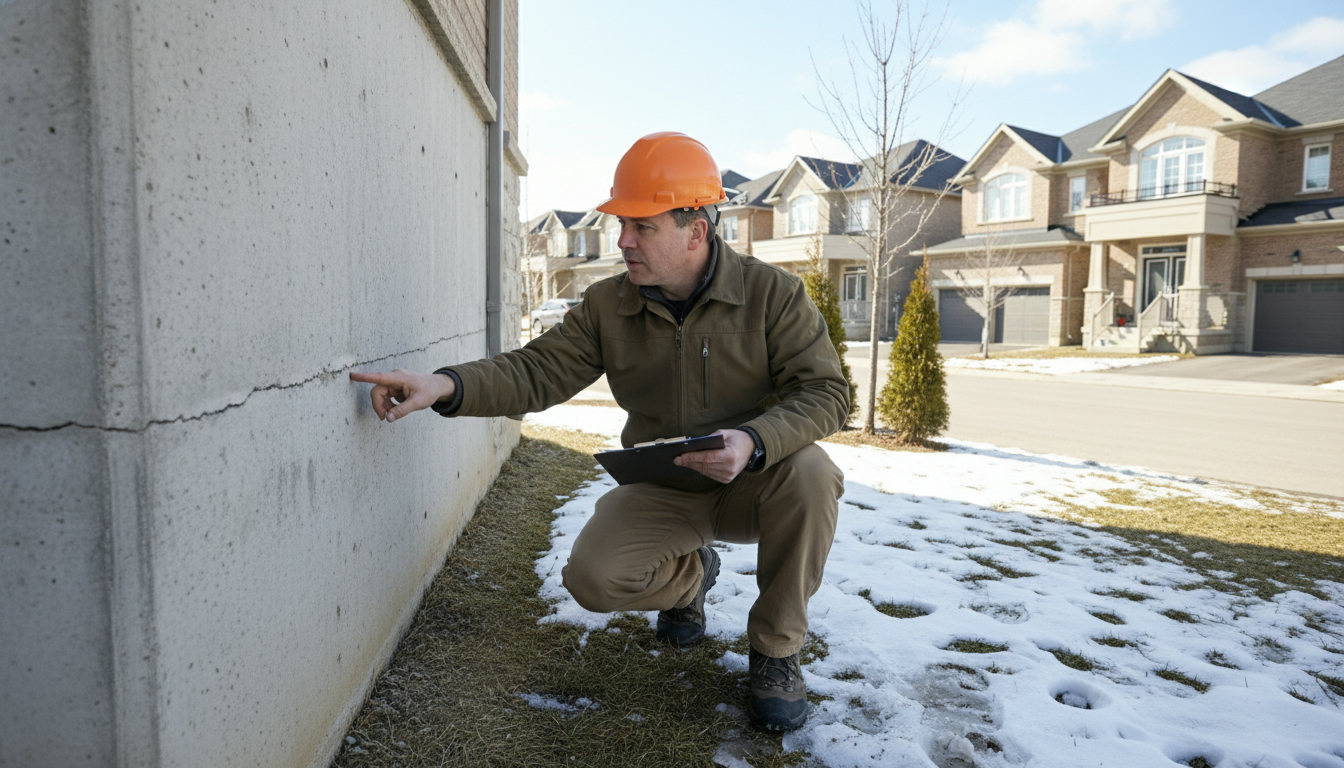
- Look for horizontal cracks, bulging or leaning walls. Vertical cracks under 3mm can be minor; horizontal cracks or gaps wider than 6mm are serious.
2) Inspect the basement and crawlspace
- Smell: musty or damp = water intrusion. Water brings freeze/thaw cycles and expansion — and costly repairs.
- Look for efflorescence (white mineral deposits) — evidence of long-term moisture.
- Check for visible settlement: sloping floors, widened cracks between walls and floors, doors that won’t latch.
3) Check floors, ceilings and load-bearing elements upstairs
- Walk the whole house. Feel for springs, bounces or soft spots.
- Inspect joists, beams and headers for sagging or rot.
- Look for diagonal cracks above windows and doors — often a sign of foundation movement.
4) Roof structure and attic
- In Milton’s climate, snow load is real. Inspect rafters and collar ties for sagging or water stains.
- Look for light between roof boards and sagging sheathing — this can indicate framing problems or a failing roof system.
5) Chimneys and masonry
- Mortar deterioration and stair-step cracks are common on older Milton homes. Repointing or rebuilding can be expensive.
6) Mechanical signs that point to structural issues
- HVAC ducts that pull away from vents, plumbing misalignment, and cracking in tile floors — these can be symptoms of movement, not just cosmetic problems.
7) Check permits and renovation history
- Ask for permit records. Unpermitted structural work (removed walls, altered beams) increases risk. Milton’s building department records can confirm permits for major work.

Who to bring and when: the inspection team that matters
- Licensed Home Inspector: baseline. They’ll identify issues and recommend next steps. Expect a thorough inspection report.
- Structural Engineer: required if the inspector flags foundation movement, bowing walls, or major framing problems. Engineers provide stamped reports and repair plans.
- Specialized contractors: drainage, chimney, roofing pros for quotes on fixes.
Local tip: hire inspectors and engineers who work in Halton Region and Milton specifically. They know local soil, frost line behavior, and common construction practices here.
Cost and timelines — what to expect
- Home inspection: $400–$700 in the Greater Toronto Area. In Milton, prices are similar.
- Structural engineer evaluation: $600–$1,800 depending on complexity.
- Minor foundation repairs (crack injection, drainage fixes): $1,000–$5,000.
- Major stabilization (piering, underpinning, rebuilding sections): $10,000–$60,000+.
Timing: allow 7–14 days for inspections and engineer reports. Sellers and buyers should build this into contingency timelines.
Negotiation strategies for buyers and sellers in Milton
For buyers:
- Use inspection and engineer reports to negotiate price reductions, seller-paid repairs, or escrow holdbacks.
- If repair costs exceed thresholds (pick a number you’re comfortable with), walk. Don’t fall in love.
For sellers:
- Be proactive. Fix drainage and clear gutters before listing. Disclose known structural items and include inspection reports to build trust.
- Small repairs like repointing mortar, adding downspout extensions, or sealing minor cracks often deliver higher returns than cosmetic staging.
Renovations & upgrades that protect value (and sell faster)
- Fix grading and install proper drains — one of the best ROI moves in Milton.
- Replace failing joists or sister in new lumber to remove bounce and reassure buyers.
- Repair or tuckpoint masonry and chimney separation early.
- Replace or repair roofing and ensure attic ventilation — this prevents roof framing rot.
- Address visible basement moisture with a sump pump, interior drain system, or exterior waterproofing.
Prioritize fixes that prevent future damage over cosmetic work. Buyers pay for peace of mind.

Local examples — real risks I see in Milton listings
- Older downtown homes with parapet chimneys and repointed brick: often need masonry scopes.
- Newer subdivisions built on fill: watch for early settlement and non-level floors within the first few years.
- Properties near escarpments or low-lying areas: higher risk of surface water pooling and hydrostatic pressure.
Practical checklist to bring to showings (print and use)
- Photograph all cracks and measure width at top and bottom.
- Test doors/windows in every room.
- Check grade and downspouts — photos.
- Note any musty smells or visible mold.
- Ask the listing agent for permits and recent inspection reports.
Bring this to the home inspector — it speeds diagnosis and helps prioritize the engineer’s scope.
Quick decision rules (cut through the noise)
- Cosmetic cracks + no moisture + stable doors/windows = monitor, not panic.
- Horizontal cracks, bowing walls, or active leakage = call an engineer, budget for major repair.
- No permit for structural changes = pause and investigate thoroughly.
Call to action — get local help that protects your money
I work with Milton buyers and sellers to spot structural risk fast and translate that risk into clear numbers: repair cost, time, and negotiation strategy. If you’re buying and want a pre-offer risk check or you’re selling and want a pre-listing inspection and repair plan, reach out.
Tony Sousa — Licensed Realtor, Milton, ON
Email: tony@sousasells.ca | Phone: 416-477-2620 | https://www.sousasells.ca

FAQ — Fast answers to common questions about structural assessments and renovations in Milton, ON
Q: When should I order a structural engineer?
A: Order one if the inspector notes horizontal cracks, bowing walls, or active water infiltration. Engineers give a fix plan with cost ranges.
Q: Can foundation cracks be fixed cheaply?
A: Minor vertical cracks often need crack injection ($500–$1,500). Horizontal or structural cracks usually require stabilization ($10k+).
Q: Does unpermitted work affect resale in Milton?
A: Yes. Unpermitted structural changes reduce buyer confidence and can force costly corrections or permit retrofits. Always check Milton’s building department records.
Q: Which renovations give the best return when selling in Milton?
A: Fix water/drainage issues, stabilize foundations, and repair roofing. These protect value and are more persuasive to buyers than fresh paint.
Q: How much should I budget for unexpected structural repairs?
A: For most Milton homes, plan a contingency of 2–5% of purchase price for potential structural fixes. For older homes or properties near water, budget higher.
Q: Can I get insurance for pre-existing structural issues?
A: Standard home insurance typically won’t cover pre-existing structural defects. Disclosure and repairs are the responsible approach.
If you want a clear, no-fluff assessment before you make an offer — call or email. I’ll connect you to Milton inspectors and engineers I trust, fast.