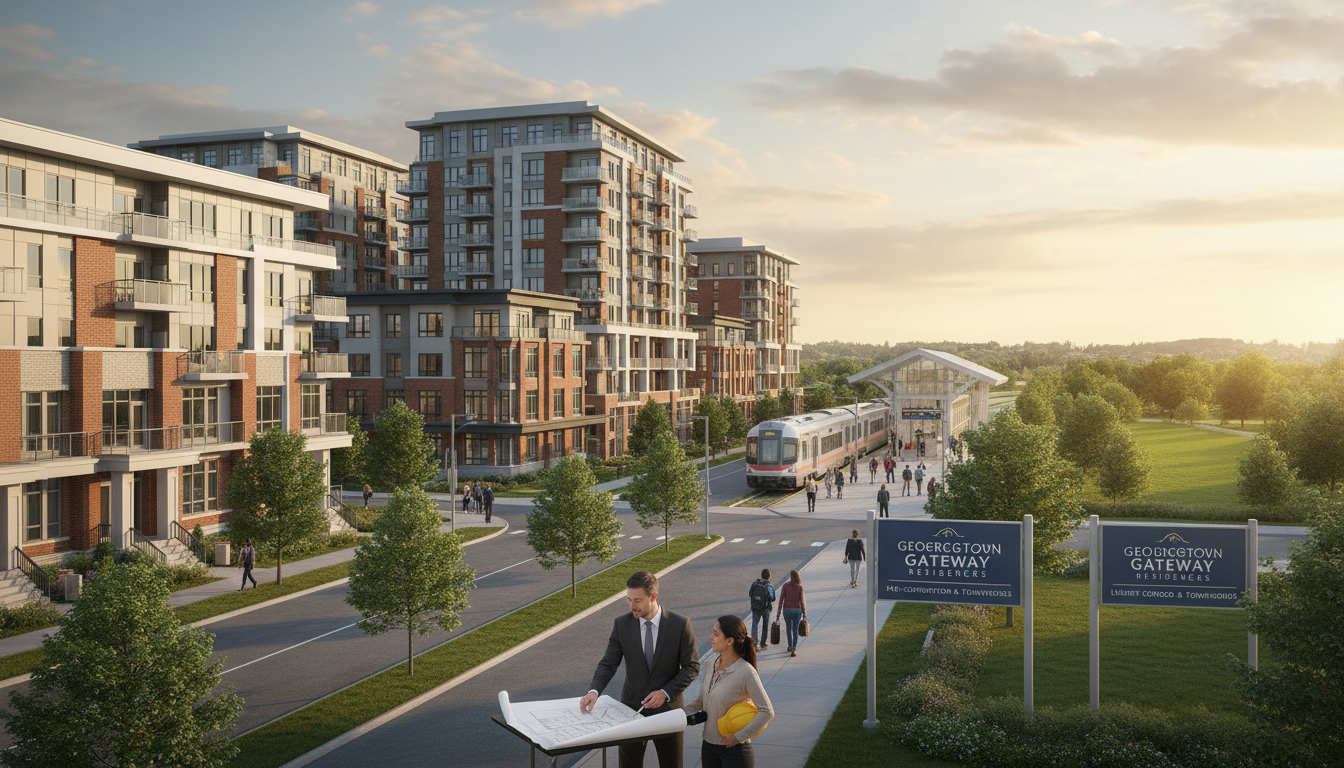
Are pre-construction properties a good
investment?
Want to know if pre-construction in Georgetown will make you richer when you sell?
Quick Answer — Yes, But Only If You Do Three Things Right
Pre-construction properties can be a smart move for resale value in Georgetown, ON — but only when you buy the right product, at the right location, from the right developer, and with a clear exit plan. If you treat pre-construction like a gamble, you’ll get gambler results. Treat it like a business with a process, and you can create predictable upside.
Why Sellers Should Care About Pre-Construction
If you’re selling a home in Georgetown today, your next move matters. Reinvesting proceeds into pre-construction changes the timeline, risk profile, and potential returns compared to buying resale. Pre-construction gives you:
- Lower entry price compared to completed units (early-bird pricing).
- Ability to lock in today’s pricing while the market moves.
- New finishes and warranties that attract buyers and command a premium at resale.
- Potential for assignment profit if the market rises before completion.
But those benefits don’t appear automatically. That’s where process beats hope.
What Drives Resale Value in Georgetown
Focus on these drivers — they decide if your pre-construction unit will sell for more later:
- Location: walkability, distance to Georgetown GO Station, proximity to schools and retail, and major roads. Units near transit and services always outperform.
- Product type: freehold townhomes and stacked towns often appeal to families and young professionals; smaller condos attract investors and commuters.
- Floor plan and functionality: layouts that fit modern buyers (open kitchen, storage, outdoor space) sell faster.
- Developer quality: warranty, build quality and finishes influence buyer confidence.
- Condo fees and taxes: high carrying costs reduce buyer pool and lower resale price.
- Market timing and interest rates: these shape buyer demand at completion.
Every dollar you save on purchase or add in value through improvements compounds at resale.

Georgetown Market Snapshot — What Sellers Must Know
Georgetown is part of Halton Hills and the Greater Toronto Area commuter market. Key local dynamics that matter to sellers:
- Steady commuter demand: buyers who work in the GTA but want more space choose Georgetown for access and affordability compared to Toronto.
- New infrastructure and regional development increase long-term demand for housing in the area.
- Inventory swings quickly in the GTA fringe: a small shift in supply or interest rates moves prices.
For sellers, that means location within Georgetown matters more than ever. A well-sited pre-construction unit near transit or a main artery will outperform a peripheral offering.
Pros and Cons — Real Talk
Pros:
- Price advantage: early-bird pricing and escalator-free purchase can yield instant paper equity.
- New product premium: buyers pay more for new builds with warranties and modern finishes.
- Assignment upside: if the market rises, you can sell your contract before completion.
Cons:
- Timeline risk: construction can take years. Market may shift by completion.
- Carrying costs: mortgage pre-approval timing, interim housing, and deposit schedules increase complexity.
- Developer risk: delays, budget cuts, or poor finishes hurt resale.
- Condo fees and management: high fees eat into cashflow and resale attractiveness.
Smart Criteria to Pick a Pre-Construction Unit for Resale Value
Use this checklist. If a project fails any of these, walk away or negotiate hard.
- Location first: within 800m of Georgetown GO or major retail, or on main transit/commuter route.
- Developer track record: at least 3 completed projects with verifiable finishes and customer service reputation.
- Floor plan fit: 1-bedroom+den or 2-bedroom units with parking and storage sell quickest to buyers and investors.
- Reasonable condo fees: ask for estimates and compare to similar buildings.
- Deposit structure you can manage: 10-20% staged over 2 years is standard; ensure you can cover it.
- Assignment allowance: confirm legal ability to assign the contract if you need to flip it before closing.
- Project absorption rate: how many units already sold? Higher pre-sales can mean developer confidence but also less upside.
Cost and Cashflow — What Sellers Must Prepare For
You’re a seller. That means you may be bridging two transactions. Prepare for:
- Deposit schedule: typically 5-20% over the first 6–24 months.
- Interim housing or leasebacks if completion lags.
- Carrying costs: property taxes, maintenance (if you complete and hold), insurance and financing.
- Closing costs: HST on new homes (watch for rebates and exemptions), legal fees, and land transfer tax.
Map the cashflow before you sign. If the numbers don’t work without stress, it’s not worth the risk.

Tactical Moves That Protect Your Resale Upside
- Buy the best product you can afford, not the cheapest.
- Negotiate preferential unit locations (higher floors, corners, units with outlook) — those sell for premiums.
- Secure the lowest deposit structure you can tolerate.
- Confirm assignment rights and plan for that exit if the market moves fast.
- Build a 12–18 month contingency fund for carrying costs.
- Keep detailed records and warranties to show future buyers.
How to Use Pre-Construction as a Home Seller in Georgetown — 3 Scenarios
-
You sell now and buy pre-construction to upgrade later: Use sale proceeds to secure the unit deposit, keep a cash buffer, and time completion for your move.
-
You sell now and buy pre-construction as an investment to flip on completion: Ensure assignment is allowed, pick units with strong demand (2-bed), and monitor market closely.
-
You sell now and buy pre-construction to rent until market improves: Evaluate cap rate, management fees, and tenant demand. Condos near transit rent well to commuters.
Each path requires different risk tolerance and cash planning.
Local Negotiation Tips — Win More Value
- Ask the developer for upgrades or parking at signing if sales are slower.
- Get a licensed realtor working for you as a buyer’s rep — developers pay commissions; you should benefit from negotiation expertise.
- Track comparable closed sales in Georgetown and nearby Halton communities — seller comps set your future asking price.
When to Say No
- No assignment allowed and you need liquidity before completion.
- Developer with no proven delivery record in the GTA.
- Condo fees projected above market comparables.
- Unit far from transit or amenities and targeted to commuters.
A clear no saves you time and money.

Case Study Snapshot (How This Works in Real Life)
A seller in Georgetown chooses a 2-bed stacked town in a transit-adjacent project. Deposit schedule is manageable; developer has two recent local completions. Market strengthens during construction, and the seller assigns the unit for a tidy profit before closing. The seller used proceeds to buy a resale home with immediate occupancy. No carrying cost, lower risk, clear upside.
This is not fantasy — it’s process.
Final Checklist Before You Sign
- Confirm transit proximity and local amenities.
- Verify developer references and completed projects.
- Review deposit schedule and secure funds.
- Check condominium fees and reserve fund status.
- Confirm assignment rights and resale restrictions.
- Run worst-case cashflow scenarios (delays + higher rates).
Take Action: Sell Smart, Buy Smart
Pre-construction in Georgetown can increase resale value — but only when you plan, vet, and execute. Don’t chase paper profits or base decisions on hype. Build a plan: location, product, developer, exit strategy.
Need local help? If you’re selling in Georgetown and considering pre-construction, I can map the plan and run the numbers with you. Contact Tony Sousa at tony@sousasells.ca or call 416-477-2620. Visit https://www.sousasells.ca for a free consultation.
FAQ — Pre-Construction and Resale Value in Georgetown, ON
Q: Are pre-construction condos a good investment in Georgetown?
A: They can be. The best returns come from well-located units near transit or amenities, reputable developers, favorable deposit structures, and a clear exit plan. Avoid projects with high fees or weak developer history.
Q: What is an assignment sale and how does it affect resale value?
A: Assignment is selling your contract before the building is complete. It lets you capture market gains early. Assignment can increase your realized profit but check the contract for restrictions and taxes.
Q: How long does pre-construction take to complete?
A: Typical timelines are 2–4 years from purchase to occupancy. Delays happen. Plan for extended timelines and holding costs.
Q: Will condo fees hurt resale value?
A: High condo fees reduce the buyer pool and lower resale value. Compare fees per square foot to similar buildings to judge competitiveness.
Q: Should I buy a condo or a freehold townhome for resale in Georgetown?
A: For resale, freehold or townhomes attract families and often command higher per-unit resale values. Condos can perform well for commuters and investors. Match product to expected buyer demand.
Q: How do I vet a developer?
A: Check completed projects, visit finished buildings, read homeowner reviews, check warranty claims, and verify financial standing. Developers with consistent, quality deliveries reduce risk.
Q: What taxes or costs should sellers expect on new builds?
A: Expect HST implications on new units, land transfer taxes, legal fees, and potential development levies. Consult an accountant for personalized tax implications.
Q: Can I get upgrades negotiated into my purchase?
A: Yes. Developers often include incentives like upgrades, parking, or closing cost credits—especially in slower markets. Have your buyer’s rep negotiate on signing day.
Q: How do interest rates affect pre-construction resale value?
A: Higher rates can reduce buyer demand and lower resale prices at completion. Plan for rate sensitivity and keep contingencies if you can’t lock a long-term mortgage immediately.
Q: Who should I contact for help in Georgetown?
A: For local market strategy, pre-construction selection, and resale planning in Georgetown, contact Tony Sousa at tony@sousasells.ca or 416-477-2620. Visit https://www.sousasells.ca.
Disclaimer: This post provides general information only. It is not financial, tax, or legal advice. Consult licensed professionals for decisions affecting your finances or taxes.