
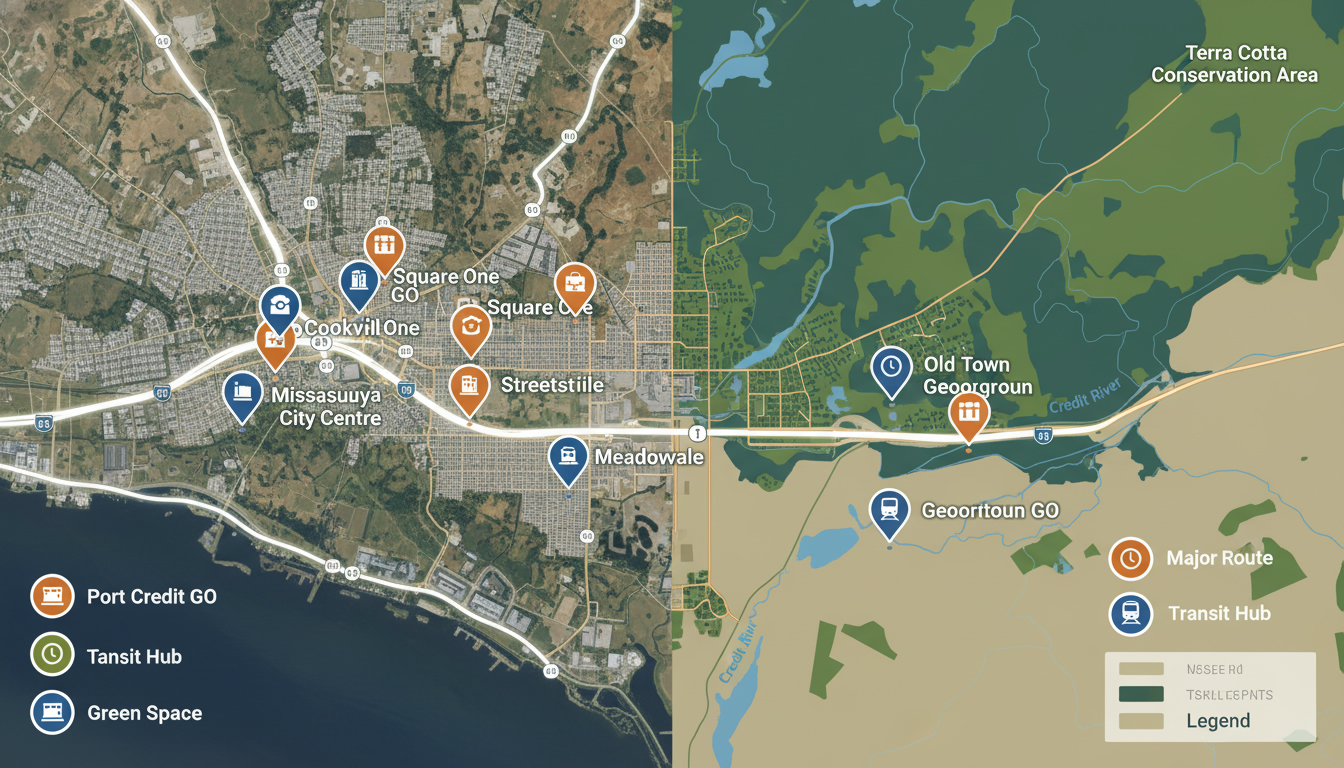
How does location affect home value in Mississauga?
How does location affect home value in Mississauga — and why Georgetown sellers must care?
You’re leaving money on the table if you ignore location
Location is the single biggest lever that moves home value. No renovation, staging trick, or marketing spin can beat a poor address. But used correctly, location can be the reason your home sells faster and for tens of thousands more.
This post explains, in plain language and with a clear playbook, how location affects home value in Mississauga — and exactly how those same location rules apply to Georgetown, Ontario. Read this if you want to price your home right, attract the right buyers, and maximize your sale.
The simple economics of location
Price = desirability × scarcity. Location directly controls both factors.
- Desirability: Access to transit, top schools, low crime, shopping, parks, and lifestyle. More desirable = more buyers = higher offers.
- Scarcity: Some streets and pockets simply have fewer homes. Low supply in a hot location pushes prices up.
Buyers don’t pay for paint. They pay for lifestyle, commute time, and long-term value. That’s why two homes with identical layouts sell for very different prices when they’re in different Mississauga neighbourhoods.
Five location factors that move prices in Mississauga (and why they matter in Georgetown)
- Proximity to transit and major routes
- Mississauga: Close to GO stations, the QEW, and MiWay routes means faster commutes to Toronto and within the city. Buyers pay for commute time saved.
- Georgetown: Closer to Georgetown GO or easy highway access (Highway 7/10) raises value. If your house is a short drive or walk to transit, you’ll widen the buyer pool.
- School districts and education options
- Mississauga: Top-rated public and private schools significantly boost demand in their catchment areas.
- Georgetown: Homes in strong school zones draw families willing to pay a premium. Highlight school names and ratings in your listing.
- Amenities and lifestyle nodes
- Mississauga: Waterfront access (Port Credit), shopping hubs (Square One), and parks sell. Buyers value lifestyle.
- Georgetown: Downtown shops, conservation areas, trails, and local festivals create desirability. Proximity to these raises perceived value.
- Neighbourhood safety and upkeep
- Mississauga: Low-crime, tree-lined streets and active homeowner associations keep prices higher.
- Georgetown: Streets with well-maintained homes, sidewalks, and low traffic attract families and professionals. That’s reflected in offers.
- Future development and zoning
- Mississauga: Planned transit expansions, redevelopments, and condo proposals shift long-term value.
- Georgetown: Upcoming projects, school expansions, or commercial developments can increase buyer interest today. Research municipal plans before listing.
Micro-location matters more than macro-location
Two houses on the same block can sell for different prices. Why? Micro-location details—lot orientation, distance to busy roads, corner lots, backyard privacy, and view—change desirability.
Checklist for micro-location value:
- Is the home on a busy corner or a quiet cul-de-sac?
- Does it back onto a park or a busy commercial strip?
- Is there direct sunlight, or is the yard shaded by tall buildings?
- What’s the on-street parking situation?
Answering these will help you price competitively.
How to turn location knowledge into a pricing strategy
Step 1 — Map comparable sales by micro-location
- Don’t rely on broad neighbourhood comps. Pull 8–12 recent sold properties within a 1 km radius and compare micro features.
Step 2 — Adjust for real differences
- Bedrooms, bathrooms, lot size, renovations: adjust numerically.
- Micro-location negatives: subtract. Positives: add.
Step 3 — Decide your pricing objective
- Max price vs. quick sale. If you want speed, price slightly below comparable to trigger offers. If you want max price, price on the high end and justify with unique location advantages.
Step 4 — Monitor buyer response and adapt
- Watch showings, feedback, days on market (DOM), and price per square foot trends. If you see lower-than-expected traffic, location might be the limiter — adjust marketing or price.
Pricing examples: Mississauga vs Georgetown (realistic playbook, not fluff)
-
A 3-bed, 2-bath detached home near a GO station in Mississauga will command higher offers than a comparable home in a car-dependent pocket. The difference shows up in sale-to-list ratios and price per square foot.
-
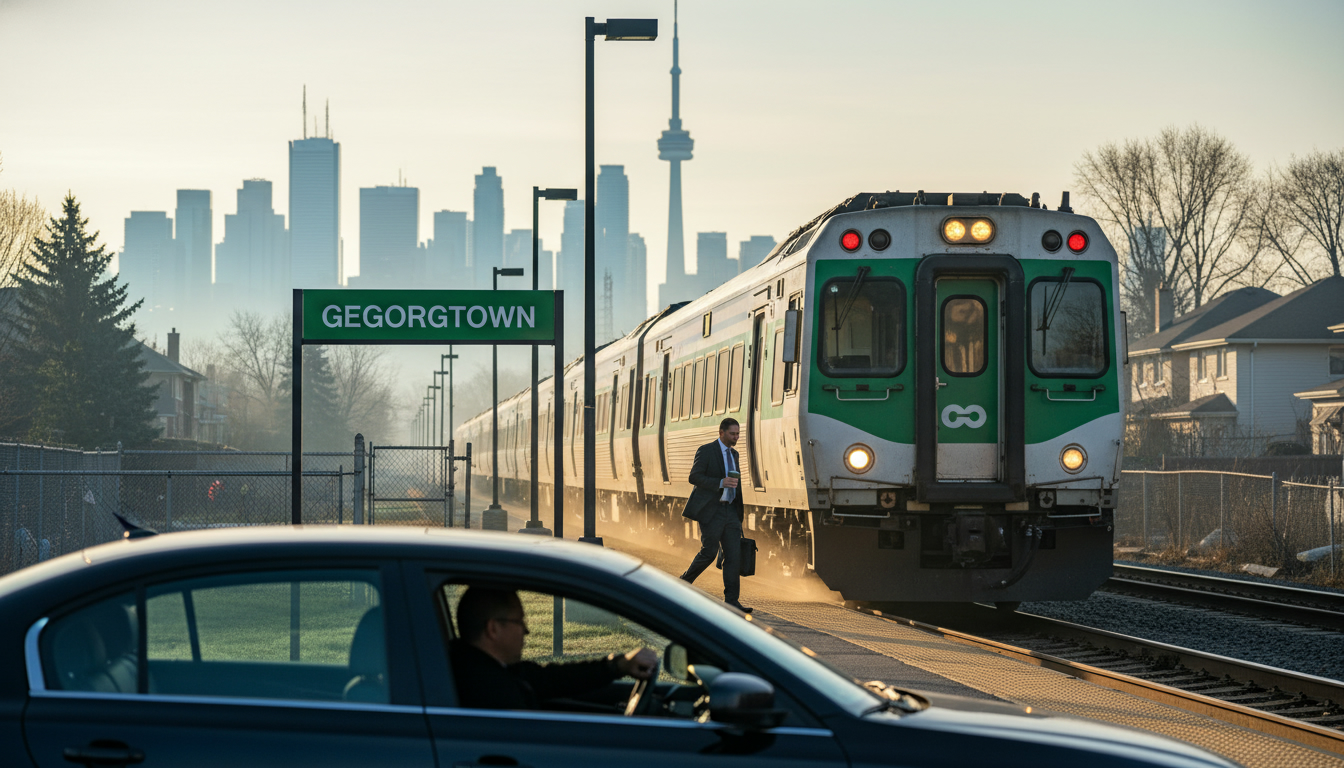
In Georgetown, a similar home within walking distance to the GO or downtown will close faster and for more than a peripheral home with longer commutes.
Numbers matter: track price per square foot in your immediate area. If comparable homes near transit sell for 10–15% more per sq ft than those two km away, that’s a real, monetizable gap.
Marketing the right location features — copy that converts
Buyers search using location keywords. Use them in your headline, bullets, and description.
Power keywords to include:
- “Walking distance to Georgetown GO”
- “Minutes to Highway 401/Highway 407”
- “Top-rated school zone”
- “Steps from downtown shops and trails”
- “Private backyard backing onto conservation area”
Don’t bury location facts. Put them front and center. Listings that lead with location attract the right buyers faster.
Pricing traps sellers fall into — and how to avoid them
- Trap: Averaging large neighbourhood comps. Fix: Use micro comps within the same block and with similar lot types.
- Trap: Overvaluing upgrades in a poor location. Fix: Present renovations, but anchor price to location-based comps.
- Trap: Underestimating the power of transit proximity. Fix: Calculate commute-time benefit for buyers and reflect it in price.
How a local expert changes the result (what to expect)
You need someone who knows every micro-pocket and how buyers behave in them. The right agent will:
- Produce a hyper-local comparative market analysis (CMA) with 10–12 micro comps.
- Build a location-led listing that targets buyers using the right keywords and channels.
- Price to meet your objective (max price or speed) and adjust fast based on real market signals.
If you’re in Georgetown, a local expert can translate Mississauga-level market tactics into the Georgetown market and find the buyer pool willing to pay for location.
Quick checklist for Georgetown sellers before listing
- Confirm nearest GO or transit commute times and mention them in the listing.
- Check school catchment boundaries and include school names and ratings.
- Audit the micro-location (busy road, cul-de-sac, park view). Note positives and negatives.
- Pull recent sold data within 1 km and match for lot size and age.
- Price intentionally for your objective: speed or max value.

Real ROI decisions: what to invest in and what to skip
- Invest in curb appeal: landscaping, fresh paint, a clean walkway. Small spend, big perceived value.
- Skip expensive renovations unless your home sits in a premium location where buyers expect high-end finishes.
- Invest in professional photos that show proximity to parks, transit, and downtown — location sells.
Get a local pricing playbook — not a guess
Location data + comparable analysis = predictable pricing. Guesswork loses money. A local agent who knows Mississauga and Georgetown pockets can convert location advantages into offers.
Contact: Tony Sousa, Local Realtor — tony@sousasells.ca | 416-477-2620 | https://www.sousasells.ca
FAQ — For Georgetown home sellers (location and pricing questions answered)
Q: How much does proximity to Georgetown GO affect home value?
A: Proximity to the GO increases buyer demand, especially from commuters to Toronto. Expect stronger buyer interest and higher sale-to-list ratios within easy walking distance. Track recent sold prices within a 1 km radius of the station to quantify the premium.
Q: Do school districts change price in Georgetown?
A: Yes. Homes in higher-rated school catchments attract families and often sell at a premium. Always list the school names and ratings. If you’re unsure of your catchment, your agent should confirm with the local board.
Q: Should I price my Georgetown home higher because it’s near a park?
A: If the park adds privacy or recreation (trails, waterfront, conservation area), yes. Buyers value usable green space. Use comparable sales that also back onto or face parks.
Q: What location features should I highlight in my listing for a faster sale?
A: Walking distance to transit, top schools, downtown core, conservation areas, major highways, and any community amenities (rec centres, farmers markets). Lead with them in your headline and bullets.
Q: How do micro-location negatives affect my price?
A: Negatives like being next to a busy road or commercial property reduce buyer interest. Your pricing should reflect the adjustment. Often a staged price below comparable will get buyers through the door and overcome minor negatives.
Q: Do renovations pay off in Georgetown?
A: Only when aligned with location. Cosmetic improvements and great staging have high ROI everywhere. Major structural renovations only pay if your home sits in a premium micro-location where buyers expect them.
Q: When’s the best time to list in Georgetown?
A: Spring generally has higher buyer traffic, but local demand, interest rates, and inventory levels matter more. A hyper-local agent will advise the best timing based on current market signals.
Q: How will you prove the price to potential buyers?
A: With a hyper-local CMA, documented commute times, mapped nearby amenities, school info, and comparable sale details. Buyers respond to clear, factual evidence of value.
Want a pricing playbook tailored for your street in Georgetown? I’ll produce a no-fluff CMA with micro comps and a recommended list price strategy. Contact Tony Sousa at tony@sousasells.ca or call 416-477-2620. Visit https://www.sousasells.ca for more.