How do I evaluate structural integrity?
Is your house really safe? Learn how to evaluate structural integrity fast and find problems before they cost you tens of thousands.
Quick answer — a click-ready breakdown
How do I evaluate structural integrity? Start with a targeted visual check, follow a step-by-step checklist focused on foundation, load paths, roof and moisture control, then call the right pro when signs point to movement or failure. Do it now if you’re buying or selling in Georgetown, ON.
Why structural integrity matters in Georgetown
Georgetown sits on rolling terrain at the edge of the Niagara Escarpment and in Halton Hills. Local soils (clay pockets, freeze-thaw cycles) plus older limestone and post-war housing stock mean small problems can get expensive fast. Structural issues can reduce sale value, kill financing, or create safety hazards. Know what to look for before you list or buy.

The 60-second inspection every homeowner should do
- Walk around the house perimeter. Look for obvious foundation cracks, bowed walls, or sloping ground.
- Check doors and windows: do they stick or have uneven gaps?
- Look at floors inside: any sagging, bouncy spots, or misaligned baseboards?
- Scan the roofline: is the ridge crooked or are eaves uneven?
If anything looks off, don’t ignore it.
Detailed step-by-step structural integrity checklist
Use this checklist when you or an inspector evaluate a home. Take photos, date them, and keep notes.
Exterior
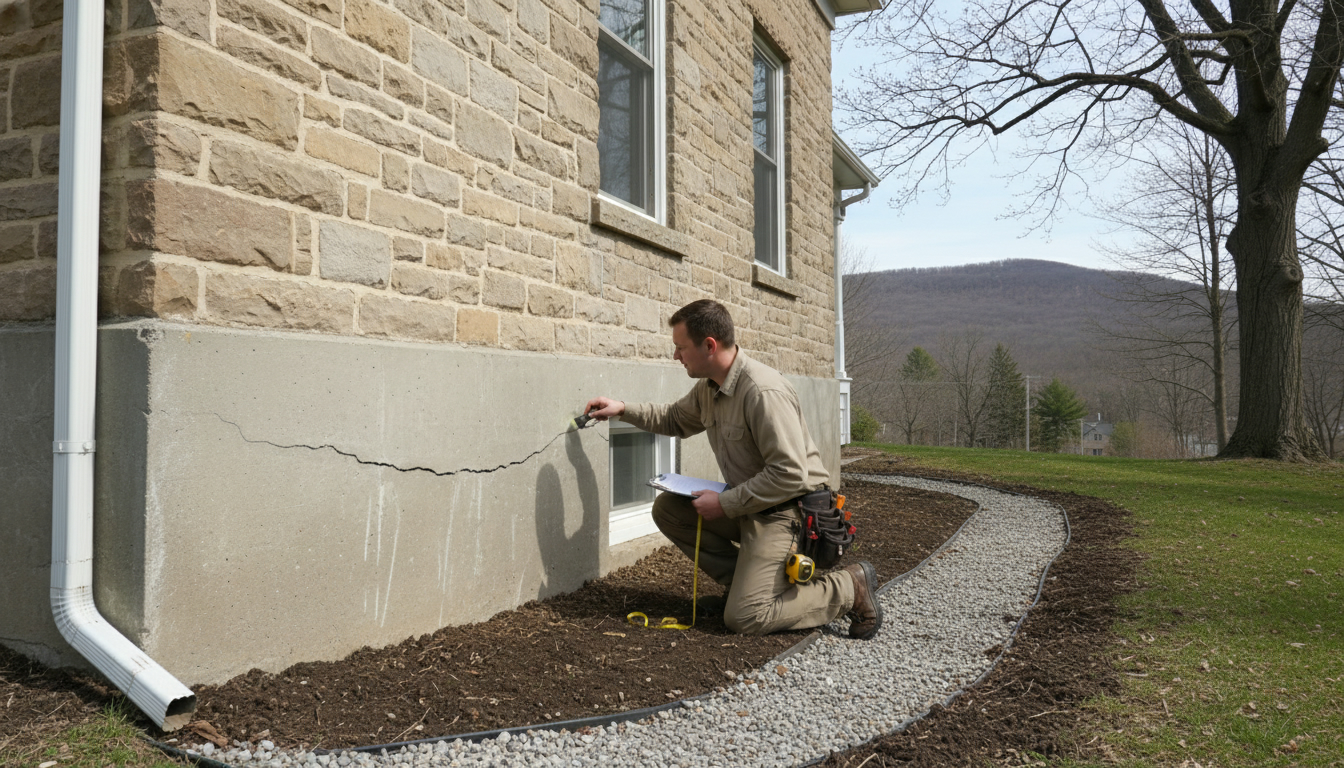
- Foundation walls: Inspect for horizontal cracks, stair-step cracks, or wide vertical gaps. Horizontal cracks or bowed walls = major warning.
- Settlement and grade: Look for downhill sloping toward the foundation. Poor grading and clogged eavestroughs cause saturation at the footings.
- Chimney and masonry: Look for leaning or separation from the house.
- Exterior cladding: Bulging, splitting, or gaps at wall corners point to movement.
- Roof structure and rafters: Look from the eaves for sagging, uneven lines, or missing truss members.
- Drainage and downspouts: Ensure downspouts discharge at least 1.5–2 metres from the foundation and grading slopes away from the house.
Interior
- Doors and windows: Sticking or uneven reveal is a classic sign of foundation settlement or movement in load-bearing walls.
- Cracks in drywall or plaster: Hairline cracks are normal; wide cracks over doorways or near corners may indicate movement. Measure them and note progression.
- Floor deflection: Walk across rooms. A bouncy or noticeably sagging floor over a span means joists or supports are compromised.
- Basement/crawlspace: Look for dampness, efflorescence (white powder), or spalled concrete. Check for rot and insect damage on wooden beams.
- Attic: Inspect roof sheathing for bowed rafters, rusted nails, or water stains around truss connections.
Systems that affect structure
- Sump pumps: Confirm operation and discharge location.
- Exterior drainage pipes and French drains: Look for signs of backups.
- Mature trees planted close to the foundation: Roots can cause soil movement and damage sewer lines.
Red flags that require immediate action
- New or widening diagonal cracks > 5 mm, especially near corners of windows/doors.
- Bowed or bulging foundation walls.
- Floors that sag or have sudden changes in slope.
- Separation or leaning chimneys.
- Repaired cracks that reappear or continue to spread.
When to call a specialist — who does what
- Licensed home inspector (pre-listing or pre-purchase): Good for a broad, documented assessment. They flag problems and recommend next steps. A pre-listing inspection in Georgetown helps you price and negotiate with confidence.
- Structural engineer (P.Eng): Required when you find major cracks, bowed walls, or load-path problems. Engineers give a diagnosis, drawings, and specifications for repairs.
- Foundation contractor or licensed mason: Executes repairs under engineer specs. Get three quotes and ask for references and warranties.
Tip: If the home inspector flags a structural issue, get an engineer’s brief evaluation before accepting or rejecting an offer. Lenders often require an engineer’s report for major fixes.
Local factors in Georgetown that change the game
- Freeze-thaw cycles: Forces water into cracks, expands them, and accelerates deterioration. Check after spring melt and fall freeze seasons.
- Clay and mixed soils: These shrink and swell with moisture. That causes differential settlement common across Halton Hills.
- Older stone and brick foundations: Many older Georgetown homes have masonry foundations built before modern waterproofing. These need careful moisture control and sometimes tuckpointing.
- Niagara Escarpment slopes: Properties on slopes or near escarpment edges need extra attention to grading, retaining walls, and run-off control.
- Conservation authority rules: Work near watercourses or steep slopes may require permits from Credit Valley Conservation or Halton Region. Confirm before you dig or install mitigation.

Pre-listing inspection strategy for sellers in Georgetown
- Order a pre-listing home inspection that includes a structural focus. It reduces surprises for buyers, speeds sales, and gives you a chance to make targeted repairs.
- Get an engineer’s letter for any major issues you fix. Buyers and banks prefer documented repairs.
- Package invoices and before/after photos in a disclosure file to show transparency. Buyers in Georgetown value trust and local knowledge.
Typical fixes and ballpark costs (Ontario context)
- Crack repair and epoxy injection: $500–$3,000 depending on size and accessibility.
- Foundation underpinning and helical piles: $8,000–$40,000+ depending on severity and house size.
- Exterior grading and drainage work (French drain, regrading): $2,000–$10,000.
- Chimney stabilization or rebuilding: $2,000–$15,000 depending on scope.
- Structural beam or joist replacement: $1,500–$10,000 depending on access and span.
Costs vary. Get local quotes from Halton contractors.
Negotiation and disclosure tips for sellers
- Disclose known structural issues up front. In Ontario, failure to disclose can lead to legal trouble and deal breakdowns.
- Present a plan: inspection report, engineer letter, and contractor estimate. Buyers respond better when they see a path to resolution.
- Use fixed repair credits for minor issues and documented fixes for major ones.
Simple maintenance that prevents structural problems
- Keep gutters clean and downspouts pointed away from the foundation.
- Maintain consistent moisture levels around the foundation during summer droughts and spring melts.
- Trim trees and control root growth within 3–4 metres of the house.
- Check the attic and roof after storms; a small leak becomes a structural problem fast.

Conclusion — act like a seller and a pro
If you own, sell, or buy in Georgetown, treat structural checks as non-negotiable. A quick inspection today can prevent a deal meltdown or a major expense next year. For help with a pre-listing inspection, structural referrals, or local contractor recommendations in Halton Hills and Georgetown, contact Tony Sousa. He knows the buildings, the soil, and the right professionals to solve issues fast.
Contact Tony Sousa — Local Realtor and trusted inspector network connector
- Email: tony@sousasells.ca
- Phone: 416-477-2620
- Website: https://www.sousasells.ca
FAQ — Clear, short answers to common structural questions
Q: How do I know if a crack is serious?
A: Hairline cracks are common. Serious cracks are wide (>5 mm), diagonal at corners of openings, horizontal in foundation walls, or growing quickly. Get an engineer if you see these.
Q: Can a home inspector evaluate structural integrity?
A: Yes, a licensed home inspector can identify signs of structural issues and recommend an engineer for diagnosis and repair specs.
Q: When does a lender require a structural report?
A: Lenders often require an engineer’s report for major foundation problems, severe settlement, or when a home shows significant structural movement.
Q: Are older Georgetown stone foundations a deal breaker?
A: Not automatically. Many can be stabilized and waterproofed. Get an engineer assessment and contractor quotes before deciding.
Q: What’s the fastest way to stop foundation damage?
A: Fix drainage: gutters, downspouts, grading. Reduce moisture swings next to the foundation and repair any leaking plumbing.
Q: Should I do a pre-listing inspection?
A: Yes. It gives you negotiating power, speeds the sale, and demonstrates transparency to buyers.
Q: How much will a structural engineer cost?
A: A basic inspection and short report typically runs $500–$2,000. Full engineering drawings and permits cost more.
Q: Who enforces building rules in Halton Hills?
A: Halton Region Building Services and Credit Valley Conservation enforce permits and work near slopes/waterways. Check permits before major work.
If you’re selling or buying in Georgetown and need a reliable pre-listing inspection, structural referrals, or contractor vetting — reach out to Tony Sousa at tony@sousasells.ca or 416-477-2620. Get local advice and avoid costly surprises.