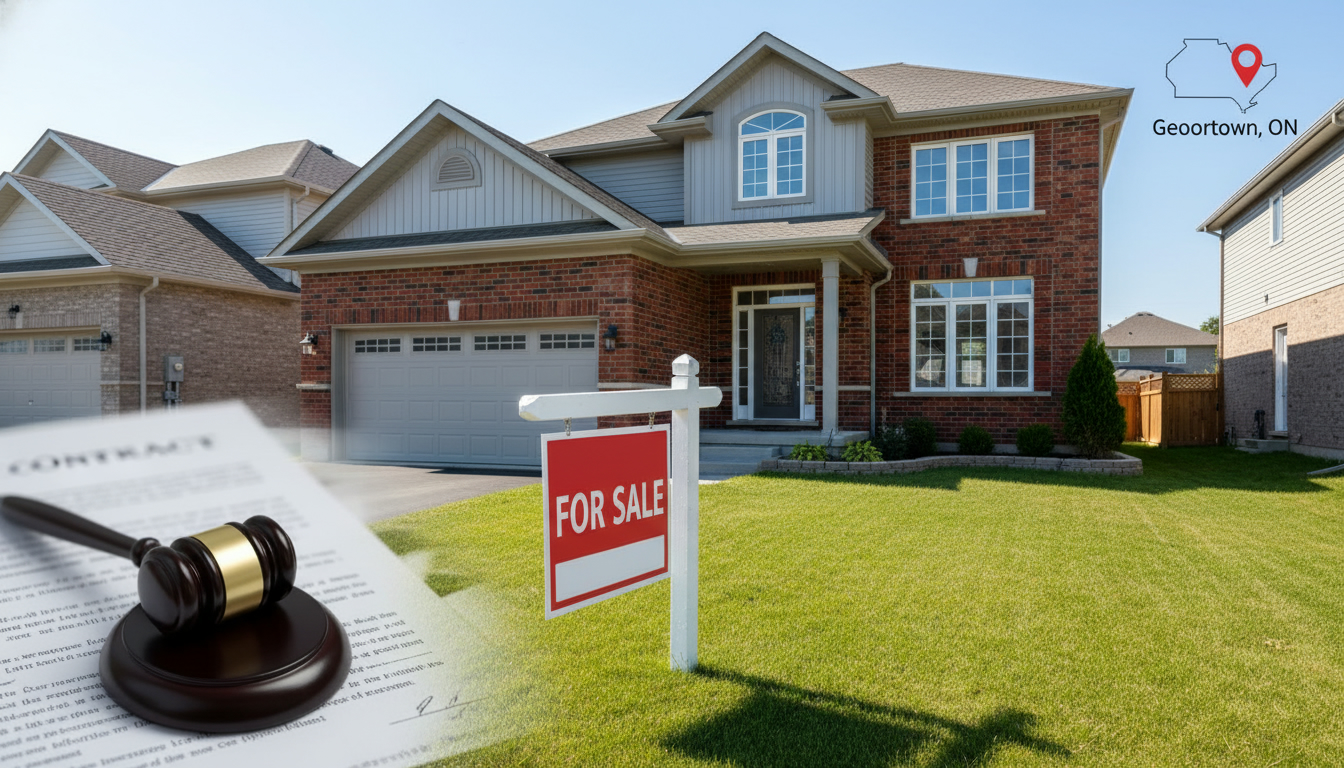
Can I challenge a lien or easement on a
property?
Think a lien or easement can block your Georgetown sale? Here’s a fast, no-fluff plan to challenge it and keep your closing on schedule.
Quick answer: Yes — but it depends on the type, the paperwork, and how fast you act
You can challenge some liens and some easements. You can sometimes remove them, reduce their scope, or negotiate a solution so a buyer closes without surprises. But not every cloud on title disappears. The outcome depends on the legal basis for the lien or easement, how it was registered, and whether deadlines or statutory rights apply under Ontario law.
This guide gives sellers in Georgetown, ON (Halton Hills) a clear, local plan: what to check, exact steps to take, realistic outcomes, timelines to watch, and how to close with confidence. No fluff. Practical moves you can execute this week.
The local reality: what you’ll see in Georgetown
- Municipal tax arrears: Halton Hills can place a lien for unpaid property taxes. That’s common and enforceable.
- Construction and vendor liens: contractors and subcontractors may register a builders’ lien under provincial rules if they worked on the property and weren’t paid.
- Court judgments and mortgage-related charges: a judgment creditor or lender can register a charge against title.
- Utility and developer easements: developers and utilities often record rights-of-way, drainage, or access easements in subdivision plans.
- Prescriptive and historic easements: long-standing uses (paths, driveways) can create rights if the legal tests are met.
Georgetown sellers must clear title or explain encumbrances to buyers. Buyers’ lawyers will flag these issues during title search and may require removal, compensation, or indemnity insurance.
Step-by-step action plan for sellers in Georgetown
- Order an up-to-date title search
- Get a current Land Titles or Registry search from the Ontario land registration system. This shows registered liens, easements, charges, and encumbrances. Do this immediately.
- Get a legal review from a real estate lawyer who knows Halton Hills
- A local real estate lawyer will read the entries, check registration dates, and advise whether any claim is stale, improperly registered, or challengeable.
- If you already have a lawyer, ask for a ‘title problem memo’ — a short, practical plan of attack.
- Order a property survey or confirm plan details
- A survey confirms exact boundaries and shows if the easement area aligns with what’s registered. Many easements relate to boundaries; a review can find mismatches.
- Ask for documentation from the lien/easement holder
- Demand the statement of claim, invoice, or easement agreement. Sometimes a simple negotiation or proof of payment will lead to a discharge.
- Negotiate a discharge, variation, or payment plan
- Most liens are settled by paying the debt or negotiating a lesser amount. Easements can sometimes be narrowed or exchanged for compensation.
- Use title insurance strategically
- Title insurance can protect a buyer or seller against many title defects and unknown liens. It rarely removes an easement but can make a buyer comfortable enough to proceed.
- If negotiation fails, file the right court application
- For improperly registered liens or defective easements, your lawyer may apply to the Superior Court of Justice to have the instrument removed or varied. This is a legal step for when negotiation won’t work.
- Disclose and manage the sale timeline
- Don’t hide encumbrances. Disclose early and set realistic closing dates. Buyers are more likely to cooperate if they see a plan and clear dates for removal.
Legal considerations and realistic outcomes
- Validity matters: Properly registered liens and easements are powerful. If they were registered correctly, a court may refuse to remove them unless there’s a legal defect.
- Time limits: Some claims have strict preservation or limitation periods. Missing a deadline weakens a lienholder’s position. Ask your lawyer about timelines specific to construction liens and judgments. Act fast.
- Prescriptive easements: Long-term uninterrupted use can create rights. If someone claims a prescriptive easement, the key questions are duration, exclusivity, and openness of use.
- Municipal powers: Tax liens and some municipal charges are statutory and harder to remove without paying or pursuing judicial relief with strong grounds.
- Cost vs. benefit: Litigation is expensive. Often the smart move is negotiation, payment, or creative solutions (partial discharge, indemnity insurance).
Practical negotiation tactics that work in Georgetown
- Create leverage with timelines: If a buyer is ready and funds are conditional only on title clear, you can use that position to negotiate a payment plan with the lienholder in exchange for a conditional discharge.
- Offer limited compensation: Small lienholders often accept a fraction of the claimed amount if they’ll sign a release.
- Use a trust holdback at closing: Put disputed funds into trust until the lien is cleared. This keeps the sale moving while protecting the buyer.
- Indemnity or title insurance: Offer the buyer title insurance or an indemnity agreement that covers the specific claim — buyers often accept this in exchange for a small price concession.
When you can win in court
- Improper registration: If the lien or easement wasn’t properly executed or registered, a court can order removal.
- Fraud or forgery: Clear cases where the instrument is fraudulent can be struck down.
- Abandonment: If an easement hasn’t been used for decades and the legal elements for prescriptive rights aren’t met, extinguishment may be possible.
Court action takes time. Use it when the legal position is strong or when settlement isn’t an option.
Cost checklist and expected timelines (ballpark)
- Title search: Same day to a few days.
- Lawyer review and negotiation: 1–3 weeks typical.
- Survey: 2–6 weeks depending on availability.
- Negotiation and discharge: Days to weeks if parties cooperate.
- Court application: Months. Expect 3–12+ months depending on complexity.
- Title insurance: Immediate once policy issued by insurer.
Budget for legal fees and potential payouts. A measured negotiation often costs far less than litigation.

Local contacts and records you should check now
- Town of Halton Hills — tax and municipal charge records (for municipal liens)
- Ontario Land Registry / Land Titles — current registered instruments
- Local utility companies — confirm outstanding easements or agreements
- Your real estate lawyer and title insurer
Tony Sousa, a Georgetown real estate expert, regularly coordinates these searches and legal teams for sellers in Halton Hills. He can expedite title clarity and connect you with trusted local lawyers who specialize in property litigation and title issues.
Sample seller checklist — start today
- Order title search and print the encumbrance report.
- Call your lawyer and request a title problem memo.
- Request a survey or confirm current one.
- Contact Halton Hills tax office to confirm tax status.
- Ask the lien/easement holder for supporting documents.
- Decide: negotiate, pay, or litigate — based on lawyer’s advice.
- Discuss title insurance or trust holdback options with buyer’s counsel.
Final thoughts: don’t let a document ruin your sale
Most liens and easements are solvable. The problem becomes insoluble when sellers ignore the issue or act late. Start early, get local legal counsel, and use negotiation tools: payment plans, limited releases, holdbacks, and title insurance.
Take action immediately if you see any encumbrance on title. The earlier you engage, the cheaper and faster the fix.
Contact and next step
If you’re selling a home in Georgetown, Halton Hills and want help clearing title issues fast, contact Tony Sousa — he coordinates surveys, lawyers, and title insurance to get homes sold on schedule.
Email: tony@sousasells.ca
Phone: 416-477-2620
Website: https://www.sousasells.ca
(Please consult a licensed Ontario real estate lawyer for legal advice. This post is practical guidance and local context, not a substitute for legal counsel.)
FAQ — Top questions Georgetown sellers ask about liens, easements, and title problems
Q: What’s the difference between a lien and an easement?
A: A lien is a charge against title to secure payment (taxes, judgments, construction debts). An easement is a right someone has to use part of your land (access, utilities). Liens usually affect sale proceeds. Easements affect how land can be used.
Q: Can a municipality force a sale for unpaid property taxes in Halton Hills?
A: Municipalities have statutory powers to collect unpaid taxes, including registering tax arrears on title and pursuing collection. If you face tax arrears, contact the Halton Hills tax office immediately and your lawyer to discuss repayment plans or remedies.
Q: How long does a builder’s or construction lien last in Ontario?
A: Construction liens have preservation timelines and enforcement deadlines under Ontario’s Construction Act. Missing preservation or enforcement deadlines weakens the lien. Ask your lawyer to confirm deadlines for the specific claim.
Q: Will title insurance remove an easement or lien?
A: Title insurance protects against many title defects and offers financial coverage for unexpected losses. It usually won’t remove a valid, registered easement. It may insure a buyer against certain risks, allowing a sale to proceed.
Q: Can I sell my house with a lien or easement on it?
A: Yes, but buyers will want clarity. Common solutions: discharge of the lien before closing, a trust holdback, buyer’s title insurance, or negotiation where the buyer accepts the encumbrance for a price concession.
Q: What if someone claims a prescriptive easement over my property?
A: Prescriptive rights depend on continuous, open, and exclusive use for the statutory period. If you’re served with a claim, get a lawyer. Evidence, surveys, and witness statements become critical.
Q: How long does it take to remove an improperly registered lien?
A: If the instrument is clearly defective, a court or registrar application can remove it — timelines vary. Quick challenges take weeks; contested litigation takes months.
Q: Who pays to clear title — buyer or seller?
A: Typically the seller clears encumbrances that existed before sale. But sometimes parties negotiate splitting costs or the buyer accepts certain encumbrances in exchange for a price adjustment.
Q: Where do I get records for my property in Georgetown?
A: Start with the Ontario land registry/land titles, Town of Halton Hills tax office, and any mortgage/utility providers tied to the property. Your REALTOR® and lawyer can pull these reports for you.
Q: Should I delay listing until title is clear?
A: If an encumbrance is serious, clear it before listing. For minor or negotiable issues, disclose them and present your plan to resolve. Buyers prefer transparency and a clear timeline.
If you want direct, local help clearing a lien or easement before your next listing, email tony@sousasells.ca or call 416-477-2620. He connects sellers with the right lawyers and moves the sale forward on time.