What is a zoning certificate and do I need it?
Ready to lose a sale? Here’s the zoning certificate every Georgetown home seller must understand
Quick answer
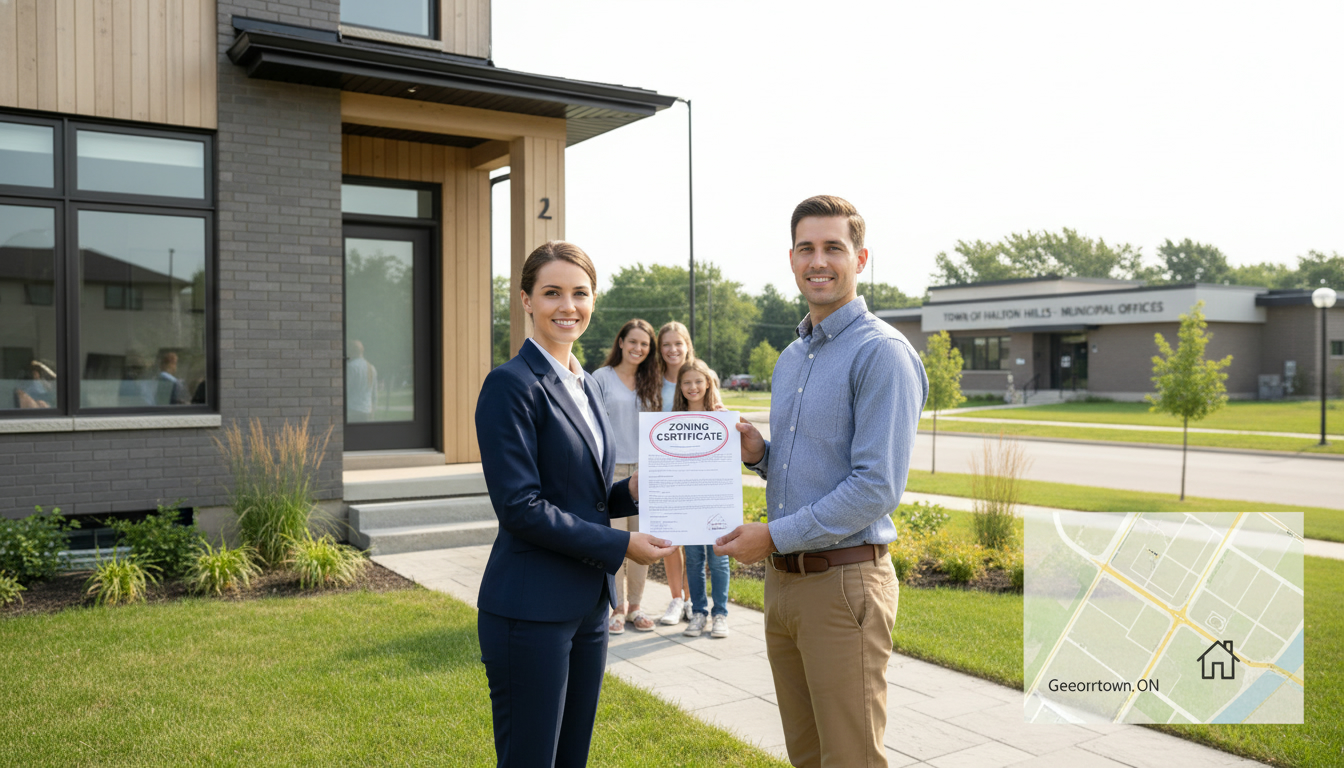
A zoning certificate (also called a zoning compliance letter or certificate of zoning compliance) is a municipal document that confirms how a property is legally used under the local zoning by-law. If you’re selling a home in Georgetown, Ontario, yes — you likely need one or you should at least understand whether one will be requested by buyers, lenders, or your lawyer. Getting clarity now avoids delays, price reductions, or failed closings.
What is a zoning certificate — plain and simple
A zoning certificate tells buyers and stakeholders three things:
- What the property is legally allowed to be used for (residential, home occupation, accessory apartment, etc.).
- Whether structures on the lot (detached garages, sheds, pools, decks, additions) meet zoning rules — setbacks, lot coverage, height limits.
- If there are existing variances, legal non-conforming uses, or outstanding zoning violations.
Municipalities use zoning certificates to reduce risk. They confirm whether a property complies with the Town of Halton Hills zoning by-law and flag any legal issues buyers need to know before they commit.

Why Georgetown home sellers should care
If you’re selling in Georgetown, you’re operating in a competitive market where buyers and lenders are cautious. A zoning certificate is one of the legal documents most likely to be requested during a sale. Here’s why it matters:
- Buyers’ lawyers often ask for zoning confirmation to clear title and confirm permitted uses.
- Lenders may require proof before releasing mortgage funds.
- Issues like illegal basement apartments, additions built without permits, or non-permitted sheds can kill a deal or force price concessions.
- Knowing zoning risks ahead of listing gives you control. Fix problems or disclose them and avoid last-minute surprises.
What a zoning certificate typically checks (and why sellers get tripped up)
- Land use: Is the property zoned residential, mixed-use, or something else? That affects future use and buyer pool.
- Setbacks and lot coverage: Did a previous owner build closer to the property line than allowed? Backyard sheds or extensions can be non-compliant.
- Accessory units and illegal suites: Many older homes in Georgetown have finished basements. If that suite was never permitted, it’s a red flag.
- Additions and renovations: Was the garage converted? Was a deck extended? If permits weren’t pulled, the municipality may list non-compliance.
- Pool and fence requirements: Pools often require permits and proper fencing; missing permits show up in a zoning review.
- Variances and legal non-conforming uses: Some homes were legalized by variance in the past; the certificate confirms these details.
If any of these items are flagged on the zoning certificate, buyers will want answers and lawyers will request solutions. That usually means extra cost, time, or a price reduction.
How zoning works in Georgetown (local, practical steps)
-
Town of Halton Hills is the authority. The planning and building departments administer zoning by-laws for Georgetown. When you request a zoning certificate, the municipal staff check their records and the property against the zoning by-law.
-
Expect a property file review. Municipal staff will look at permits, past variances, and any open orders related to building or zoning.
-
Conservation and environmental checks. Some properties near rivers or natural areas have additional restrictions from Conservation Halton. If your lot sits in a regulated area, the zoning certificate may note that additional approvals are required.
-
Heritage properties. Parts of downtown Georgetown have heritage designations. If your home is in a heritage district, you may need special permits for alterations — the zoning certificate may reference heritage status.
-
Timeline and cost. Typical turnaround varies. Some simple requests take a week; complex files take longer. Fees differ by municipality. Ask the Town of Halton Hills for current processing fees and timelines.
How to get a zoning certificate in Georgetown — step-by-step for sellers
-
Talk to your realtor and lawyer first. They’ll advise whether you should order one pre-listing. Most sellers order it early to remove uncertainty.
-
Collect paperwork: deed, site plan (if you have one), building permits, and records of renovations. The more you provide, the faster staff can process the request.
-
Submit the application to Town of Halton Hills Planning/Building Department. There’s a form and fee. Municipal staff will search records and do a zoning check.
-
Review the certificate carefully. If it lists issues, act immediately. Options include applying for a variance, applying for retroactive permits where possible, or disclosing the item and adjusting price.
-
Share the certificate with your buyer’s lawyer. If there are conditions, negotiate how they’ll be resolved before closing.
Common problems for Georgetown sellers and how to handle them
- Illegal basement suite discovered: Disclose and work with your lawyer. You may need to apply for legalization or remove rental use before closing. Some buyers will accept an “as-is” sale with adjustments.
- Unpermitted addition: If late permits aren’t possible, obtain a letter explaining what can be done or negotiate the price.
- Property encroachment: If a structure crosses property lines, get a survey and consult a lawyer. Boundary disputes must be resolved or disclosed.
- Conservation area restrictions: If your lot falls in a regulated area, speak with Conservation Halton early. Some works need permits and could limit future development.
What it costs you if you ignore a zoning certificate
- Delayed closings. Buyers can walk if a material issue appears late.
- Reduced sale price. Buyers will demand credits or price drops to cover risk.
- Legal liabilities. Concealing known non-compliance can lead to lawsuits.
- Forced remedial work. Municipal orders can require you to remove structures or undertake costly fixes.
A small municipal fee for a zoning certificate is cheap insurance against these outcomes.
Timing: When to order a zoning certificate
Best practice for Georgetown sellers: order a zoning certificate before you list the home. That gives you time to:
- Fix problems.
- Price the home accurately.
- Avoid seller concessions or failed deals.
If you didn’t order one earlier and a buyer asks, be prepared to speed up the process and be transparent.
Practical checklist for Georgetown home sellers
- Order a zoning certificate from Town of Halton Hills early.
- Gather building permits, site plans, and surveys.
- Check for heritage designation, conservation limits, or variances.
- Disclose any non-permitted work.
- Talk to your realtor and lawyer about implications and next steps.
Summary — the no-fluff bottom line
A zoning certificate is not optional in many sales — it’s a risk-control document buyers, lenders, and lawyers expect. For Georgetown sellers, ordering a zoning certificate early is smart. It reduces surprises, protects your timeline, and often saves money.
If you want a straight answer and local help that moves the deal forward, contact Tony Sousa. He knows the Town of Halton Hills process, common local pitfalls, and how to get buyers across the line.
Contact Tony Sousa
Email: tony@sousasells.ca
Phone: 416-477-2620
Website: https://www.sousasells.ca
FAQ — Zoning certificates and legal documents for Georgetown sellers
Q: Does every buyer ask for a zoning certificate?
A: Many buyers’ lawyers will request zoning confirmation. It’s common. Lenders may also request it for financing.
Q: How long does it take to get a zoning certificate in Georgetown?
A: Simple requests can take a week or two. Complex files involving older permits or conservation issues may take longer. Check current timelines with Town of Halton Hills.
Q: How much does a zoning certificate cost?
A: Fees vary. Expect a modest municipal fee. If you need surveys or legal work, those costs are additional.
Q: What if my basement apartment isn’t permitted?
A: Disclose it. You can try to legalize the suite, remove it before closing, or negotiate an “as-is” sale with the buyer.
Q: Will a zoning certificate stop a sale?
A: It can delay or complicate a sale if it reveals serious non-compliance. But it doesn’t automatically stop a sale. Early disclosure and solutions keep deals moving.
Q: Do I need a survey for a zoning certificate?
A: Not always, but a survey helps with boundary or encroachment questions and speeds up processing.
Q: Who issues the zoning certificate in Georgetown?
A: The Town of Halton Hills planning/building department issues zoning certificates. If your lot is in a regulated natural area, Conservation Halton may have requirements as well.
Q: Should I order a zoning certificate before listing?
A: Yes. Ordering one early reduces surprises, protects your price, and avoids closing delays.
If you need support navigating this process in Georgetown, contact Tony Sousa for local experience and fast answers: tony@sousasells.ca | 416-477-2620 | https://www.sousasells.ca