How do I protect floors and walls during a move?
How do I protect floors and walls during a move? — 12 Practical Fixes That Save Your Deposit and Home Value in Georgetown
Moving day is messy. But messy doesn’t have to mean costly. If you’re selling a home in Georgetown, ON, one scuff or gouge can reduce buyer confidence and cost you thousands. Stop guessing. Use this step-by-step plan to protect hardwood, tile, carpet, stairs, and walls — the exact methods I recommend to sellers in downtown Georgetown, Glen Williams, and the surrounding Halton Hills.
Why this matters in Georgetown
Georgetown homes have charm: original hardwood floors, narrow Victorian hallways on Main Street, classic baseboards in older neighbourhoods. Buyers notice floors and walls first. Real estate showings and inspections flag even small damage. Protecting surfaces keeps sale value high and speeds up offers. This is not extra work — it’s smart investment.
Quick checklist before we start
- Take time-stamped photos of all floors, stairs, walls, and baseboards.
- Measure main pathways from front door to living room, kitchen, and garage.
- Gather materials: rosin paper, floor runners, Masonite/plywood sheets, moving blankets, corner guards, painter’s tape, adhesive felt pads, stretch film, heavy-duty tape, and carpet runners.
- Pick a single high-traffic route for movers and guests.

Materials and tools you must have (local sources: hardware stores in Georgetown or big-box stores nearby)
- Rosin paper rolls: cheap, breathable, great for hardwood.
- Adhesive floor runners (visqueen or reinforced runners): quick and durable for movers.
- Masonite or 1/4–1/2″ plywood sheets: use under heavy furniture and appliances.
- Moving blankets and furniture pads: reusable and protective for walls and big items.
- Corner guards: foam or plastic for doorways and wall edges.
- Painter’s tape and 48mm packing tape: low-tack to avoid finish lift.
- Stretch wrap: for bundling furniture and protecting upholstery.
- Felt pads and sliders: place under legs to avoid scratching.
- Doorway shields and stair protectors: for condos and multi-level homes.
- Utility knife, tape dispenser, marker, measuring tape.
Step-by-step floor protection (use this exact order)
- Clean and inspect: sweep or vacuum pathways. Remove grit that causes scratches.
- Designate a single route: front door → main hallway → elevator/garage/side exit. Tell movers to use only that path.
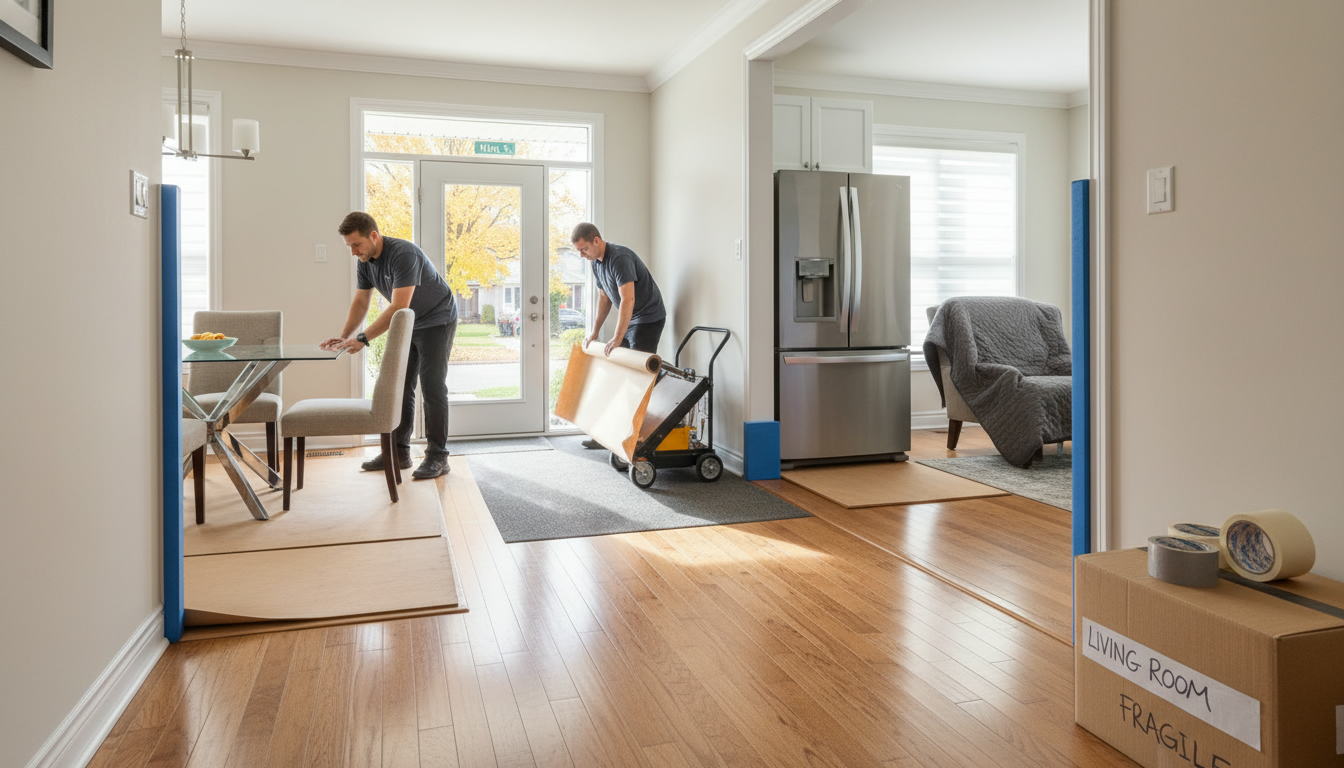
- Lay rosin paper or floor runner: roll it along the path and secure edges with painter’s tape. Use rosin paper for hardwood — it breathes and won’t trap moisture.
- Reinforce with Masonite/plywood where heavy loads will pass: appliances, pianos, pool tables, large dressers. Place sheets flat and tape seams.
- Use adhesive runner on stairs and landings: stair treads get the most wear during a move. Buy non-slip runners that adhere but remove cleanly.
- Protect thresholds and transitions: use corner guards and tape to prevent chips at door frames and tile edges.
- For carpets: use carpet film to prevent dirt and water absorption. Add adhesive runners over the film for traction.
- For tile and grout: use thin plywood or hardboard to distribute weight and prevent cracking from point loads.
- Secure everything: tape edges, staple moving blankets to protect baseboards where necessary, and place durable mats at entry points for wet weather.
Step-by-step wall and corner protection
- Identify high-risk walls: narrow hallways, tight corners, and rooms you’ll move large items through.
- Wrap large furniture in moving blankets and use stretch film to hold blankets in place. This prevents scratches when items brush walls.
- Install foam corner guards on protruding corners and door jambs. Use painter’s tape or removable adhesive strips to avoid paint damage.
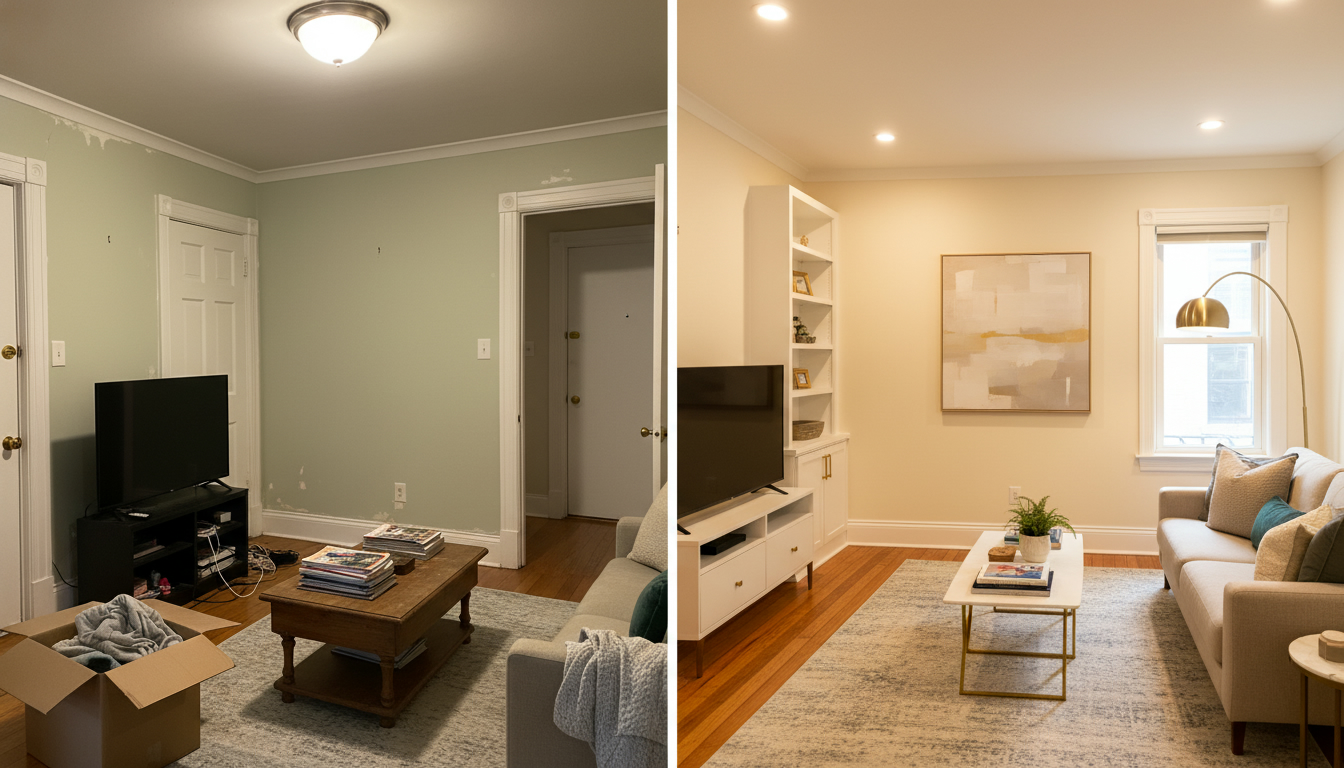
- For paint touch-ups, keep a small kit: matching paint, a small brush, and spackle. Address scuffs quickly to avoid buyer concerns.
- Use wall runners or cardboard sheets along stretches of wall where long items (mirrors, headboards) will pass.
- Protect door frames and baseboards with adhesive-backed felt or foam. This prevents dents and keeps the trim pristine for showings.
Moving heavy items safely — the damage prevention blueprint
- Use a dolly with straps. Never slide heavy items across the floor. Sliding causes gouges.
- Put plywood under dolly wheels when crossing delicate floors.
- Hire 2–3 strong movers for bulky pieces. One wrong angle will scrape paint or floors.
- Disassemble bulky furniture where possible. Smaller pieces are easier to protect and move.
- Elevate furniture on sliders/felt pads while moving. That reduces friction and scratches.
Weather and seasonal tips for Georgetown moves
- Winter (ice and salt): keep boot covers at the ready. Place absorbent mats inside the entry and salt/brush sidewalks before movers arrive.
- Rain: use waterproof plastic sheeting at entry points and secure it so it won’t slip on stairs.
- Mud season/spring: lay extra runner from the curb through the house. Clean footwear at each entrance.
Hiring movers in Georgetown — exact questions to ask
- Do you provide floor runners, rosin paper, and corner guards? If not, what will you use?
- Do you have experience with older Georgetown homes and narrow hallways on Main Street?
- Can you show proof of insurance and damage claims history?
- Will you assign a crew leader who knows the protection plan?
- Can you sign a short move plan that limits traffic to one path and agrees to use my protection materials?
If a mover hesitates to follow your protection plan, hire someone else. A company that refuses basic protection is a liability, not a value.
Staging and showings during a move: keep it sale-ready
- Keep protection down during open houses. Use clean runners and replace any stained or dirty sheets.
- Remove day-to-day clutter from protected paths so guests can see the home, not the chaos.
- Keep a labeled toolbox and touch-up kit in the kitchen or staging closet.
Document everything — the proof that keeps you safe
- Before movers arrive, take video walkthroughs of all floors, walls, stairs, and baseboards. Time-stamp or upload to cloud storage.
- After movers finish, repeat the walkthrough. Compare footage and note any damage immediately.
- Keep receipts for protective materials and contractor repairs. These support claims if damage occurs.

Cost vs. value — why protecting surfaces pays
- A small scratch on hardwood can mean a buyer discount for refinishing or replacement. That’s often hundreds or thousands of dollars.
- Protection materials are cheap: a few dozen dollars for rosin paper and tape, a couple of plywood sheets for heavier items, less than a few hundred total in most moves.
- The ROI is immediate: better showings, fewer buyer objections, and full sale price retention.
Local nuance: Georgetown-specific notes
- Historic homes near Silver Creek and Main Street often have original narrow staircases. Use stair-specific runners and extra padding.
- Newer subdivisions east of Hwy 7 may have modern open-plan floors that are easier to protect with runners but watch out for tile transitions.
- Condos near the GO station require elevator protection; reserve elevator pads and hallway runners and coordinate timing to avoid other residents’ traffic.
Final move-day script to hand to movers (print this)
- Front door only entry. Use marked path on the floor.
- All large items wrapped in blankets and stretch film.
- Masonite/plywood under every appliance, piano, and pool table.
- Tape edges of runners and secure corner guards.
- No shoes with spikes; boot covers on in wet conditions.
- Take photos of any contact points after each major item is moved.
Call to Action
If you’re selling in Georgetown and want an expert who protects your home’s value, get professional guidance. I help sellers plan moves that protect floors, walls, and sale price. Email tony@sousasells.ca or call 416-477-2620. Visit https://www.sousasells.ca for tailored moving and staging support.

FAQ — Protecting Floors and Walls During a Move (quick, direct answers)
Q: What’s the single best protection for hardwood floors?
A: Rosin paper plus adhesive floor runner. Rosin protects the finish and runner stops wear from boots and dollies.
Q: Will tape damage my floor finish?
A: Use painter’s tape or low-tack adhesive tape. Avoid duct tape or heavy adhesive on bare wood.
Q: How do I protect stairs?
A: Use stair runners with non-slip backing and add corner guards at top and bottom landings.
Q: Should movers use boot covers?
A: Yes — especially in wet or snowy conditions common in Georgetown. Boot covers prevent grit and salt damage.
Q: Are moving blankets enough for walls?
A: Moving blankets protect walls when wrapped around furniture. For tight corners, add foam corner guards and cardboard panels.
Q: How do I protect tile and grout?
A: Use thin plywood or Masonite to distribute the weight of dollies and heavy items. Avoid point loads.
Q: What if a mover damages my floor?
A: Document with time-stamped photos/video. Report to the mover immediately and file a claim with their insurance. Keep receipts for repairs.
Q: How much does protection cost?
A: Basic protection materials usually cost under $150. Adding Masonite or hired floor protection can raise it to $200–$500 — still small versus repair costs.
Q: Do I need to disclose protective measures to buyers?
A: No. You simply present a well-maintained home. Protection prevents damage and preserves value.
Q: Any Georgetown-specific tips?
A: Reserve elevator and hallway protection for condos near the GO station. Use extra padding for narrow Victorian staircases on Main Street.
If you want a direct plan for your specific Georgetown home — floor plan, stairs, or unique trim — email tony@sousasells.ca or call 416-477-2620. I’ll walk you through a custom protection checklist and a move-day script for your movers.
Image used for blog post: see image metadata fields below.