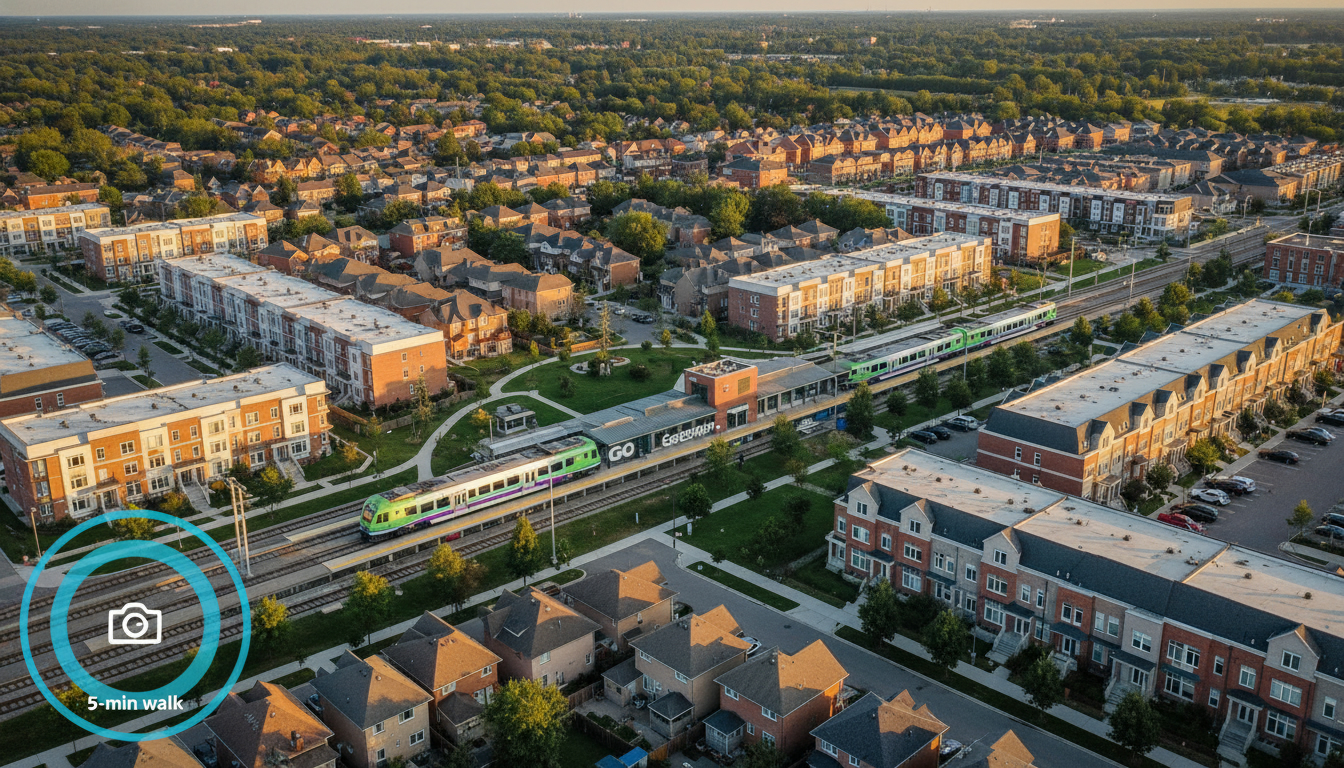
How does proximity to transit affect value?
Can being a 5-minute walk from Georgetown GO add $20,000–$75,000 to your sale price? Read on—this changes how you price, prep, and sell.
Why transit proximity matters for Georgetown home sellers
Buyers pay for convenience. In Georgetown, that convenience usually means the GO Station and regular bus connections. Being close to transit changes who will bid on your house and how much they’re willing to pay. Simple facts:
- Properties within a short walk (about 400–800 metres) to a frequent transit stop often sell for a measurable premium. Studies and market reports typically show a 5–20% uplift, depending on local supply and demand.
- Transit reduces perceived commute time. For commuters to Toronto or surrounding employment hubs, a short walk to Georgetown GO is a direct dollar benefit.
- Planned service upgrades and regional investment raise buyer confidence. When people expect better service, demand rises now — not later.
If you’re selling in Georgetown, ON, transit proximity is not a gimmick. It’s a selling point. You must treat it like one.
How distance to transit translates into dollars — a practical guide
Think in zones, not guesswork:
- Zone A (0–400 m / ~5 min walk): Highest premium. Strongest demand from commuters and young professionals. Expect the upper range of the transit premium.
- Zone B (400–800 m / ~5–10 min walk): Good premium. Still very attractive for buyers who value a short walk but want more privacy or lower price per square foot.
- Zone C (800–1500 m / ~10–20 min walk or short bus ride): Reduced premium, but still relevant to many buyers — especially families valuing schools and local amenities.
Pricing tactic: Compare sold comps by transit zone, not just neighbourhood. Two homes on the same street can sell differently if one is a 4-minute walk to the GO and the other is 12 minutes away.
Georgetown-specific dynamics you must know
- The Georgetown GO Station connects local buyers to Toronto and regional jobs. Commuters actively search for short walks to the station.
- Downtown Georgetown has retail, cafes, and walkable streets that compound the transit premium. Buyers don’t pay for transit alone; they pay for the combined convenience of transit + downtown amenities.
- Investors watch Georgetown for rental demand tied to transit. A well-located property can attract long-term tenants, keeping vacancy low and rents competitive.
Local market tip: During active selling seasons, properties within Zone A in Georgetown often attract multiple offers. That’s your leverage.
The trade-offs: noise, traffic, and perceived negatives — and how to neutralize them
Proximity isn’t all upside. Buyers worry about noise, privacy, and parking. You can turn those concerns into neutral or positive selling points:
- Noise mitigation: Install double-glazed windows, present soundproofing upgrades in listing notes, and highlight quiet hours on schedules for GO service.
- Privacy and landscaping: Show mature trees, fencing, and smart landscaping in photos to offset “too close to transit” impressions.
- Parking: If your property lacks off-street parking, show nearby parking options and emphasize walkability and reduced need for a second car.
Don’t hide negatives. Acknowledge them and provide solutions in the listing and during showings.
How to price and market a transit-adjacent home in Georgetown
- Start with zone-based comps. Use sold homes within the same walk-time to the station.
- Adjust for condition, lot size, and upgrades. Transit premium is additive — it doesn’t erase poor condition.
- Market the commute time in the headline. “6-minute walk to Georgetown GO — 35-minute commute to Union Station” works better than vague terms.
- Use maps and walking routes in your listing. Visual proof of convenience converts interest into offers.
- Target buyer personas: commuters to Toronto, young professionals, downsizers, and investors. Tailor listing copy and photos to them.
Headline examples for MLS and social ads:
- “Walk to Georgetown GO — Modern Home, Easy Commute”
- “Minutes from the GO Station — Rent-Ready Investment”
Renovations and upgrades that protect or increase the transit premium
Not all upgrades pay back the same. Focus on what buyers near transit care about:
- Low-maintenance exterior and security (good return; shows move-in ready).
- Modern kitchens and bathrooms (still essential; attracts higher offers).
- Soundproof windows and smart locks (sell the comfort of living next to transit).
- Flexible spaces for home office or commuting prep (lockers, mudroom, easy storage).
Don’t over-improve for the neighbourhood. Keep upgrades aligned with comparable homes in Georgetown.

Marketing checklist for capturing the transit premium
- Lead with commute time and walking minutes in the listing title and first photo.
- Include a clear map thumbnail showing route to Georgetown GO and local bus stops.
- Provide nearby amenity list: coffee shops, schools, downtown restaurants.
- Show evening and rush-hour photos that highlight lighting and safety.
- Offer a one-page commute profile for buyers (times to Union Station, nearby employers, and transit frequency).
These items turn a vague “close to transit” claim into a tangible benefit buyers will pay for.
Pricing examples (illustrative) — how the math works
Imagine two similar 3-bed homes on the same street. One is a 5-minute walk to the station; the other is 15 minutes away.
- Base market value (neutral distance): $700,000
- Zone A premium (5–10% typical in local markets): +$35,000–$70,000
- Zone C adjustment (0–5% discount possible if buyers value other factors more)
Net effect: Your short walk to the GO could be the difference between a $700K sale and a $735K–$770K sale. That’s real cash in your pocket.
When proximity can hurt value — and what to do about it
- If the property sits directly adjacent to heavy rail, buyers may demand a discount. Mitigate with upgrades and transparent communication.
- If parking is limited and your target buyer needs a car, price accordingly or present nearby parking options.
- If future transit projects remove parking or change neighbourhood dynamics, disclose and provide context. Some buyers will value future development; others won’t.
Clear communication and professional staging matter more than you think.
Fast action plan for sellers in Georgetown (30-day sprint)
Day 1–7: Gather zone-based comps and choose listing price range. Start minor repairs.
Day 8–14: Install high-ROI upgrades (deep clean, paint, curb appeal, basic soundproofing).
Day 15–21: Create listing assets — commute map, professional photos, and a one-page transit benefits sheet.
Day 22–30: Launch with a targeted marketing push to commuter groups, social ads that highlight commute time, and open houses timed for after-work hours.
A tight, transit-focused launch often shortens days on market and increases final sale price.
Why work with a local expert who understands Georgetown transit value
A generic agent can list your home. A local expert knows how to quantify transit premiums, find the right comps, and market to commuters and investors. That skill turns location into real dollars.
If you want a custom valuation that isolates the transit premium for your property, get a local market plan backed by data and targeted marketing.
Contact for a tailored plan: tony@sousasells.ca | 416-477-2620 | https://www.sousasells.ca
FAQ — Common questions home sellers in Georgetown ask about transit and resale value
Q: Does being near Georgetown GO always increase my sale price?
A: Not always. It usually increases value for commuters and investors. The impact depends on exact walking distance, property condition, parking, and noise. Zone-based comps reveal the likely effect.
Q: How much extra can I realistically expect?
A: Typical local and national reports show a 5–20% premium for properties close to frequent transit. In Georgetown, expect the lower-to-middle of that range for Zone B, and the higher end for Zone A — after adjusting for condition and parking.
Q: Will noise from trains lower my price?
A: It can, if untreated and obvious. Mitigate with soundproofing, landscaping, and transparent communication. Many buyers will accept slight noise for the commute savings.
Q: Should I spend money on renovations before listing?
A: Spend on items that reduce buyer friction: cosmetic refresh, sound mitigation, curb appeal, and updates to kitchen/bath if needed. Avoid over-improving beyond neighbourhood norms.
Q: How do I show transit proximity in my listing?
A: Use maps, walking time, commute times to major employment hubs, and a short transit benefits sheet. Lead with commute time in the headline.
Q: How do investors value transit proximity in Georgetown?
A: Investors look at rental demand, vacancy, rent premiums, and long-term appreciation tied to regional transit upgrades. Properties close to the GO often attract stable tenants.
Q: Who should I contact for a precise valuation that accounts for transit?
A: For a data-driven valuation and a marketing plan tailored to Georgetown transit buyers, contact Tony Sousa at tony@sousasells.ca or 416-477-2620, or visit https://www.sousasells.ca
Sell smart. Price by zone. Market the commute. Capture the transit premium.