How do I evaluate basement waterproofing?
Worried your basement will sink your sale? Here’s the no-fluff checklist to evaluate basement waterproofing and fix the real problems—fast.
Why basement waterproofing matters for Georgetown sellers
Georgetown sellers: buyers notice basements. A wet or suspect basement kills offers, reduces price, and spawns long renegotiations. Georgetown‘s seasonal spring thaws, heavy summer storms, and low-lying lots near the Credit River raise the water table and test foundations. You need proof that your basement is dry, or a clear plan to fix it.
This guide gives a direct, step-by-step evaluation method you can use today. Skip the fluff. Know what to look for, what it costs, and how to close a deal without surprises.
Quick reality check: common signs of failed waterproofing
- Musty or damp smell
- White powdery residue (efflorescence) on walls
- Mold or mildew spots
- Paint bubbling, flaking or staining
- Vertical or horizontal cracks in foundation walls
- Rust stains on walls or floor drains
- Standing water, puddles or a constantly wet floor
- Sump pump present but old, noisy, or lacking a backup
- Downspouts dumping water at the foundation line
If you find any of these, assume there’s an active moisture problem until proven otherwise.

Step-by-step basement waterproofing evaluation (what to do now)
- Walk the perimeter
- Check grading: soil should slope away from the foundation 1 drop every 25 cm (approx 1 inch every foot) for at least 1 metre.
- Look at downspouts: they should extend at least 1.5 metres from the foundation or drain into a storm system.
- Inspect eavestroughs: clogged gutters overflow and saturate the soil near the foundation.
- Note nearby trees and shrubs whose roots can clog drains and shift soil.
- Inspect the interior
- Smell test: a musty smell is a strong indicator of chronic moisture.
- Look for efflorescence, paint failure, or mold stains.
- Check for floor-to-wall gaps—this is where settling or movement shows.
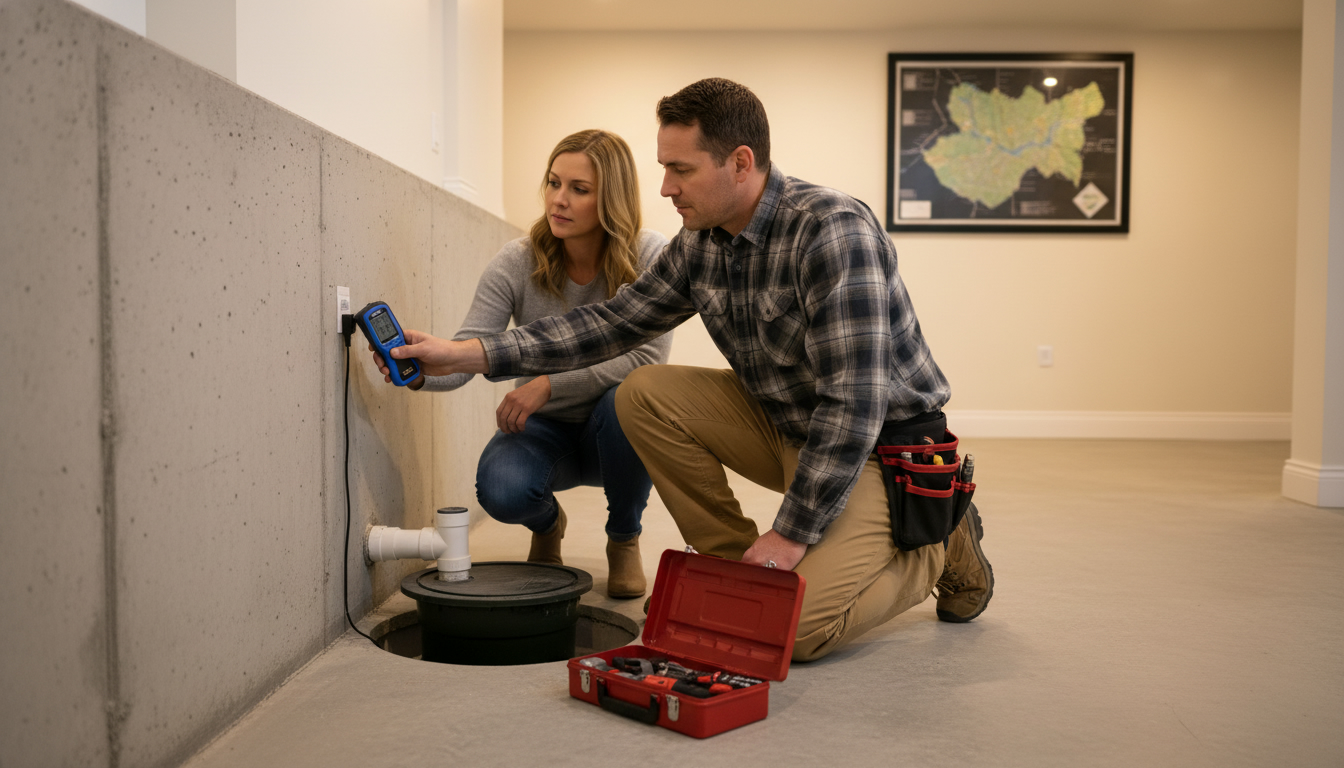
- Run a moisture meter across walls and floors if you have one; readings above 16–18% mean active moisture.
- Check the sump pump and drainage systems
- Is there a sump pit? Is the pump recent and rated for the house size?
- Ask when the pump was last replaced and whether there’s a battery backup.
- Does the pump discharge above-grade or to the sanitary line? (Discharging to sewer can be restricted.)
- Find past repairs and paperwork
- Ask for invoices, warranties, and permits related to waterproofing, foundation repair, or sump installations.
- Contractors who provide a transferable warranty and permits show professionalism. No paperwork increases buyer risk.
- Look for hidden signs during rainy days
- Inspect after heavy rain or during spring thaw. Minor issues become obvious under stress.
- Call in a pro when in doubt
- A certified home inspector or a basement waterproofing contractor should perform a camera inspection of weeping tiles, and a structural contractor should evaluate serious cracks.
Interior vs. exterior waterproofing: know the difference
- Interior systems: injections, sealants, interior French drains, and sump pumps. Quicker and cheaper. Good for stopping active water but don’t always fix the root cause (hydrostatic pressure).
- Exterior systems: excavating around the foundation, repairing drainage, installing membranes, and replacing weeping tiles. More expensive, but it addresses external water and hydrostatic pressure.
For sellers, the decision depends on severity, timeline, and budget. Cosmetic fixes and interior drains can reassure buyers if paired with documentation and a plan.
Cost guide (approximate CAD ranges for Georgetown area)
- Minor interior sealants and crack injection: $500 – $3,000
- Sump pump install or replacement (quality pump + backup): $800 – $2,500
- Interior French drain with sump system: $2,000 – $10,000
- Exterior excavation, membrane, and new weeping tile: $10,000 – $30,000+
Actual costs depend on foundation type, access, lot grading, and local permits. Provide estimates and invoices to buyers to speed negotiations.
How to prioritize repairs before listing
- Fix visible and smelly problems first. Buyers react emotionally to odor and stains. Interior mold remediation, fresh paint, and visible sump pump maintenance deliver immediate returns.
- Document everything. Before-and-after photos, contractor invoices, and warranties reduce buyer skepticism.
- Consider a pre-listing inspection focused on basement condition. It removes the surprise factor and positions you as a transparent seller.
- If the issue is major and you have time, invest in an exterior solution—it’s marketable and boosts sale price in flood-prone neighbourhoods.
What buyers will ask—and how to answer
Buyers will ask: Has it ever leaked? How often? Was it capped, repaired, or fully resolved? Who did the work? Provide honest answers and the paperwork. If you fixed the problem, highlight the year, the contractor, and the warranty.
If you didn’t repair: present a clear estimate from a reputable contractor and offer to negotiate credits or do the repairs before closing. Buyers prefer certainty.
Local considerations for Georgetown, Ontario sellers
- The Credit River corridor: homes close to the river face higher flood risk. Check municipal flood maps and disclose proximity to waterways.
- Seasonal freeze-thaw: icing and thaw cycles stress foundations. Look for small seasonal cracks that may widen over time.
- Clay and compact soils: some Georgetown lots have dense soils that reduce permeability, increasing runoff and hydrostatic pressure—good grading is critical.
- Permits and contractors: check with the Town of Halton Hills before major exterior work. Use local contractors experienced with Georgetown soil and municipal drain systems.
Georgetown buyers are savvy. They’ll check municipal drainage, lot elevation, and recent storm events. Be proactive with documents and inspections.
How waterproofing affects resale value and offers
- No visible issues + documentation = smoother sale and often multiple offers.
- Small fixes with receipts = less buyer leverage for price drops.
- Major unresolved issues = price deductions, buyer financing hurdles, or failed transactions.
Think of waterproofing as an investment in confidence. Buyers pay for certainty.
Quick checklist sellers can use today
- Walk the perimeter after rain.
- Record photos and videos of interior damp spots.
- Test or service the sump pump; add battery backup if none.
- Clear gutters and extend downspouts away from the foundation.
- Get a pre-listing basement-focused inspection and contractor estimates.
- Compile invoices, warranties, and permits into a folder for buyer review.

Closing the deal: positioning your property
When you can hand a buyer a clear report, invoices, warranties, and a recent sump pump receipt, you move from problem to solution. Price your home on condition and peace-of-mind. That’s what sells in Georgetown.
If you want help sorting the inspection, compiling reports, and positioning your house for top offers, contact a local realtor who knows the market and the contractors. Email: tony@sousasells.ca | Phone: 416-477-2620 | https://www.sousasells.ca
FAQ — Basement waterproofing & home inspections (Georgetown sellers)
Q: How can I tell if a basement leak is active?
A: Look for fresh water stains, damp spots after rain, efflorescence that’s gone past powder to dark stains, and moisture meter readings above 16–18%. Musty smell and mold growth indicate active or recurring moisture.
Q: Do I need a pre-listing inspection focused on the basement?
A: Yes. It reduces buyer surprises, speeds negotiations, and positions you as transparent. A focused inspection will catch both minor and serious issues.
Q: Are interior waterproofing fixes a long-term solution?
A: They work for many cases but treat symptoms, not always the root cause. For hydrostatic pressure or high water table problems, exterior fixes are more durable.
Q: Will waterproofing require permits in Halton Hills?
A: Exterior excavation, major drainage changes, or changes to storm sewer connections often need municipal permits. Check with the Town of Halton Hills before major work.
Q: How much should I budget for waterproofing in Georgetown?
A: Minor interior fixes: under $3,000. Interior drainage systems: $2,000–$10,000. Full exterior excavation and membrane: $10,000–$30,000+. Get local quotes.
Q: Should I disclose past basement leaks to buyers?
A: Yes. Disclosure builds trust and avoids legal issues later. Provide documentation showing repairs and warranties.
Q: Will replacing a sump pump increase my sale price?
A: It won’t necessarily raise the listing price, but a new pump and battery backup remove buyer objections and reduce requests for price reductions or repairs.
Q: How do I find reputable waterproofing contractors in Georgetown?
A: Look for local reviews, transferable warranties, municipal permits, and tradespeople experienced with Georgetown soils and the Credit River area. Ask your realtor for referrals.
Q: Can I sell an older home with known basement issues?
A: Yes. Disclose the issues, provide estimates and options, or offer a price credit or escrow. Buyers will weigh the cost against location and structure.
Q: What documents should I have ready for buyers?
A: Inspection reports, contractor invoices, warranties, permit copies, and any photos or videos showing completed work.
Need help with pricing, negotiation, or finding contractors? Email tony@sousasells.ca or call 416-477-2620. Visit https://www.sousasells.ca for local market tips and trusted contractor referrals.