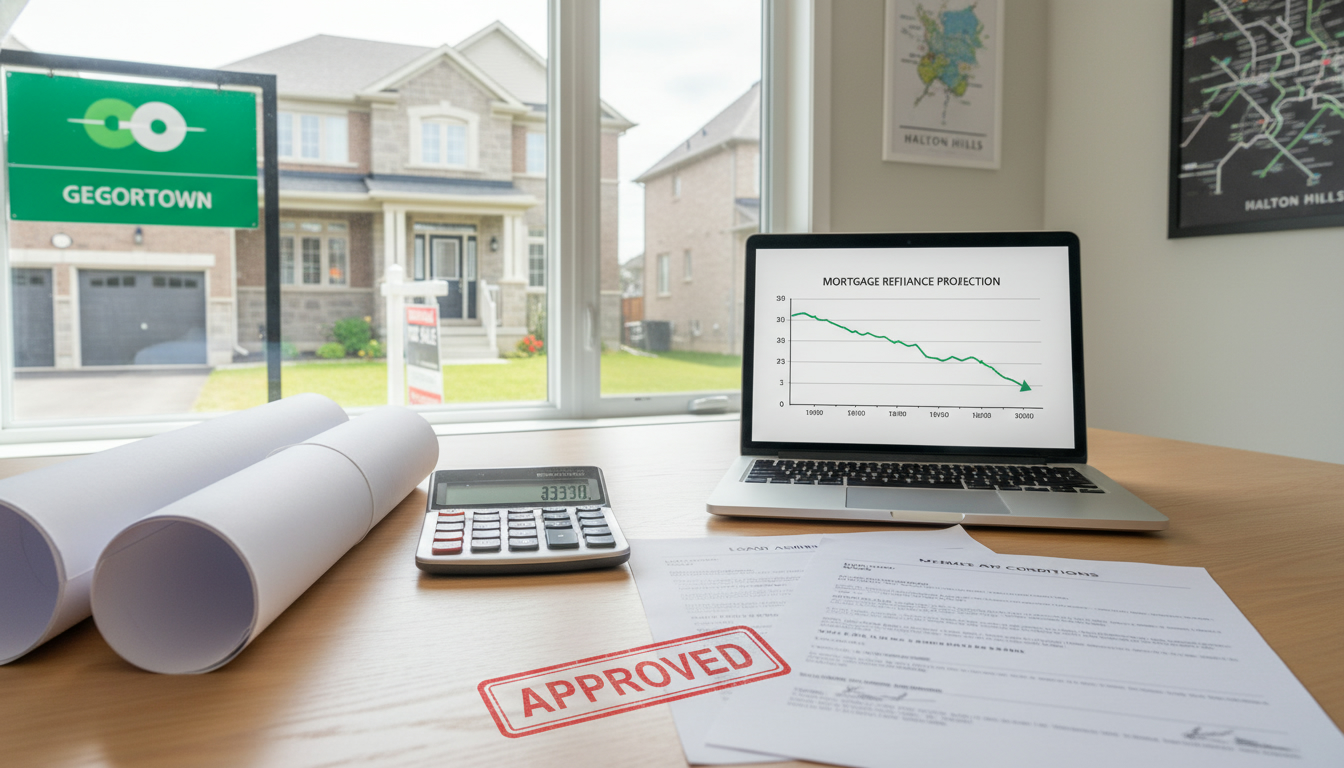
How does refinancing work in Ontario?
Rewritten question to grab attention: How does refinancing work in Ontario — and how can a Georgetown seller turn home equity into ready cash fast?
Quick promise
If you sell in Georgetown and you want more cash at closing, lower carrying costs, or money to renovate and sell for top dollar, refinancing can deliver. This post tells you exactly how refinancing works in Ontario, the steps to take in Georgetown, what it costs, and the smart moves sellers use to win.
Why this matters to Georgetown home sellers
Georgetown, ON is a commuter hub with steady demand, limited inventory, and buyers willing to pay for move-in-ready homes. That means one simple fact: the smarter you prepare and position your home, the higher your sale price. Refinancing helps you do that.
Use refinancing to:
- Pull equity for renovations and staging that raise sale price.
- Lower mortgage payments while the home is on the market.
- Consolidate high-interest debt to reduce monthly burden while selling.
- Bridge to your next purchase without pressure to sell at a low price.
Keywords: refinancing Ontario, refinancing Georgetown, mortgage refinance Ontario, cash-out refinance Georgetown, home equity Georgetown

How refinancing works in Ontario — the straight facts
Refinancing replaces your current mortgage with a new one. The new mortgage pays off the old one and resets interest, term, and sometimes the mortgage balance.
Two main types:
- Rate-and-term refinance: Change your interest rate or mortgage term to get lower monthly payments or better terms.
- Cash-out refinance: Increase your mortgage to access home equity as cash.
Core steps in Ontario:
- Calculate your home equity: current market value minus mortgage balance. Equity = what you can tap.
- Check LTV (loan-to-value): Most lenders allow up to 80% LTV without mortgage default insurance. Over 80% may trigger mortgage insurance or be denied by some lenders.
- Compare rates and lenders: Shop banks, credit unions, and mortgage brokers.
- Estimate costs: penalties, legal fees, appraisal, title work.
- Apply and close: Lender underwrites, you sign, old mortgage is paid, new mortgage starts.
What about penalties and fees? Don’t get blindsided
Refinancing often triggers penalties if you break a mortgage early.
- Fixed-rate penalties: Interest Rate Differential (IRD) or a three-month interest option, depending on the lender and contract.
- Variable-rate penalties: Usually three months’ interest.
- Other costs: appraisal fee ($300–$600), legal fees ($500–$1,500), discharge and registration fees.
Do the math: If savings from a lower rate or cash-out benefit exceed penalties and fees within your intended timeframe, refinancing is worth it.
Mortgage insurance and LTV rules in Ontario
If your new mortgage exceeds 80% LTV, you may need mortgage default insurance (CMHC, Genworth, Canada Guaranty). That insurance adds cost and affects eligibility. For sellers who plan to list and sell soon, avoid pushing LTV above 80% unless the cash is essential for value-adding renovations.
Why Georgetown is different — local market factors that change the game
- Commuter demand: Proximity to GO Transit and highways keeps buyer pool strong.
- Family buyers: Emphasis on schools and parks makes renovations that appeal to families high ROI.
- Tight inventory: Scarcity means better pricing power for sellers who present well.
- Seasonal spikes: Spring and fall have more active buyers. Time your refinance to fund improvements before peak selling seasons.
This matters because the right refinance strategy in Georgetown is not just about saving on interest. It’s about deploying capital where it produces the biggest sale boost: kitchens, bathrooms, curb appeal, basement suites, or strategic staging.

Real-world refinance strategies for Georgetown sellers
- Cash-out to renovate before listing
- Pull equity to fund high-ROI projects: kitchen update, landscaping, or fixing obvious issues. Spend $20k–$40k where buyers notice. If the upgrades increase the sale price by more than the refinance costs, you come out ahead.
- Bridge financing to buy before you sell
- Use a refinance or second mortgage to secure your next purchase while your current home is on the market. This removes the forced-sell fear and lets you hold out for top offers.
- Lower payments to carry the home longer
- Refinance for a lower rate or longer amortization to reduce monthly carrying costs while waiting for a better market window.
- Consolidate debt for cleaner cash flow
- Refinance to pay off high-interest credit lines. Cleaner finances make it easier to invest in the home and manage selling costs.
The numbers you must run before refinancing
Don’t guess. Calculate:
- Penalty estimate (IRD or 3 months’ interest)
- Legal and appraisal fees
- New mortgage rate and monthly payment
- How long you plan to keep the property before sale
- Expected increase in sale price from renovations or improved marketing
Simple break-even: (Savings + Expected sale premium) > (Penalties + Fees + Added interest from cash-out)
If the math checks, refinance. If not, don’t.
Common mistakes Georgetown sellers make — and how to avoid them
- Tapping too much equity and triggering mortgage insurance: Keep LTV ≤ 80% when possible.
- Ignoring penalties: Get a firm penalty quote before committing.
- Not timing renovations: Do the work before peak listing season.
- Using cash for low-ROI projects: Focus on what buyers in Georgetown pay for — kitchens, bathrooms, curb appeal.
Step-by-step plan to refinance for sellers in Georgetown (practical playbook)
- Get a market value estimate: Ask a local realtor or get a CMA. Know your current home value.
- Get a mortgage statement: Know your balance and rates.
- Talk to a mortgage broker or lender: Compare refinance offers and get penalty quotes.
- Run the numbers: Use break-even math above.
- If you refinance for renovations: hire contractors, get quotes, set deadlines aligned with listing plans.
- Close the refinance and use funds. Track expenses and save receipts for transparency with buyers.
- List and sell: Use your improvements and financial breathing room to command a higher price.

Quick examples (rounded numbers)
- Example A: You owe $350,000. Home value $550,000. Equity = $200,000. At 80% LTV, max mortgage = $440,000. Cash available ~ $90,000 before costs. Use $40,000 for renovations. Penalty $5,000. Net benefit if sale price rises by $30–$50k.
- Example B: Lower payments. You refinance from 4.5% to 3.25% and extend amortization. Monthly savings cover listing costs and staging for several months.
How to choose the right lender in Georgetown
- Use a mortgage broker with local experience.
- Ask for penalty quotes, appraisal rules, and LTV limits in writing.
- Check if the lender supports bridge products if you need them.
Local legal and tax notes (Canada-specific)
- Mortgage interest on a principal residence is generally not tax-deductible in Canada.
- Always consult an accountant for tax planning if you intend to use refinance funds to buy investment property.
- Legal fees and closing costs are taxable events; get clear invoices from your lawyer.
Final move: How to start today
- Get a local market value estimate. Contact a realtor or ask for a free CMA.
- Contact a mortgage broker and get a penalty quote for breaking your mortgage.
- Run the break-even numbers. If they work, book the refinance and schedule renovations to hit the next busy season.
Contact for local help
For Georgetown-focused advice and a custom refinance plan, contact Tony Sousa, Local Realtor and mortgage-savvy advisor: tony@sousasells.ca | 416-477-2620 | https://www.sousasells.ca

FAQ — refinancing and mortgages in Georgetown, ON
Q: What is refinancing?
A: Refinancing replaces your current mortgage with a new one. You can change the rate, term, or take out cash from home equity.
Q: Can I refinance if I plan to sell soon?
A: Yes. Sellers refinance to fund renovations, lower carrying costs, or bridge to a new purchase. But always compare penalties vs benefits.
Q: What penalties will I face if I break my mortgage in Ontario?
A: Fixed-rate mortgages usually face an Interest Rate Differential (IRD) or a set three-month interest penalty. Variable-rate mortgages typically face three months’ interest. Get a firm quote from your lender.
Q: How much equity can I tap in Ontario?
A: Most lenders allow up to 80% LTV without mortgage default insurance. Above 80% may require mortgage insurance and adds cost.
Q: Are there local lenders in Georgetown that offer better refinance deals?
A: Local credit unions and brokers often offer competitive deals tailored to Halton Hills and Georgetown borrowers. Talk to a local broker for the best options.
Q: Will refinancing delay my sale?
A: Refinancing itself usually closes within 2–4 weeks. If you’re refinancing to renovate, factor in project timelines.
Q: Is mortgage interest tax deductible in Canada?
A: Not for your principal residence. Consult an accountant if you plan to use funds for investment property or rental income — rules differ.
Q: What is a cash-out refinance vs a bridge loan?
A: Cash-out refinance increases mortgage to get cash. Bridge loans are short-term loans to cover a gap between buying and selling.
Q: Should I refinance to lower monthly payments while the home is on the market?
A: If lower payments help you hold out for a better offer and the refinance penalties are covered by your savings, yes. Run the numbers.
Q: How long does it take to refinance in Ontario?
A: Typically 2–6 weeks, depending on lender, appraisal, legal work, and how quickly you provide documents.
Q: Who pays closing costs on a refinance?
A: You do. Expect appraisal, legal fees, discharge/registration fees, and any lender-specific charges.
Q: How do renovations funded by a refinance affect sale price?
A: Targeted, high-ROI projects (kitchen, bathroom, curb appeal) yield the best returns in Georgetown. Avoid cosmetic upgrades with low buyer impact.
Q: How do I get started right now?
A: Get a local market value estimate and call a mortgage broker for penalty and rate quotes. For hands-on help in Georgetown, contact Tony Sousa at tony@sousasells.ca or 416-477-2620.
If you want a custom refinance analysis for your Georgetown home — with penalty estimates and a cash-out plan that actually improves your sale outcome — reach out today.