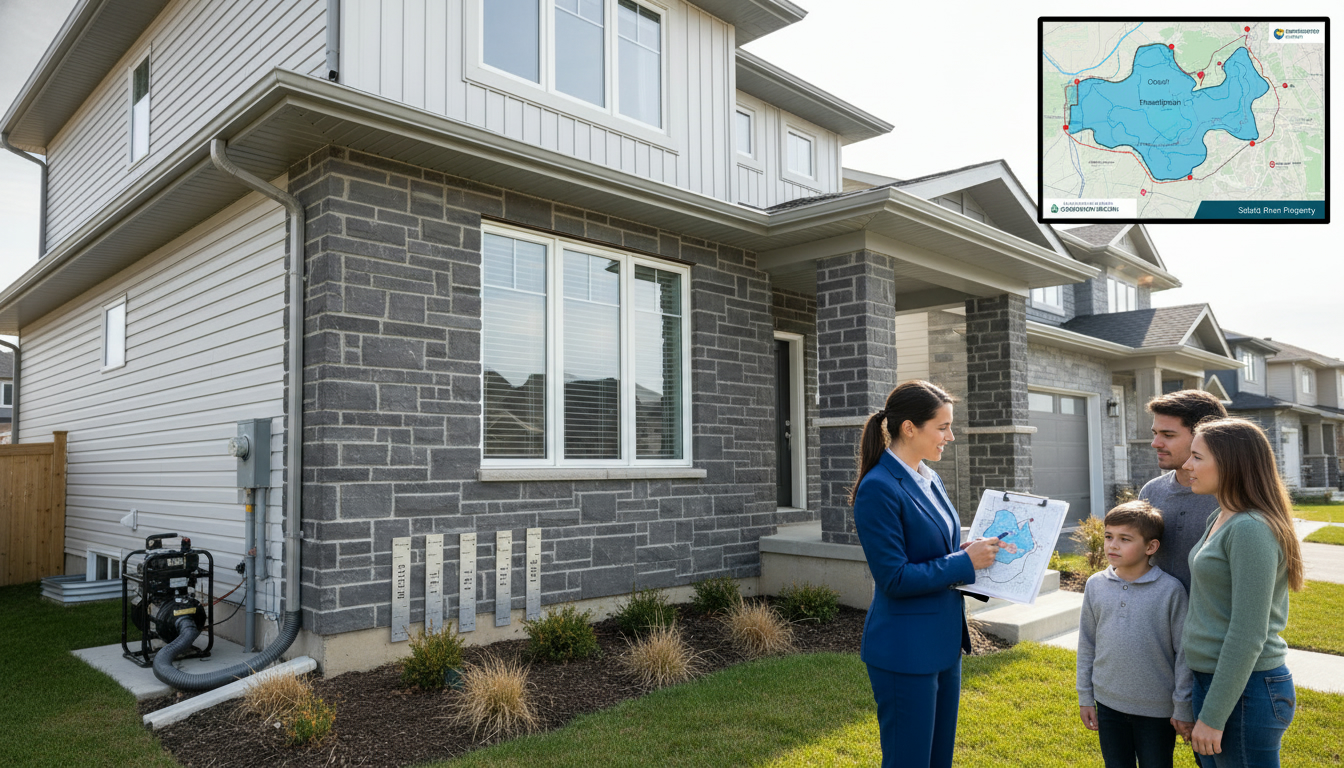
How do I assess flood and natural disaster
risk?
Will my Georgetown home flood? Here’s the blunt checklist every seller must run — now.
Why every Georgetown home seller needs to know flood and natural disaster risk
If you’re selling a house in Georgetown, Ontario, buyers will ask about flood risk. Insurance underwriters will check it. Municipal and conservation authorities will have records. If you don’t know the facts, you’ll lose time, money, and negotiating power.
This guide gives a clean, practical playbook to assess flood and natural disaster risk — focused on Georgetown, Halton Hills, and the Credit River watershed. Follow it step-by-step, act on the findings, and position your property so buyers trust the listing and offers close faster.
Quick checklist (run this now)
- Check Conservation Halton floodplain maps and Credit River zoning.
- Pull historic flood records and insurance claims for the property.
- Verify municipal drainage, stormwater plans, and infrastructure upgrades with Halton Hills.
- Walk the lot for signs: high water marks, basement repairs, damp odors, efflorescence.
- Order a home inspection focused on water entry points and a grading survey for elevation.
- Get an engineer’s flood-elevation or mitigation report when needed.
- Confirm flood insurance availability and premium estimates.
Use this to know your risk and control the sale process.
Step 1 — Understand local risk: maps, watersheds, and history
Start with the maps. Georgetown sits along the Credit River. That matters.
- Visit Conservation Halton’s floodplain maps. They show regulated floodlines, erosion hazards, and regulated areas where special permissions or floodproofing are required.
- Check municipal GIS from Halton Hills for storm sewer maps, low-lying zones, and historical flood events.
- Search public records and local news for downtown Georgetown flood events, road closures, and past emergency response for storms.
Why this matters: Buyers, insurers, and lenders check these sources. If you know the data first, you avoid surprises and can present mitigation steps upfront.

Step 2 — Inspect the property like an underwriter
Don’t guess. Inspect.
What to look for:
- Basement signs: water stains, peeling paint, efflorescence (white salt lines), mold, recent patching, or installed sump pumps.
- Exterior grading: soil should slope away from the foundation at least 2% for the first metre.
- Eavestroughs and downspouts: are they directing water at least 2 metres from the foundation?
- Window wells, garage door thresholds, and HVAC placement.
- Evidence of backflow protection on sewer lines.
Hire a home inspector experienced with water issues. A plain general inspection misses items that affect flood risk and insurance.
Step 3 — Get elevation and drainage facts
Flood maps are a start. Elevation and drainage control tactic.
- A certified survey or elevation certificate gives precise height relative to known flood lines. This is the single best document to prove a property sits above a recognized flood line.
- Check stormwater flow on neighbouring properties. A high driveway or new landscaping next door can increase your risk.
- Confirm municipal ditch and culvert maintenance history. Blocked or undersized storm systems create localized flooding.
If elevation is borderline, budget a professional engineering assessment. It’s cheap compared to a failed sale or an unexpected claim.
Step 4 — Review insurance and lender requirements
Insurance decides closing ability. In Ontario, flood coverage varies and premiums can spike.
- Contact local insurance brokers and get a flood-risk premium estimate for the property. Ask about deductibles and exclusions for sewer backup or overland flooding.
- Some lenders require specific flood-related disclosures or higher down-payment if risk is elevated. Know these before listing.
- If flood insurance is hard to obtain or very costly, disclose that fact in listing documents and price accordingly.
Tip: A pre-listing insurance check removes late-stage renegotiations.
Step 5 — Confirm legal and disclosure obligations for sellers in Ontario
You must disclose material facts about the property. Flood history and prior claims are material.
- Complete any standard seller information forms accurately. Even if forms aren’t mandatory, disclose known flood or water incidents.
- Keep receipts and reports for repairs, sump pump installs, and mitigation work. Buyers trust documented fixes.
Honesty closes deals. Hiding problems kills them.

Step 6 — Mitigation steps that add value and reduce buyer pushback
Fix what you can, document it, and price strategically.
Practical, cost-effective measures:
- Install or service a sump pump with battery backup.
- Add backwater valve on sewer connection to prevent sewage backup.
- Improve grading and extend downspouts.
- Install proper eavestroughs and gutter guards.
- Replace aging window wells and seals.
- Use flood-resistant finishes in basements (concrete floor, cementboard walls).
Every documented improvement reduces perceived risk and can recapture mitigation costs in the sale.
Step 7 — When to hire experts
You don’t need an engineer for every sale. You do when:
- The property sits near the Conservation Halton floodplain or Credit River.
- Historic flooding is recorded on the lot.
- Elevation mapping shows your property near a regulated floodline.
- Buyer or lender requests detailed proof.
Engineers produce elevation certificates, mitigation plans, and cost estimates. These reports win negotiations and move sales faster.
Step 8 — Price and market with intelligence
Position the property with facts, not fear. Use disclosures and mitigation documents in your marketing pack.
- Lead with transparency: include a short summary in the listing about flood history and the measures taken.
- Offer the mitigation documents and insurance quotes to serious buyers.
- If risk is present, price for it or offer credits for buyer mitigation.
Buyers respect candor. You’ll get better offers and fewer last-minute walkaways.
Local resources every Georgetown seller should use
- Conservation Halton floodplain maps and planning department.
- Halton Hills municipal planning and stormwater division.
- Local insurance brokers familiar with Halton risk profiles.
- Certified home inspectors who specialize in water intrusion.
- Civil engineers with residential flood mitigation experience.
Use these to build a folder for buyers. A tidy folder with maps, reports, and insurance quotes beats vague reassurances.

Real case: Quick example you can copy
A Georgetown bungalow near the Credit River showed old patching in the basement. The seller ordered a grading survey and a short engineer report. They installed a battery-backed sump pump and a backwater valve, fixed gutters, and produced the documentation to buyers.
Result: Two offers above asking, no insurance surprises at closing, sale closed in 10 days.
Apply the same sequence and documentation strategy to your sale.
Contact for sellers in Georgetown who want certainty
You don’t have to navigate this alone. For a tailored property risk assessment, local flood-history check, and buyer-ready documentation, contact local realtor Tony Sousa. He specializes in Georgetown homes, Halton Hills, and properties on the Credit River.
Email: tony@sousasells.ca
Phone: 416-477-2620
Website: https://www.sousasells.ca
Tony will walk you through maps, insurance checks, and the exact documents buyers and lenders want.
FAQ — Flood & natural disaster risk for Georgetown home sellers
How do I check if my Georgetown property is in a floodplain?
Start with Conservation Halton’s floodplain maps and Halton Hills municipal GIS. If maps show proximity to the Credit River floodline or a regulated area, order an elevation certificate or a certified survey.
What if my basement flooded years ago but it’s been fixed?
Disclose the incident and provide receipts for repairs, any contractor reports, and proof of mitigation (sump pump invoices, photos). Buyers trust documentation.
Can I sell a house with a known flood risk in Georgetown?
Yes. Disclose facts, present mitigation, and get an insurance quote upfront. Expect negotiation on price or credits if risk is real.
How much does flood mitigation cost?
Small fixes (gutters, grading) often cost a few hundred to a few thousand dollars. Larger measures (engineer reports, backwater valves, major regrading) range higher. Get quotes — then compare to the potential discount a buyer will demand.
Do I need an engineer for every sale?
No. Use an engineer when the property is near mapped floodlines, has documented flooding, or a buyer/lender requests formal proof. For minor concerns, a focused inspection plus insurance quote may suffice.
Will flood risk stop a mortgage in Georgetown?
Lenders review risk case-by-case. High flood risk can trigger conditions or require proof of insurability. That’s why pre-listing checks remove surprises.
Where can I get a reliable flood insurance quote in Halton Hills?
Contact local insurance brokers who work with Ontario flood and sewer-backup products. Ask for premium estimates, deductibles, and coverage exceptions for overland flooding.
What local agencies should I contact?
Conservation Halton, Halton Hills municipal planning and stormwater division, and local insurance brokers.
This is the practical, local playbook. Run the checklist. Get the reports. Document the fixes. Price with clarity. Present with confidence. That’s how you sell faster and keep your closing on schedule.
Need a local expert to run a flood risk check and prepare buyer-ready documents? Tony Sousa handles Georgetown listings end-to-end. Contact him at tony@sousasells.ca or 416-477-2620.