How do I assess neighborhood rental demand?
Want to know if your Georgetown neighborhood is a rental goldmine — or a money pit? Here’s the short test that separates winners from losers.
The quick answer every Georgetown home seller needs
If you want top resale value or to pitch your property to investors, neighborhood rental demand is the single most reliable signal. High rental demand means faster sales, higher multipliers, and investors willing to pay a premium. Low rental demand drags resale value and limits buyer pools.
This post shows you, step-by-step, how to measure neighborhood rental demand in Georgetown, Ontario, what metrics to watch, and how to position your home to get the highest resale value.
Why neighborhood rental demand matters for resale value and investment
- Investors buy neighborhoods, not houses. If your area shows steady or rising rental demand, buyers will bid more, expecting cash-flow or easy re-rental.
- Rental demand reduces days-on-market for investor buyers. Faster sales equal higher prices for sellers.
- Strong rental demand correlates with infrastructure investment, better amenities, and pricing resilience in downturns.
For Georgetown, ON specifically: stable commuter access, a walkable downtown, and family-friendly neighbourhoods mean rental demand often outpaces similar towns. But the only way to know for sure is to measure it.

7-step playbook to assess neighborhood rental demand in Georgetown
Follow these steps in order. Do the numbers. Don’t guess.
1) Define the renter profile for your neighborhood
Ask: who rents here? Options in Georgetown typically include:
- Commuters to Toronto and nearby employment hubs (young professionals)
- Families seeking affordable rentals near good schools
- Seniors downsizing or seeking low-maintenance housing
- Short-term or corporate renters near transit
Write a one-line renter profile for your street. That informs all your follow-up checks.
2) Scan active rental listings right now
Look at Rentals.ca, Kijiji, Craigslist, Zillow/MLS rental tabs, and local property manager listings. Filter to Georgetown, ON and your property type.
What to record:
- Average asking rent for comparable units
- Days-on-market (how fast listings disappear)
- Number of similar units for rent in a one-kilometre radius
If comparable units are scarce and leases are signing fast, demand is strong.
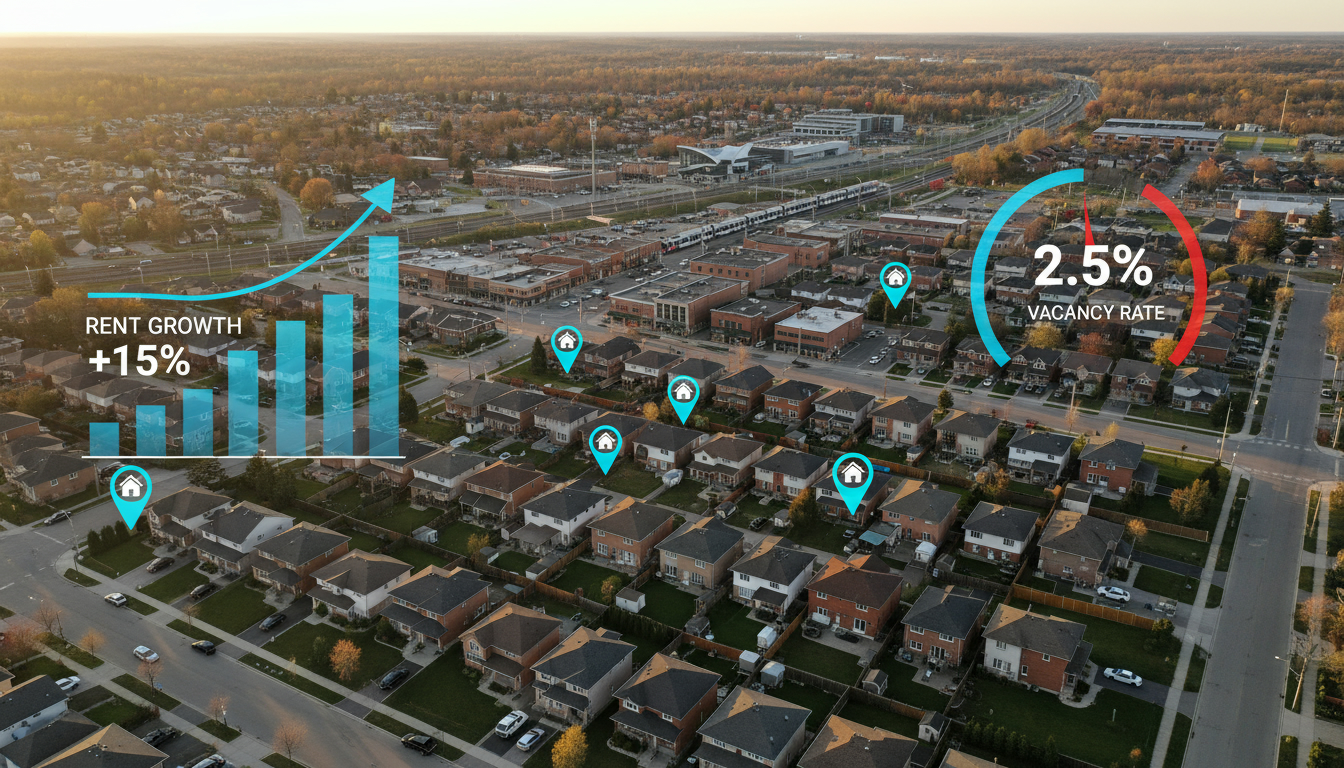
3) Check historical rent growth and vacancy trends
Use CMHC Rental Market Reports, provincial data, and local market snapshots to find:
- 1–3 year rent growth percentage
- Current vacancy rate for your building type
Why it matters: consistent rent growth and low vacancy = structural demand. Georgetown’s rental growth history has been supported by commuter demand and local jobs — verify the latest numbers, not past impressions.
4) Measure supply-side signals in Georgetown
Supply affects demand. Check:
- New rental or condo builds in Halton Hills and nearby Milton
- Conversion applications and planning files at the Town of Halton Hills
- Listings of units for sale marketed to investors
An influx of new supply can depress rents if demand doesn’t keep up.
5) Analyze commute and amenity pull factors
Key drivers in Georgetown:
- GO Transit commuter access (train access attracts Toronto workers)
- Proximity to the downtown core, grocery, schools, parks
- Highway access for drivers and proximity to employment hubs
Map commute times and transit connectivity. Properties near the GO station or major bus routes command higher rents and resale value.
6) Run three quick financial metrics
Calculate these to test investment appeal and market strength:
- Price-to-Rent Ratio: house price divided by annual rent. Lower suggests better rental return.
- Gross Rental Yield: (annual rent / purchase price) x 100. Compare to local mortgage and yield expectations.
- Days-on-Market for rentals: confirms demand velocity.
If yields look reasonable and price-to-rent is attractive compared to Toronto or Milton, expect buyer demand.
7) Talk to local pros and verify with data
Call one or two Georgetown property managers, a local real estate agent who handles rentals, and the town planning office.
Questions to ask:
- Are you seeing more renters or buyers in this price band?
- How fast are units leasing now?
- Are there policy changes or new developments coming?
Data plus local insight eliminates guesswork.
Specific red flags for Georgetown sellers
Watch for these signals that rental demand may be weak:
- Several comparable units sit vacant for 60+ days
- New builds advertise move-in incentives
- Significant zoning changes that could flood supply
- Large share of long-term owner-occupied homes with no renter base
If you see multiple red flags, treat your property as a traditional resale — price and staging matter more than rental potential.
How rental demand ties to resale value — the direct link
- Buyer pool size: High rental demand increases investor interest. More buyer types => higher sale price.
- Pricing multiple: Investors pay for predictable cash flow. Higher rents and low vacancymake your property command higher multiples.
- Market speed: Properties with proven rental demand sell faster, cutting carrying costs and increasing competition among buyers.
For Georgetown sellers: highlight rent comparables, recent lease terms, and commuter appeal in your marketing. That converts investor interest into higher offers.
Quick checklist: Data to gather today (print this and use it)
- 5 comparable rental listings within 1 km and their asking rents
- 3-year rent growth for Halton Hills / Georgetown (CMHC)
- Current vacancy rate for your property type (CMHC or local PM)
- Number of new rental units coming to market in the next 12 months
- Commute time to nearest GO station and transit frequency
- Days-on-market for similar rental listings
- Price-to-rent ratio and gross rental yield for your property
If at least five data points show strength (low vacancy, fast leasing, steady rent growth, high yield, strong transit), neighborhood rental demand is an asset you can monetize at resale.

If rental demand is strong — how to market your house
- Create an investor info sheet: recent rents, lease lengths, cap rate, tenant profile.
- Highlight commuter access and school rankings.
- Show recent upgrades that reduce vacancy (in-unit laundry, low-maintenance yard).
- Price to generate multiple offers, including investor-friendly financing details.
Investors love clarity. Give them the numbers and they’ll bid competitively.
If demand is weak — what to do before you sell
- Target owner-occupiers: stage to show family or multi-generational living.
- Add low-cost upgrades that boost resale (kitchen refresh, curb appeal).
- Consider short-term rentals only if local rules allow; otherwise avoid risky pivots.
Sometimes shifting your buyer target doubles your chance of a fast sale.
Tools and data sources every Georgetown seller should use
- CMHC Rental Market Reports (vacancy & rent growth)
- Rentals.ca and Zumper for market rent snapshots
- Local MLS for days-on-market and sale comps
- Town of Halton Hills planning & building permits
- Local property managers for leasing velocity and tenant profiles
Use at least two sources for every metric. Cross-checking prevents costly mistakes.
Case study: How numbers flipped a Georgetown listing (short example)
A 3-bed semi in central Georgetown showed: several nearby comparables rented at market rate with 2–4 week vacancy, 2% annual rent growth, and low new supply. The seller created an investor packet and sold to a local investor at 6% above listed price after a 10-day listing period.
Numbers convinced the buyer. Stories sell, but data closes deals.

Final play: How this affects your resale value tomorrow
Neighborhood rental demand is a leading indicator for resale value. Investors and owner-occupiers look at the same signals. When demand is clear and verifiable, your home becomes a product that sells faster and for more.
If you want a fast, no-fluff assessment of your Georgetown property’s rental demand and resale positioning, I provide a concise market pack that delivers the numbers investors care about.
Contact: Tony Sousa — Local Realtor specializing in Investment & Resale Value. Email: tony@sousasells.ca | Phone: 416-477-2620 | https://www.sousasells.ca
FAQ — Quick answers Georgetown home sellers ask about rental demand
Q: How do I check real-time rental demand in my street?
A: Search Rentals.ca, Zumper, and Kijiji for comparable units within 1 km. Note asking rent, days-on-market, and number of listings. Call a local property manager to verify leasing speed.
Q: What vacancy rate signals strong demand?
A: Under 3% is very strong; 3–5% is healthy; above 7% suggests weak demand. Check CMHC for accurate local rates.
Q: What rent growth should I expect in Georgetown?
A: Look for steady positive growth over 1–3 years. Compare Georgetown to nearby Milton and Halton Hills to see relative strength.
Q: Will a nearby GO station always increase rental demand?
A: Proximity to reliable commuter transit typically increases rental appeal, but factors like parking, frequency, and last-mile transit also matter.
Q: Should I advertise to investors if rental demand is strong?
A: Yes. Prepare a clear investor packet (rents, yields, lease history, tenant profile). Investors pay for predictability.
Q: How do regulations affect rental demand and resale value?
A: Local and provincial regulations (zoning, occupancy rules, rent control exemptions) impact investor appetite. Verify with town planning and a realtor.
Q: What’s the single best metric to watch?
A: Vacancy rate combined with rent growth. Low vacancy + rising rents = reliable demand.
Q: Can I boost rental demand before selling?
A: Improve curb appeal, add in-unit amenities (laundry, storage), and ensure the property is move-in ready. These changes reduce vacancy and improve perceived value.
Q: How do I price for investor vs owner-occupier buyers?
A: Investors focus on yield and cap rate. Owner-occupiers focus on monthly payments and quality. Price and market materials should reflect your target.
Q: Do short-term rental opportunities change resale value?
A: They can, but short-term rentals face stricter local rules and higher management needs. Use caution and verify Town of Halton Hills rules.
If you want a tailored rental-demand report for your address in Georgetown, I’ll pull the exact comps, vacancy, rent growth, and yield — clear, fast, no fluff. Email tony@sousasells.ca or call 416-477-2620.