Warning: Undefined variable $result in /www/wwwroot/www.sousasells.ca/wp-content/themes/oceanwp-child-theme-master/functions.php on line 464
What are the future development plans in my area?
“Is my street about to change forever? Here’s what’s planned in Georgetown — and how sellers get rich from it.”
Why this matters now
If you own a home in Georgetown, Ontario, development plans nearby directly affect your sale price, time on market, and buyer pool. I break down the facts, the sources, the timelines, and the exact selling moves that put cash in your pocket. This isn’t theory. This is a tactical playbook for sellers.
Quick overview: What to expect in Georgetown
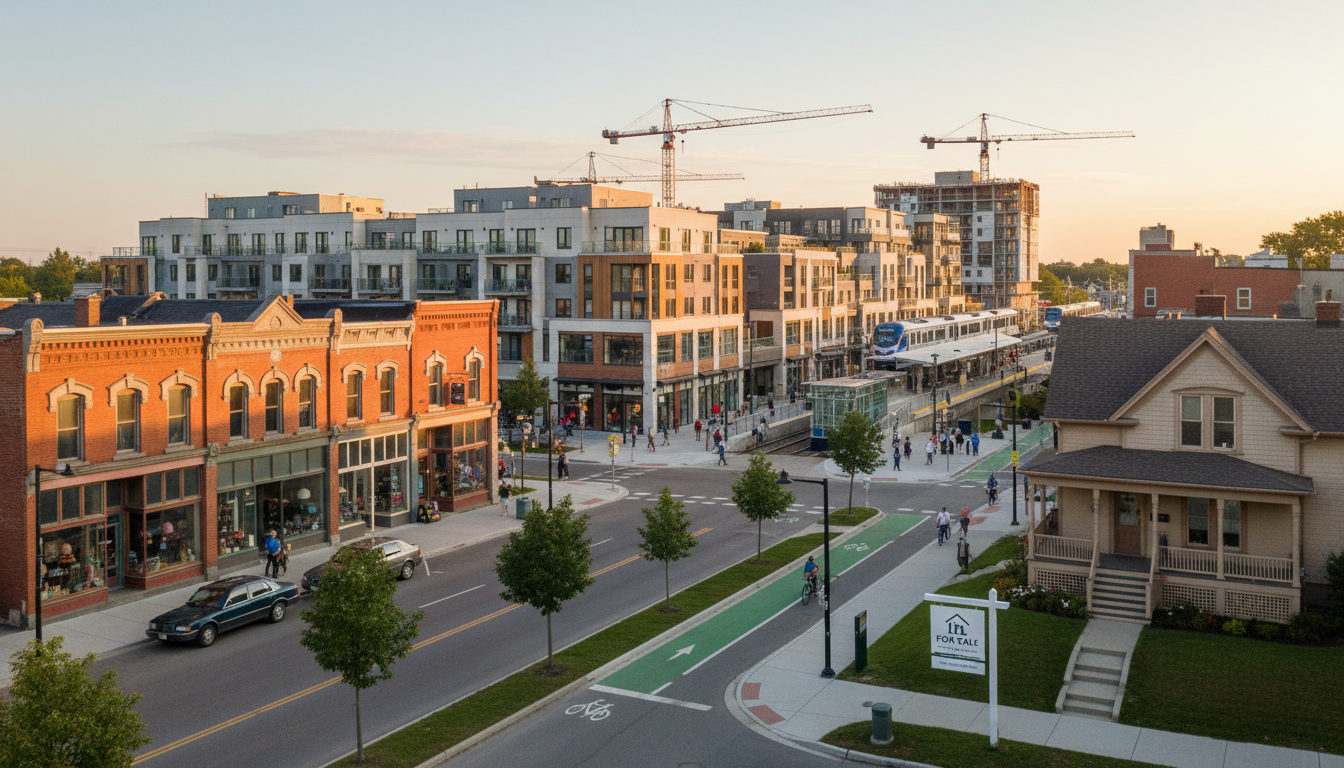
Georgetown sits inside Halton Hills and inside the Greater Golden Horseshoe — an area targeted for population and employment growth by provincial and regional planning. That means pressure to add housing, upgrade transit, and intensify downtown and corridors near major roads and the GO station.
Key themes you will see across official plans, public studies, and permit activity:
- Transit-focused intensification near the Georgetown GO station and major bus routes.
- In-fill and low- to mid-rise residential growth in and around downtown Georgetown.
- New mixed-use developments on key corridors (retail at grade, apartments above).
- Upgrades to roads, sidewalks, bike lanes, and public spaces that improve walkability.
- Growth of commercial and light industrial uses on employment lands near Highway 7 and Trafalgar Road.
- Ongoing planning updates driven by the Halton Region Official Plan and the Town of Halton Hills Official Plan to meet provincial Growth Plan targets.
These are planning trends, not sales pitches. Use them to anticipate demand, not to chase noise.

Where official plans and real projects live (and how to read them)
Start with these sources:
- Town of Halton Hills website — planning applications, public notices, master plans.
- Halton Region Official Plan — growth targets and land use strategy.
- Metrolinx / GO Expansion updates — transit investment plans and Mobility Hub studies.
- Ontario provincial planning policies (Growth Plan for the Greater Golden Horseshoe).
- Local planning committee agendas, heritage advisory reports, building permit databases.
What to look for in those documents:
- Re-zoning and draft plan of subdivision or condominium applications near your property.
- Site plan approvals and building permit issuance (these mean work is actually starting).
- Public infrastructure budgets and timing (road work, water/wastewater upgrades).
- Mobility hub or transit-oriented development studies — high-probability value drivers.
If you want a one-page actionable brief, contact me and I’ll pull current applications and timelines for your exact address.
How development affects property values and buyer demand
Not all development raises prices. Here’s what matters to buyers and to your sale price:
- Proximity to improved transit, shops, and parks raises demand and sale price.
- New higher-density housing increases overall inventory near your street — that can soften price unless demand outpaces supply.
- New employment or retail nearby draws buyers who want live-work convenience.
- Road and streetscape upgrades improve curb appeal and reduce days on market.
- Construction noise and long timelines can push some buyers away in the short term.
Net effect: sellers who position their listing to highlight proximity to new amenities and who time the market correctly often get more than sellers who ignore the change.
Real selling strategy: 7 steps to profit from local development
- Audit local applications — know if a proposed project is 3 months away or 3 years away. Short-term construction hurts, long-term amenities help. I do this for sellers.
- Fix immediately actionable issues — landscaping, lighting, curb appeal. Buyers judge neighborhoods first.
- Stage to sell the lifestyle — show easy access to transit, walking routes, schools, and planned parks.
- Price with proof — use comps and add value of confirmed infrastructure (e.g., completed road, approved transit project). Don’t speculate on unapproved plans.
- Market to target buyers — if a condo plan nearby will bring young professionals, tailor photos and messaging to that crowd.
- Time listing around construction milestones — list right after noisy infrastructure work ends or when a major permit is issued confirming project progress.
- Use disclosure strategically — be honest about nearby construction and provide context about timelines and benefits.
These steps shorten time on market and often increase final sale price.
Where growth is most likely in Georgetown (practical hotspots)
Focus your attention on places that drive demand:
- The area around the Georgetown GO station and Main Street West — transit access and downtown amenities attract buyers.
- Downtown core — infill and mixed-use projects make the downtown more vibrant.
- Corridors that link to Highway 7 and Trafalgar Road — these are logical corridors for retail and employment expansion.
- Older lots and parking sites that could be redeveloped as mid-rise housing.
If your home is within walking distance of these spots, mention it boldly in your listing.
Risks and red flags sellers should know
- Long-term, uncertain proposals: plans that are only in the discussion stage are not reliable value drivers.
- Overbuilding with low absorption: too many new units delivered in a short time can reduce prices temporarily.
- Infrastructure lag: approvals without timely water, sewer, or road upgrades create delays.
- Rezoning that changes neighborhood character — check heritage or designations.
A professional neighbourhood review prevents surprises on closing day.
Pricing tactics tied to development signals
- Confirmed permits and started construction — you can justify a premium for benefit-to-amenity.
- Announced but unapproved projects — present as potential upside; avoid overpricing.
- Completed infrastructure (bike lanes, parks) — add 2–6% to comparable-based pricing depending on proximity.
Numbers vary by street and home type. I will run a data-driven CMA for your house and show the exact lift (or drag) based on current approved projects.
Negotiation tips when development influences the deal
- Use construction timelines as negotiation points — buyers may seek price credits or shorter closing.
- If the project is a confirmed amenity, use it to justify a tighter closing and fewer contingencies.
- For pending projects with short-term noise, offer a small seller concession rather than slashing price.
A negotiated concession keeps headline price high while addressing buyer concerns.
Case playbook: How I prepared sellers in a nearby neighbourhood (summary)
- Pulled planning applications for three nearby lots.
- Time-listed property 2 weeks after site plan approval was announced.
- Emphasized the walk score and upcoming park in marketing collateral.
- Net result: multiple offers above asking within 10 days.
Every street is different. This approach works when you combine verified planning data with aggressive marketing.

How I help sellers in Georgetown right now
I build a custom Neighborhood Development Brief for your address. It includes:
- Active planning applications and timelines.
- Confirmed infrastructure projects and start dates.
- Comparable sales adjusted for upcoming amenities.
- A recommended listing strategy and headline price range.
If you want a brief for your address, email tony@sousasells.ca or call 416-477-2620. I’ll send a custom report and a clear sell-or-wait recommendation.
FAQ — Future development and selling in Georgetown, ON
Q: How certain are development plans in Georgetown?
A: Certainty varies. Projects with issued building permits or site plan approvals are highly likely to proceed. Re-zonings or concept proposals are lower certainty. Use permit and site-plan status to judge reliability.
Q: Will new condos near the GO station hurt my house price?
A: New condos increase housing supply for a segment of buyers. For most detached and semi-detached sellers, improved transit and nearby retail often increase demand. The net effect depends on scale and velocity of new supply.
Q: How long does development typically take from approval to completion?
A: Typical timelines vary from 12 months for small builds to 3–5 years for large mixed-use projects. Infrastructure can add extra time.
Q: Does municipal approval guarantee higher property taxes?
A: Not directly. New development can increase municipal revenue needs, which may affect budgets. Municipalities often recover costs through development charges. Check the Town of Halton Hills budget documents and tax impact studies for specifics.
Q: Should I sell now or wait for projects to finish?
A: It depends. If a confirmed amenity is several years away, you may trade immediate demand for speculative upside. If a project is confirmed and near completion, listing after completion often yields higher prices. I provide a custom timing recommendation for every address.
Q: How can I find out about planning applications near my home?
A: Check the Town of Halton Hills planning portal, Halton Region agendas, Metrolinx updates, and local public notices. Or get a one-page brief from me with all active applications affecting your property.
Q: Will construction affect my ability to sell?
A: Short-term construction can lengthen marketing time and affect some buyers. Good staging, transparent disclosure, and correct pricing overcome most construction-related objections.
Q: Can I get compensation if a nearby project makes my home less desirable?
A: Rarely. Municipal processes and private developers rarely compensate neighboring homeowners unless expropriation or municipal acquisition occurs. Legal advice is recommended in complex cases.
Final direct offer
If you own in Georgetown and want a clear plan, I will prepare a Neighborhood Development Brief and a pricing strategy for your property. No fluff. No guesswork. Email tony@sousasells.ca or call 416-477-2620. Visit https://www.sousasells.ca for client success stories and current listings.
Get the facts. Use them. Sell with confidence.