Should I counteroffer or reject outright?
“Should I counteroffer or reject outright?” — The bold, proven playbook Georgetown sellers use to keep thousands more in their pocket.
Why this decision matters in Georgetown
When an offer lands, you have two simple choices: counteroffer or reject. Both move the sale forward. Both can cost you money if chosen without strategy.
Georgetown sits inside Halton Hills, a commuter hot spot west of Toronto. Buyers are price-sensitive but motivated. Interest rate shifts, school zones, and commuting times swing demand quickly. A single decision on the first offer can change your final sale price by thousands.
This post gives a direct, tactical plan for Georgetown home sellers: when to counter, when to reject, and exactly how to negotiate to maximize net proceeds.
Read this first: the local market reality
- Inventory has loosened compared to the peak pandemic squeeze. More homes on market means buyers have choices. Expect fewer instant multiple-offer situations than 2020–2021.
- Commuter buyers still dominate. Proximity to GO service, highway access, and schools are top drivers.
- Pricing still matters. A well-priced home draws competitive interest. An overpriced home creates bargaining chips for buyers.
Quick rule: in a balanced or cooling market, countering is your default. Rejecting is a tactical move reserved for clear mismatches.
Simple decision framework: counter or reject
Answer these in order. If any answer is “yes,” counter. If all are “no,” consider rejecting.
- Is the offer within 5–7% of your asking price after adjustments (closing date, deposit, conditions)?
- Does the buyer have a clean financing pre-approval or proof of funds? (Not just a conditional approval.)
- Are the conditions reasonable and short (home inspection 5–7 business days, financing 5–7 business days)?
- Is the buyer flexible on closing date to match your needs?
If you answered “yes” to any, counter with a clear, value-first demand. If all answers are “no,” you can reject or send a low counter that signals seriousness.
When to counteroffer — exact scenarios
- Offer close to list but with minor condition wants (long inspection window, low deposit). Counter to tighten the terms and increase deposit. Example: buyer offers 98% of asking with 2-day inspection and 5% deposit — counter to 100% asking, 3-day inspection, 10% deposit.
- Buyer pre-approved but requests seller-paid closing costs or repairs. Counter by asking for price increase equal to repair estimate or a credit cap. Or split the repair cost — you decide.
- Multiple offers aren’t present but show interest. Counter to test buyer seriousness and create urgency.
Tactics: Always put money on the table first. Ask for a higher price or better terms, not concessions that hurt you.
When to reject outright — clear cut cases
- Lowball with big contingencies and no proof of funds.
- Buyer asks for seller to absorb major repairs with no price movement.
- Offer includes a long closing timeline that conflicts with your plans and no payoff for the delay.
Reject politely and quickly. A blunt but professional “thank you — we will pass” removes ambiguity and keeps momentum for other buyers.
How to craft a counteroffer that wins (scripts + numbers)
Lead with the value. Say less. Demand more.
Scripts:
- Short, firm: “Thank you. We’ll accept X price with Y deposit, inspection removed/reduced to Z days, closing date [date].”
- Soft-anchored: “We appreciate the offer. Counter at X price to account for market comps and the condition.”
Pricing math (Georgetown example):
- If list price = $800,000 and offer = $760,000 (5% low). Counter to $790,000 and tighten conditions. This gives you room to accept $780,000 later and still beat the original offer.
- If buyer wants $10,000 credit for repairs, counter by increasing price by $6,000 and offer a $4,000 credit. You keep more net and cover perceived repair risk.
Deposit strategy:
- In a balanced market, ask for 5–10% deposit. Higher deposit reduces buyer’s ability to walk.
Condition limits:
- Inspection: 3–7 business days for typical single-family homes in Georgetown.
- Financing: 5–7 business days if pre-approved. If conditional on financing beyond that, ask for shorter windows or a clear mortgage commitment date.
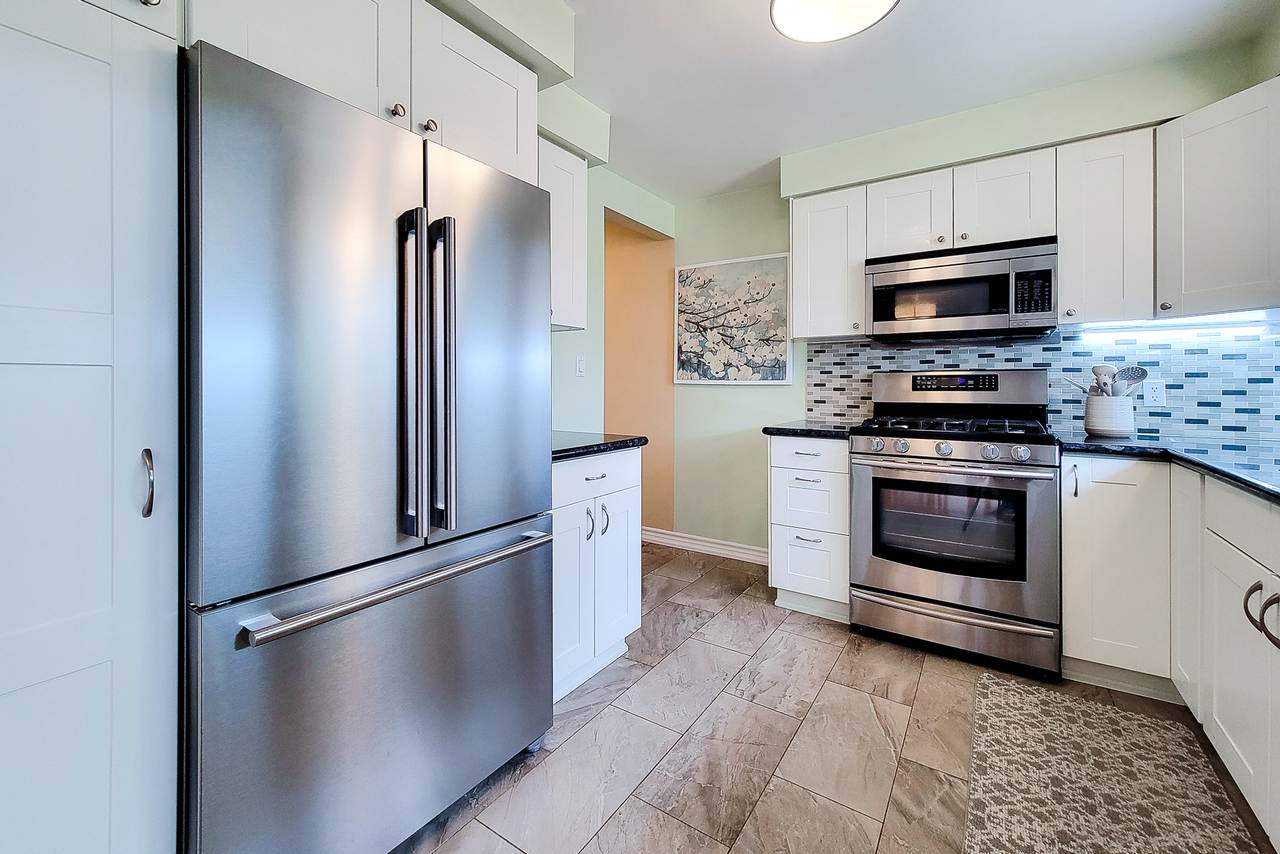
Local example: The Wellington Street townhouse
Scenario: Two-bedroom townhouse listed at $720,000. First offer $680,000, 1% deposit, 10-day inspection, buyer pre-approval conditional.
What to do: Counter. Here’s why: buyer’s price is low but a weak deposit and long inspection window give you leverage.
Counter strategy:
- Counter price: $710,000.
- Deposit: 5%.
- Inspection: 5 business days.
Result (likely): Buyer increases price to $700,000 and bumps deposit to 3%. You accept. Net proceeds up $20k vs. original offer.
This is the exact kind of win Georgetown sellers can expect when they counter strategically.
Use market data to justify your counter
Always attach comparables (recent sales under 1–2 months) to your counter. Show sold prices for similar homes on similar streets. In Georgetown, highlight sales near GO stations and popular school zones.
Numbers speak. Buyers trust comps. Comps close deals.
Negotiation tactics that work in Georgetown
- Set a deadline on counters. A 24–48 hour window creates pressure and weeds out casual buyers.
- Keep communications through your agent. It reduces emotion and keeps leverage.
- Offer alternatives: If buyer can’t move on price, ask for better terms (higher deposit, faster inspection, fewer conditions).
- Don’t split the difference automatically. Working toward your net number matters more than the headline price.
When rejecting is the smart move
Reject when the buyer’s terms create risk: low deposit + long conditions + financing uncertainty. Reject publicly and re-list stronger, or hold for better offers.
If your timeline is tight — e.g., settled purchase on your next home — accept stronger terms even if price dips. Time is a cost. Factor it into your decision.

Final decision flow (one-minute checklist)
- Is offer within 5–7% of asking? Yes = counter. No = next.
- Is proof of funds or clean pre-approval present? Yes = counter. No = reject or conditional counter.
- Are conditions standard and short? Yes = counter. No = tighten or reject.
- Will accepting now save you carrying costs or timeline risk? If yes, consider accepting or mild counter.
If you need more than one “yes” to move forward, default to counter. Counters buy time and preserve upside.
Contact for local strategy and pricing comps
This is tactical, local work. Price, comps, and timing vary by street. A single line in an offer — deposit, inspection period, or closing date — changes outcomes.
For a free, street-level evaluation and instant negotiation plan tailored to your property in Georgetown, email tony@sousasells.ca or call 416-477-2620. Visit https://www.sousasells.ca for recent solds and market updates.
FAQ — Georgetown sellers: fast answers
Q: Is it safer to counter every offer?
A: No. Counter when the offer shows buyer capability (deposit, pre-approval) or when the price is negotiable. Reject clear lowballs with no proof.
Q: How big should my counter be?
A: Aim to anchor near your target net. Common practice: counter 2–5% above the highest realistic offer to create room for a final settlement.
Q: How long should inspection and financing conditions be?
A: Keep inspections 3–7 business days. Financing 5–7 business days if pre-approved. Longer windows increase seller risk.
Q: What deposit works best in Georgetown?
A: 5–10% in a balanced market. For condos or townhomes, 3–5% may be acceptable. Larger deposits reduce buyer walk risk.
Q: If I need a fast sale should I accept lower price?
A: Factor carrying costs and timeline. Accepting a lower but solid offer can be smarter than risking months on market.
Q: Should I counter multiple offers?
A: Use counters to create urgency. Set deadlines. If multiple strong bids appear, run an escalation strategy or call for best and final.
Q: Can I accept an offer subject to the buyer selling their home?
A: Avoid if possible. Conditions tied to the buyer’s sale add significant risk. Require stronger protections (higher deposit, strict timelines).
Q: What if the buyer asks for repairs after inspection?
A: Get quotes. Counter with a price adjustment or a capped credit. Keep control by setting a cap on seller-paid repairs.
Q: How do local schools and proximity to GO affect strategy?
A: Properties in preferred school zones and near GO stations attract commuter buyers willing to pay a premium. Use that in your pricing and counters.
This is a tactical playbook, not academic theory. Offers and negotiations are straightforward when you use a repeatable system. Counter to preserve upside. Reject to remove risk. Use comps to justify your position. Tighten conditions to protect your sale.
For a tailored negotiation plan for your Georgetown home, email tony@sousasells.ca or call 416-477-2620. Visit https://www.sousasells.ca for local sold data and a free seller consultation.