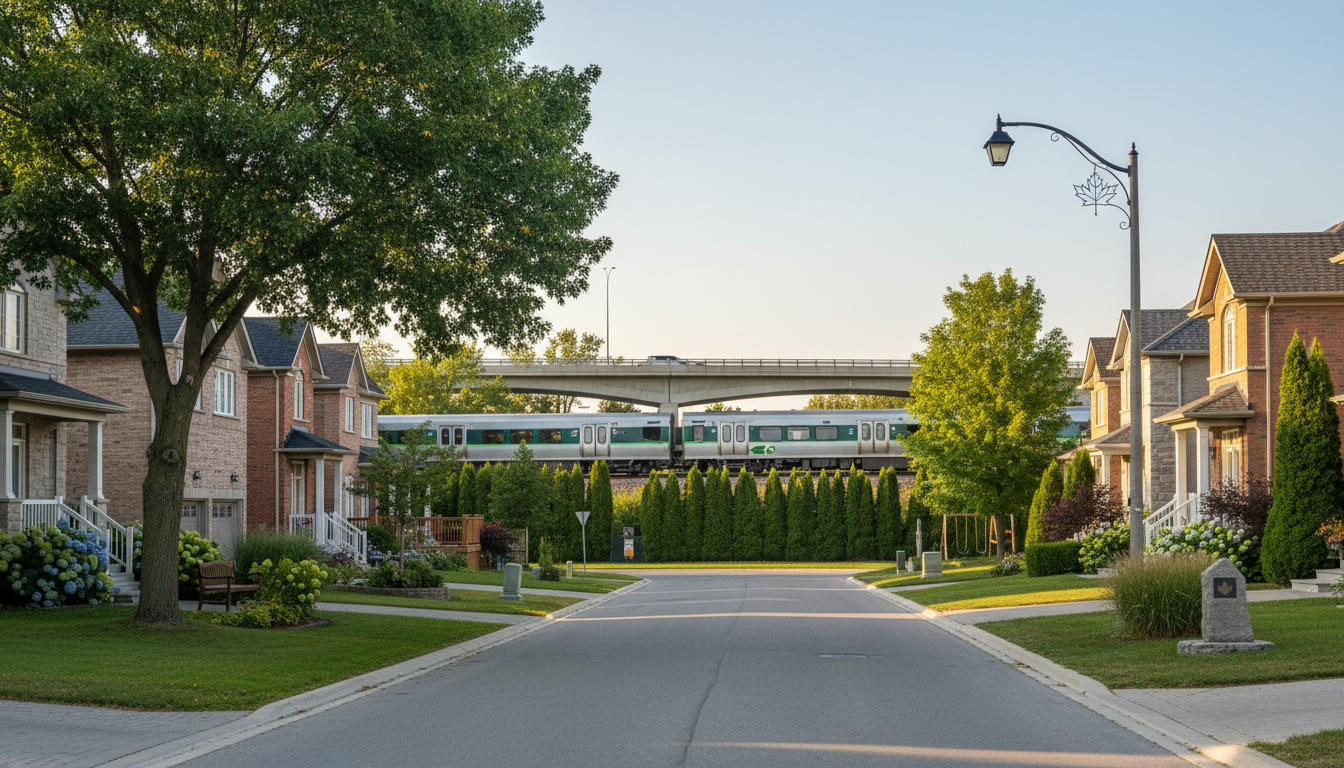
Are there noise or traffic concerns?
“Are there noise or traffic concerns?” — The blunt question every buyer will ask. Here’s the short, profitable answer for sellers in Georgetown, ON: yes, noise and traffic matter, but they’re solvable — if you know exactly where to look and what to show.
Quick answer for sellers
Noise and traffic can affect sale price and days on market in Georgetown, but the impact is tied to location, timing, and presentation. Properties directly beside the GO station, busy arterials, or major interchange corridors will feel the effect most. Quiet side streets, cul-de-sacs, and homes backing onto green space or the Credit River hold value better. Your job as a seller is to identify which side your property sits on and act fast.
Where noise comes from in Georgetown — be specific
- Trains and GO service: Georgetown is served by GO Transit on the Kitchener line. Train noise and occasional horn use near level crossings are real for properties closest to the tracks.
- Major roads and commuter routes: Main streets and regional roads carry commuter traffic. Morning and evening rush hours (roughly 7–9am and 4–6pm) are when buyers notice commute noise and congestion.
- Highway access and spillover: Nearby highways and arterial ramps bring traffic and occasional highway noise to adjacent neighbourhoods, especially during peak periods or long weekends.
- Construction and commercial activity: Development, roadwork, and business deliveries create intermittent noise. New builds and infrastructure upgrades mean temporary disruption.
- Seasonal and event noise: Town events, festivals, and seasonal sports can be loud for a day or weekend — buyers notice patterns, not isolated dates.
If your home is near one of these sources, don’t panic. Use facts, not fear, to neutralize concerns.

How traffic noise affects buyer behavior and price
Buyers evaluate noise and traffic in two ways: objective and emotional. They measure objective factors (distance to source, frequency) and then apply emotion — can I live with this every day? Homes near persistent noise sources often sell for less or take longer to sell. But a well-framed listing and targeted fixes can recover lost value.
What matters most to buyers in Georgetown:
- Is the noise constant or occasional? Constant background hum is worse than predictable commuter peaks.
- Can I sleep and work at home comfortably? With remote work common, interior sound levels matter.
- Is there visible traffic congestion affecting commute time? Buyers weigh drive-time vs. transit access.
Sellers who answer these quietly, clearly, and with fixes win faster and at better prices.
Practical, high-ROI fixes sellers can implement now
- Measure and document
- Record short clips of typical daytime and evening noise at your property. Note times and conditions. Buyers trust objective evidence.
- Soundproofing upgrades that buyers notice and value
- Replace or upgrade windows to double or triple pane where noise is worst.
- Add weatherstripping to doors and seal gaps.
- Install heavy drapes on key windows facing the noise source.
- Landscaping buffers
- Plant evergreen hedges or install privacy fencing to break direct sound paths. Mature hedges add curb appeal while dampening street noise.
- Reposition rooms for showings
- Stage bedrooms and home offices on the quiet side of the house. When buyers tour, open blinds on the quieter exposures to emphasize calm.
- Time your showings and open houses strategically
- Avoid rush-hour showings for listings affected by commuter traffic. Show the home during quieter hours so buyers experience the property at its best.
- Full disclosure and framing
- Be upfront about nearby infrastructure. Then frame it: “5-minute walk to GO station” is a commute benefit, not just a noise risk. Transparency builds trust and reduces renegotiation.
- Professional noise assessment for high-risk properties
- If you suspect serious nuisance, a short noise study gives a measurable baseline and can reassure buyers or justify pricing.
How to market a property near transit or roads — words that sell
Buyers who commute value predictability. Turn potential negatives into benefits with clear, factual copy:
- Use phrases like “easy commuting via GO Transit (Kitchener line)” or “quick access to regional routes” when proximity is an advantage.
- For properties on quieter streets: “Quiet residential lane” “mature tree-lined street” “backing onto greenspace” — these phrases reduce perceived risk.
- Don’t hide the truth. Use objective language and visuals: show photos of the quiet side, landscaping, and interior windows.
Listing example snippets you can use:
- “Minutes to Georgetown GO — ideal for predictable commutes. Quiet backyard backs onto mature trees.”
- “Luminosity and peace: bedrooms positioned away from the road; upgraded windows for comfort.”
Staging and show-day tactics that remove buyer doubt
- Run a showing during a calm period so buyers feel the home’s quiet potential.
- Use white-noise machines in strategically noisy rooms during showings to mask brief disturbances.
- Provide a one-page “neighbourhood and commute” summary with sample commute times by car and GO train, nearby grocery and school walk times, and the town’s noise bylaw link.

Legal and municipal considerations in Halton Hills
- The Town of Halton Hills and Halton Region have municipal noise bylaws and standards. For sellers, this is a two-fold advantage: you can point buyers to official limits and enforcement procedures.
- If a buyer raises concerns about long-term development or future road plans, contact the town planning department and pull recent planning notices. Buyers respect proof of due diligence.
Pricing strategy when noise or traffic is a factor
- Determine how close your property sits to the noise source, and apply a measured discount based on comparable sales on quiet vs. noisy streets.
- When in doubt, price to create buyer competition. A slightly aggressive price with strong marketing can offset buyer hesitation caused by noise concerns.
- Use professional photos and virtual tours to highlight quiet spaces, interior comfort, and upgraded windows.
Turn a potential weakness into a selling advantage
Buyers who prioritize commuting will pay a premium for location near GO Transit. Buyers who prioritize family life will prioritize quiet streets and schools. Your job is to segment the market and craft messaging for each buyer type.
- For commuters: emphasize transit access, predictable commute times, and parking.
- For families: emphasize schools, parks, quiet side yards, and soundproofed living spaces.
This focused messaging shortens time on market and reduces price concessions.
Checklist for sellers: action items before listing
- Walk the property morning, midday, and evening. Note noise patterns.
- Record short audio/video clips and keep them available for serious buyers.
- Upgrade windows or add targeted soundproofing where ROI is highest.
- Stage bedrooms and offices on the quiet side.
- Prepare a neighborhood factsheet: commute times, GO schedule link, municipal noise bylaw link, and nearby amenities.
- Price competitively based on comparable sales in similar exposure positions.
FAQ — quick answers buyers and sellers want in Georgetown, ON
Q: Will train noise from the GO line ruin my sale?
A: Not if you show it transparently and present solutions. Buyers often accept trade-offs for transit access. Soundproof windows and honest marketing reduce friction.
Q: Are there specific streets I should avoid when pricing?
A: Avoid guessing. Compare recent sales on the same street and similar exposure. Streets closest to rail crossings and main arterials typically sell differently than quiet side streets.
Q: How do I find out about planned roadwork or highway projects?
A: Check the Town of Halton Hills planning notices and Halton Region infrastructure pages. Pull recent planning reports before listing.
Q: Do noise bylaws protect buyers?
A: Yes. Local bylaws set standards and enforcement procedures. Provide the bylaw link in your factsheet to reassure buyers.
Q: Should I invest in professional soundproofing before selling?
A: Targeted upgrades deliver the best ROI — windows and door seals first, then landscaping buffers. If the property is heavily impacted, a noise study helps justify the price.
Q: Can I use proximity to the GO station as a selling point?
A: Absolutely. Commuters pay for convenience. Package transit access with quiet interior photos and upgrades to show the best of both worlds.
Final word — sell from strength, not shame
When buyers ask, “Are there noise or traffic concerns?” give them facts, fixes, and confidence. Georgetown is a desirable market. When you prepare, present, and price like a pro, noise and traffic stop being problems and become predictable facts that buyers can assess and accept.
Need a local strategy that works? I’ll analyze your property’s exposure, recommend high-ROI fixes, and craft the listing language that sells. Contact the local expert:
Tony Sousa — Local Realtor, Halton Hills specialist
Email: tony@sousasells.ca
Phone: 416-477-2620
Website: https://www.sousasells.ca
List smart. Price right. Close faster.