How do I sell a parent’s home with pets still living there?
Sell a Parent’s Home Without Forcing Out the Pets — The Practical Plan That Works in Georgetown, ON
You can sell a parent’s home while pets still live there. You can keep the animals safe, keep the house attractive to buyers, and close on time — without losing money. This is the step-by-step playbook for Georgetown home sellers who need results, not excuses.
Why this matters in Georgetown, ON
Georgetown (Halton Hills) is a strong market inside the western edge of the GTA. Buyers here want move-in-ready homes and calm showings. Pets can make a property look lived-in or neglected. Left unmanaged, they cost you offers and slow the sale.
This guide tells you exactly what to do when pets are still in the house: legal steps, staging, showings, photography, pricing adjustments, and logistics. No fluff. Straight actions you can implement today.
First things first: ownership, power of attorney, and legal clearance
- Confirm who legally owns the property. You can’t list a home until title and authority are clear.
- If the parent is incapacitated, have the Power of Attorney or estate executor documentation ready.
- If probate or estate administration is required, start that process immediately. It buys you time to plan pet logistics and marketing.
A local real estate lawyer and your realtor should verify paperwork before you list.
Pet disclosure and liability — be transparent
- Disclose pets in the listing notes where appropriate. Buyers appreciate honesty.
- If animals have caused damage (chewed baseboards, stained carpets, odour), disclose and fix where cost-effective.
- Consider a simple pet addendum for showings: pet remains removed during visits, or stays in a secured room with food and water.
Transparency reduces risk, speeds negotiations, and prevents last-minute deal collapses.
Clean, neutral, staged — sell the lifestyle, not the smell
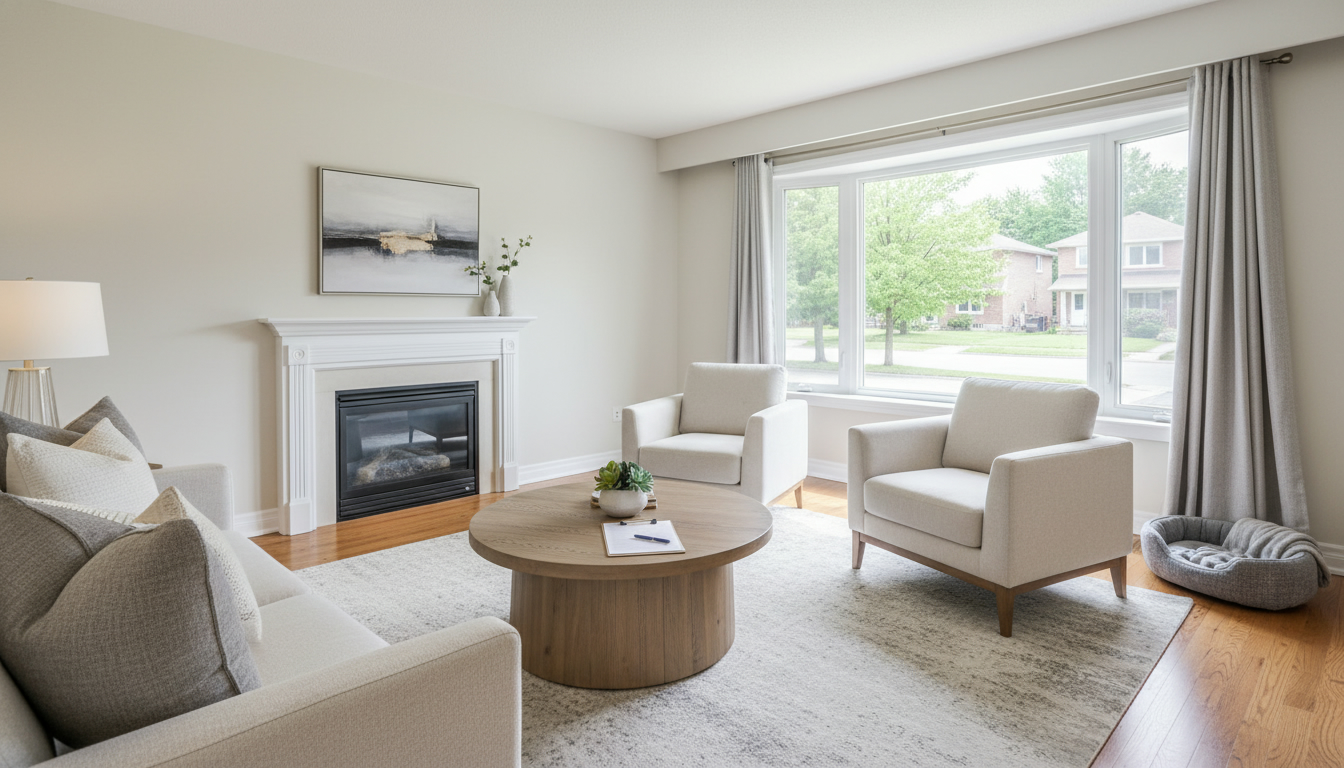
Buyers buy lifestyle. Pet odour, hair, and visible damage break that image. Here’s an efficient staging checklist:
- Deep clean carpets or replace if damage is extensive. Clean rugs and upholstery.
- Steam clean floors and tile grout.
- Shampoo or replace linens and curtains that carry odour.
- Use enzymatic cleaners for urine or feces spots — they remove odor molecules rather than mask them.
- Remove pet clutter: beds, bowls, litter boxes, toys. Store them offsite during marketing.
- Neutralize scents — avoid heavy air fresheners. Use subtle, clean scents (fresh linen, light citrus) sparingly during open houses.
A modest investment in cleaning and minor repairs often returns in higher offers and quicker sales.
Staging with pets in mind — present calm, not chaos
- Stage primary rooms to look pet-friendly but tidy. Buyers should picture themselves living there with or without pets.
- Replace worn doormats and patch scratched baseboards.
- If pets are present during photos, keep them out of the shots. Professional listing photos should show a clean, neutral space.
Home staging matters more in Georgetown where buyers compare homes closely.
Showings: systems that keep pets and buyers safe
You need a repeatable showing system that protects animals, suits buyers, and keeps the property market-ready.
Options:
- Short-term boarding or pet daycare: Best for multiple showings or open houses. Georgetown has local kennels and pet sitters — budget for this during the marketing period.
- Neighbor or family care: If available, rotate pets out during peak showing hours.
- Secure a dedicated ‘pet room’ with food, water, bedding, and bathroom access. Keep that room tidy and lock it during showings. Leave a note on the listing to inform agents.
- Leashed or crated presence: Only if the owner or handler stays during the showing. Not ideal for open houses.
A clear plan for showings removes buyer hesitation.
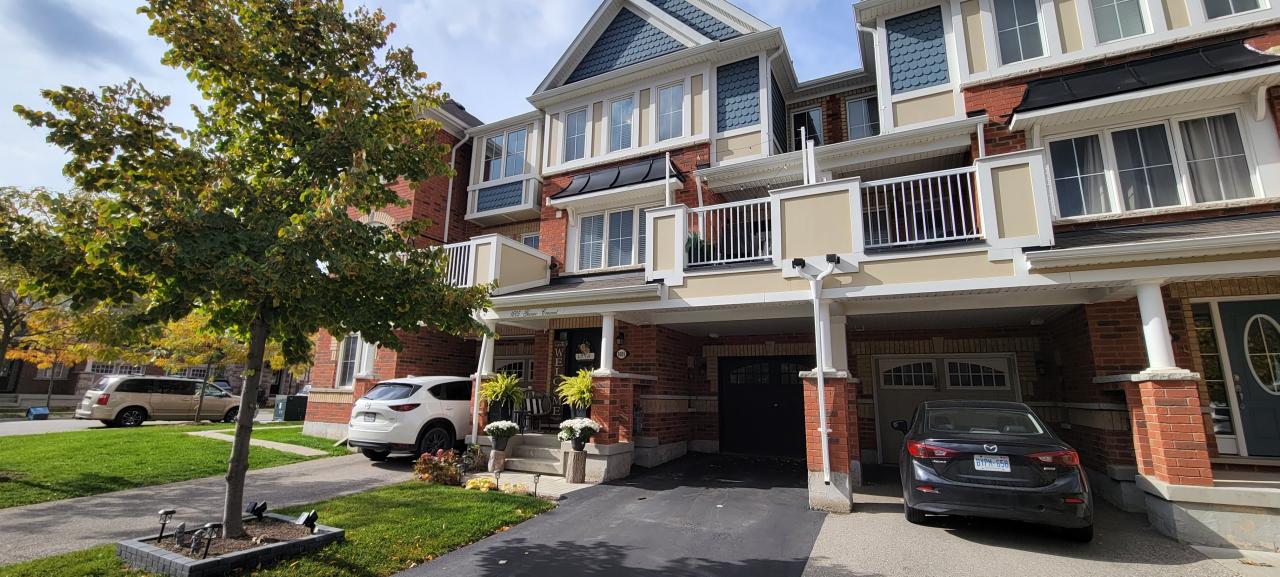
Photography and online marketing — sell the potential, not the problem
- Hire a professional photographer. Clean, bright images sell faster.
- Avoid showing pets in photos unless the listing is marketed to pet owners specifically.
- Use virtual tours and floor plans to let buyers explore before visiting.
- In the listing copy, call out pet-friendly features (fenced yard, mudroom, tiled entry). That attracts buyers who see pets as a positive.
Good online marketing outweighs small inconveniences — especially in the local Georgetown audience.
Pricing strategy — be realistic, protect your margin
- If pets caused damage you cannot fully repair before sale, price to reflect that or fix the issue.
- If you invest in cleaning and repairs, list at market value. Buyers will reward turnkey condition.
- Your realtor should run comps across Georgetown neighbourhoods to target the correct list price and anticipate buyer expectations.
Pricing balanced with visible condition brings offers quickly.
Negotiation tactics when pets are involved
- Document repairs and cleaning receipts to show buyers.
- If a buyer requests a credit for pet-related issues, counter with documented costs or offer a modest closing credit for a fixed repair amount.
- If pet presence is a deal-breaker, consider offering a short possession period after closing so the sellers can find a boarding solution.
Keep negotiations fact-based and paper-tracked.
When selling an estate or under probate — special rules
- Estate sales often require probate or court approval. Timeline matters. Communicate realistic marketing windows to buyers.
- If pets remain in the house during estate administration, be especially careful with showings and liability.
- Work with an estate lawyer experienced in Halton Hills procedures.
The right legal partner keeps the sale moving.

Practical Georgetown resources (what to call right now)
- Local boarding and doggy daycares in Georgetown — book early for weekends and open house days.
- Mobile groomers who will de-shed and deodorize before photos.
- Local cleaners who know enzymatic treatments for urine.
- A trusted local inspector and contractor for quick, cost-effective repairs.
Your realtor should provide a short list of vetted vendors to move fast.
When keeping pets for the sale is the best choice
Sometimes moving animals out is impossible. In that case:
- Limit disruption: designate one room, deep clean, and make it off-limits for buyers.
- Schedule showings at predictable times and provide a 24-hour showing window so agents can plan.
- Keep pets calm: pheromone sprays, calming wraps, or a sitter during showings.
You can still sell quickly even with pets if you control the presentation.
Closing: move fast, protect value, keep the animals safe
Selling a parent’s home with pets still present is a logistics problem — solvable with planning, cleaning, and local know-how. The market in Georgetown rewards clean, well-marketed homes. Don’t let animals become an excuse for a lower sale price.
If you want a clear action plan for your property — including vendor referrals for boarding, cleaning, and staging — call or email now. I handle the process start to finish so families can focus on care and closure.
Contact:
Tony Sousa, Local Realtor — Georgetown, ON
Email: tony@sousasells.ca
Phone: 416-477-2620
Website: https://www.sousasells.ca
FAQ — Selling a parent’s home with pets in Georgetown, ON
Q: Can I list the home while pets are still living there?
A: Yes. Make sure legal ownership or Power of Attorney is confirmed. Prepare a showing plan and disclose any damage. Proper staging and cleaning make the listing competitive.
Q: Will pets hurt my sale price?
A: Visible damage and odors can reduce offers. Fix what’s cost-effective (carpet cleaning, minor repairs). Small investments often recoup more in sale price than they cost.
Q: What’s the cheapest way to manage pets during showings?
A: Ask a neighbor or family member to take the pets during showings. If unavailable, set up a neat, dedicated pet room and communicate that with buyers.
Q: Are there local boarding options in Georgetown?
A: Yes. Georgetown and nearby Halton Hills have kennels and daycares. Your realtor will provide vetted contacts based on your dates and needs.
Q: Do I have to disclose pet damage?
A: Don’t hide material damage. Disclose known issues and provide receipts for repairs to avoid disputes later.
Q: What if I’m selling an estate and can’t remove the pets quickly?
A: Coordinate with your estate lawyer and realtor. Schedule non-intrusive showings, use clear signage, and consider short-term boarding for open houses.
Q: Should I include pets in listing photos?
A: Generally no. Photos should show a clean, neutral space. Mention pet-friendly features in the description instead.
Q: How much does professional cleaning or minor repairs usually cost?
A: Costs vary. Ask your realtor for local estimates. Focus on carpet cleaning, spot repairs, and enzymatic odor treatment — those deliver the best ROI.
Q: Will buyers walk away if they see a dog or cat during a showing?
A: Serious buyers understand pets. Most will not walk away if the house is clean and shows well. The risk is unmanaged pets or noticeable damage.
Q: Who pays for pet-related repairs after inspection?
A: Usually negotiable. Provide receipts for repairs already completed. If a buyer requests a credit, counter with documented costs or a set closing credit.
Q: How long should I expect the process to take in Georgetown?
A: Timing depends on condition, pricing, and market activity. With proper prep, pet-friendly homes can sell as quickly as other properties. Your realtor will set realistic timelines based on local comps.
Q: What’s the one action that most improves buyer interest?
A: Deep cleaning and odor removal. It’s the fastest way to change perception and increase offers.
Need help with the whole process? Call or email to get a fast, local plan and vendor list tailored to your property and pets.