How do I assess plumbing and sewage systems?
Stop wasting money: Here’s exactly how to assess plumbing and sewage systems before you buy a home.
Why plumbing and sewage matter now
A hidden pipe problem can turn a great deal into a money pit. Plumbing and sewage issues create mold, structural damage, raw sewage backups and five-figure repair bills. If you’re buying, selling, or protecting equity, you must inspect systems like a pro.
Quick, practical 8-step plumbing and sewage inspection checklist
Follow this checklist during showings and inspections. It’s actionable and fast.
- Visual scan (2–5 minutes)
- Look under sinks, behind the washer, around the water heater and basement walls for stains, drips, corrosion or patched pipes.
- Check exposed waste stacks and visible sewer cleanouts outside the home.
- Run every fixture (5–15 minutes)
- Turn on all faucets, showers and tubs. Watch for low pressure, sputtering, discoloration or temperature lag.
- Flush every toilet twice. Listen for slow refill or running water.
- Test drains and traps
- Fill sinks and bathtubs, then release. Slow drains or gurgling indicate partial blockages or venting problems.
- Smells near drains suggest trap failures or sewer leaks.
- Inspect for leaks and water damage
- Check ceilings and walls for bubbling paint, brown stains, or efflorescence near piping.
- Look at floor joints, appliance connections and the base of toilets for moisture.
- Check the main sewer line access
- Find the cleanout cap outside or in the basement. If capped or cracked, it’s a red flag.
- Ask if the seller has recent sewer-line reports or repairs.
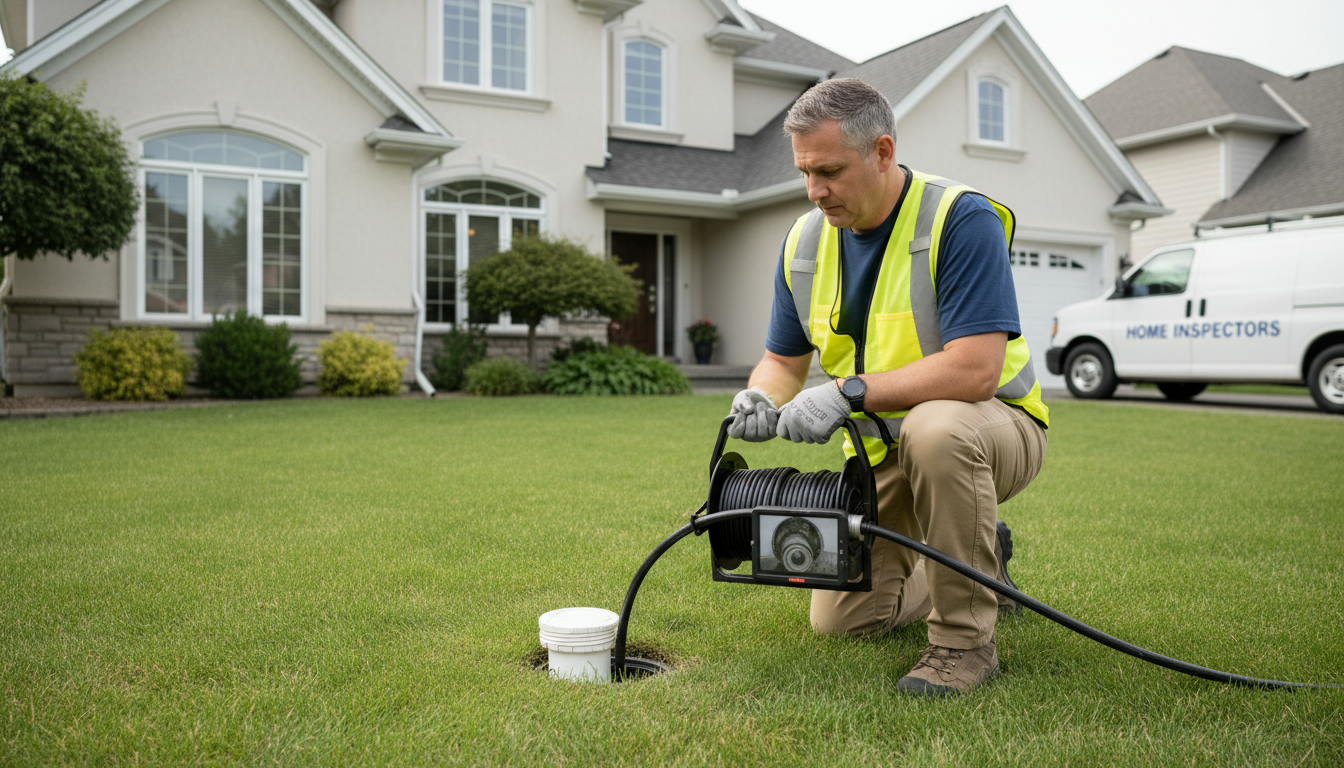
- Know when to get a sewer scope (CCTV)
- Required for older homes, mature trees on the lot, history of backups or if insurance requires it.
- A camera inspection reveals root intrusion, bellied pipe, offsets, collapsed sections and material type.
- Septic system checklist (if applicable)
- Ask for pumping records, tank location and recent inspection. Look for soggy ground or lush vegetation near the drain field.
- Never buy a septic system without a certified inspection.
- Hire licensed pros for critical tests
- Licensed plumber for pressure, leak detection and water heater evaluation.
- Sewer-camera specialist for mainline condition. Expect $200–$500 depending on length and report.
Red flags that deserve immediate attention
- Repeated backups or seller disclosures of past cleanouts
- Root intrusion, collapsed or clay pipes on CCTV
- Continued low pressure throughout the house
- Fresh patches or painted-over repairs in crawlspaces
Costs and next steps
Minor fixes: $200–$1,500. Sewer replacement or major repairs: $5,000–$25,000+. Get written estimates and scope-of-work before negotiating.
If you want fast local referrals to trusted plumbers, sewer-camera operators and certified home inspectors, contact Tony Sousa. He’s a local realtor who guides buyers through these checks, negotiates repairs and protects your offer.
Email: [email protected] | Phone: 416-477-2620 Visit: https://www.sousasells.ca
Call to action: Don’t gamble on hidden pipes. Book a sewer scope and licensed plumber review before waiving conditions. Contact Tony now to get vetted pros and expert negotiation support.
Featured Real Estate Listings
Browse current properties available right now. Click any listing to view photos, floor plans, or schedule a private tour.