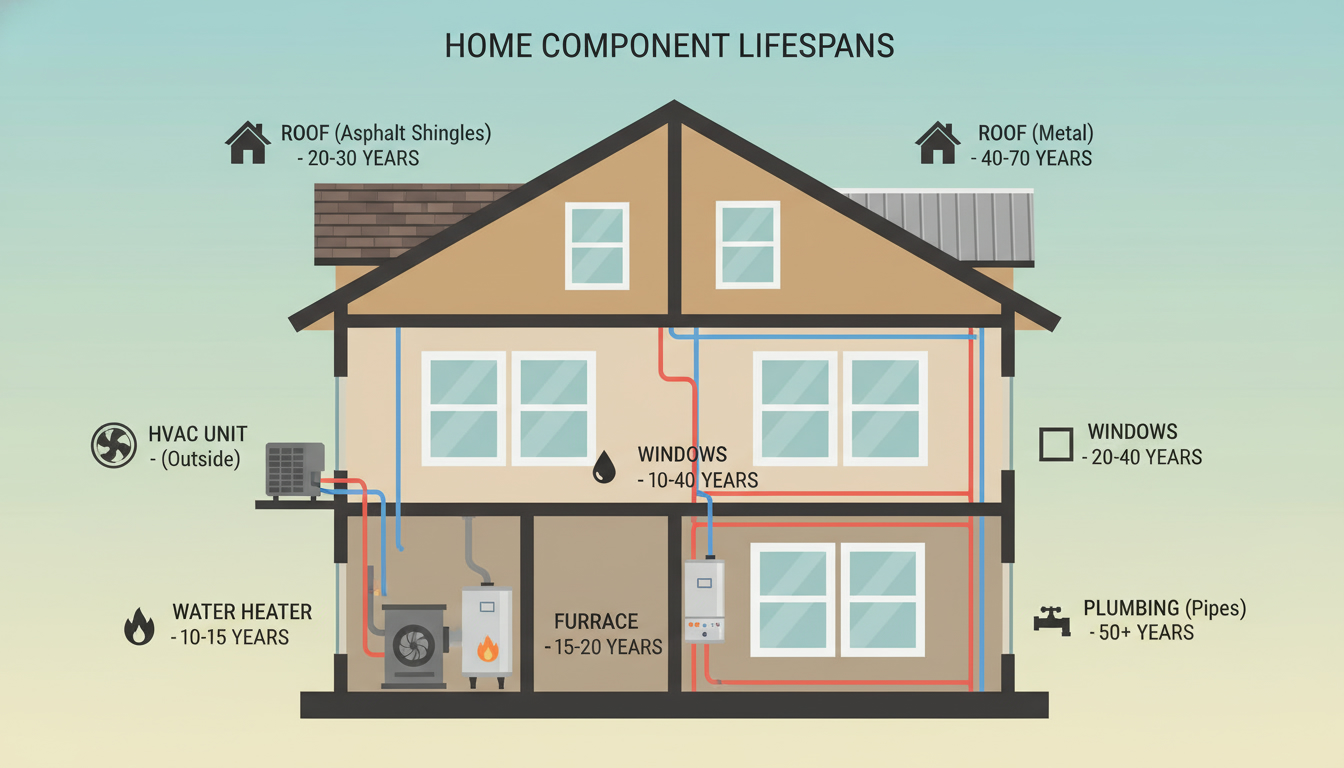
What is the average lifespan of key home components like roof and HVAC?
How long until your roof or HVAC needs replacing? You’ll want to know before it costs you tens of thousands.
Quick, shocking lifespan numbers every homeowner needs
If you own a home, start with these average lifespans. These are industry-standard ranges that drive buying, selling, and maintenance decisions.
- Roof (asphalt shingles): 20–30 years
- Roof (metal): 40–70 years
- HVAC (central AC): 15–20 years
- Furnace (gas): 15–25 years
- Heat pump: 10–15 years
- Water heater (tank): 8–12 years
- Tankless water heater: 20+ years
- Windows (vinyl): 20–30 years
- Plumbing (copper): 50–70 years; (PVC): 25–40 years
- Electrical panel: 30–50 years
These ranges are the baseline. Climate, installation quality, maintenance, and product brand change the math.
Why these numbers matter right now
Numbers alone don’t move markets—predictability does. Buyers and sellers make decisions based on expected replacement costs. Knowing expected life means you can budget, negotiate, and avoid surprises.
Example: a 25-year-old asphalt roof in Toronto might be at end-of-life. That impacts listing price and buyer offers. Same with a 20-year-old furnace — expect a repair or replacement contingency.
How to push components to the high end of their lifespan
- Maintain. Clean gutters, clear debris, change HVAC filters every 1–3 months. A small maintenance cost extends life dramatically. 2. Annual inspections. Roof checks, HVAC tune-ups, plumbing inspections. 3. Quality installs. Cheap installations shave years off a system’s life. 4. Timely repairs. Fix small leaks, replace failing components fast.
Actionable rule: spend 1% of your home value yearly on maintenance. It’s not optional.
What to watch during home inspections
- Roof: missing shingles, sagging, dark streaks, flashing issues.
- HVAC: inconsistent heating/cooling, higher bills, frequent cycling.
- Water heater: rust, leaks, inconsistent temps.
- Windows: drafts, condensation between panes.
These are early warning signs that the system is closer to failure than the calendar suggests.
How this affects home value and negotiations
Buyers will discount a property if major systems are near end-of-life. Sellers who preemptively replace or provide a credit sell faster and often for more. Use lifespan knowledge to create accurate, defensible pricing.
Final takeaway (and what to do next)
Know the expected life of your roof, HVAC, and other key systems. Inspect annually. Budget for replacement. If you want a precise assessment tied to the local market and resale value, get an expert opinion.
Tony Sousa is a top local real estate expert who helps buyers and sellers factor system lifespans into pricing and negotiation. Email [email protected] or call 416-477-2620 for a home-specific assessment or listing strategy. Visit https://www.sousasells.ca to learn more.
Featured Real Estate Listings
Browse current properties available right now. Click any listing to view photos, floor plans, or schedule a private tour.


