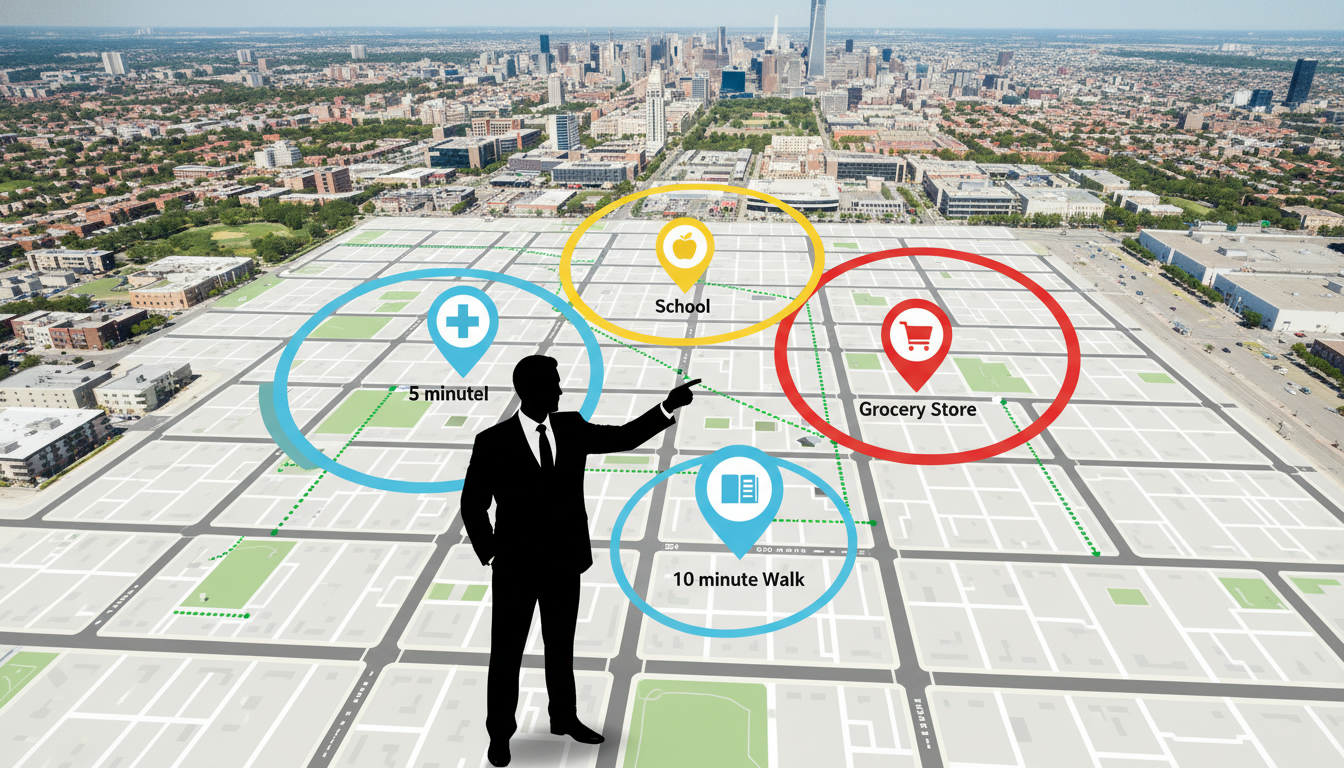
How close are hospitals, schools, and grocery stores?
What's Next-Door: Hospitals, Schools, Groceries — How Close Are They, Really?
If you care about convenience, safety, and resale value, the distance to hospitals, schools, and grocery stores matters more than the house itself. Read this short, hard-hitting guide to know exactly what "close" means and how to measure it like a pro.
Quick answer: what buyers should expect
In most desirable urban and suburban neighborhoods, expect:
- Grocery store: 5–10 minute drive, 5–15 minute walk in walkable areas
- Elementary and secondary schools: 5–15 minute drive, often a 10–20 minute walk
- Hospital or urgent care: 5–20 minute drive depending on city density
"Close" = under 10 minutes by car or under 20 minutes walking in a walkable neighborhood. Those numbers increase in rural areas.
How proximity affects value and daily life
Proximity is not just convenience. It affects safety, commute time, property value, and buyer demand. Homes within a short drive to quality schools and a reliable grocery store sell faster and often at a premium. Close emergency care reduces risk and is a key factor for families and older buyers.
How to measure proximity — practical metrics
Use these simple, repeatable metrics when evaluating any neighborhood:
- Drive time (minutes): realistic for daily errands. Set a 10–15 minute threshold for groceries and schools.
- Walk time (minutes): shows walkability. Under 20 minutes to a grocery or school is strong.
- Public transit time: important in cities — check routine schedules, not just a single express.
- Distance (km or miles): useful in rural searches. Convert to drive time for real context.
- Service availability: urgent care vs full hospital. An urgent care within 10 minutes is useful; a full hospital within 20 minutes is ideal.
Typical neighborhood profiles
- Urban core: Grocery and schools often within walking distance; hospitals 5–15 minute drive.
- Suburban: Groceries and schools usually 5–15 minutes by car; hospitals 10–25 minutes.
- Rural: Expect 20+ minutes to major services. Factor that into lifestyle choices and insurance.
Buyer checklist: 5 questions to ask on every showing
- How long is the daytime drive to the nearest supermarket?
- Is there a school walk route and crossing guard nearby?
- Where is the closest urgent care and full-service hospital?
- What transit options exist for school and work commutes?
- How often is traffic heavy during peak times?
Why local expertise matters
Numbers matter. Local nuance determines whether a 12-minute drive is realistic at 8 a.m. or becomes 25 minutes in traffic. Tony Sousa analyzes route times, school boundaries, and emergency care access for every listing so buyers get realistic, actionable proximity data.
Ready to buy with confidence? Get precise proximity maps, commute testing, and school-boundary checks tailored to your search. Contact Tony Sousa — [email protected] | 416-477-2620 | https://www.sousasells.ca
Featured Real Estate Listings
Browse current properties available right now. Click any listing to view photos, floor plans, or schedule a private tour.


