What happens if I price my home too high?
Price your home too high? How overpricing kills offers, drains time, and cuts your final payout — and the clear steps to fix it.
Why pricing matters more than staging
In a market where buyers search, compare, and decide in minutes, price is the loudest message. Overprice a home and you don’t just get fewer showings. You destroy bargaining power, trigger negative appraisal results, and invite long-term stigma that lowers final sale price.
Tony Sousa is a local market authority. He studies comps, buyer behavior, and listing data. He proves that the right price on day one gets more eyes, starts multiple offers, and maximizes net proceeds.
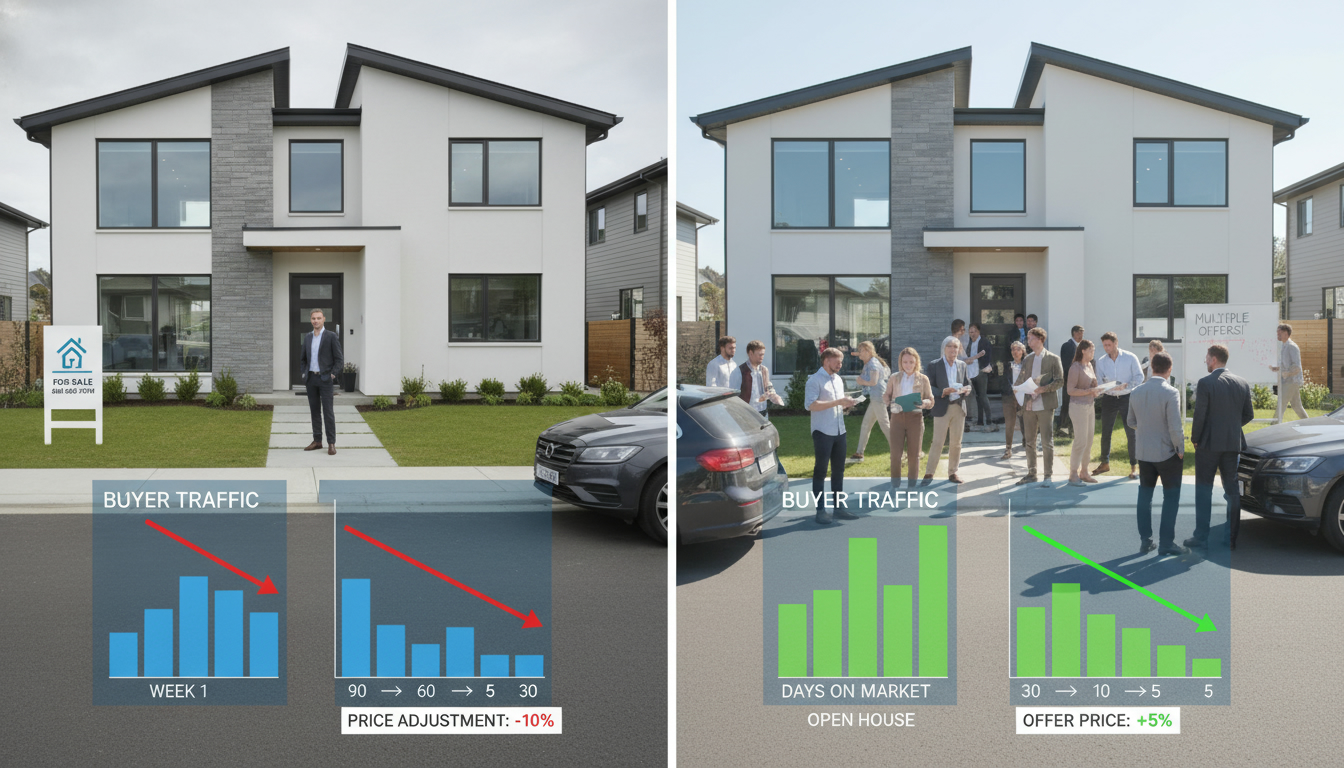
What actually happens when you price too high
- Fewer showings: High list price filters out motivated buyers. Algorithms on portals hide overpriced listings from common search ranges.
- Longer days on market: Each day lowers buyer urgency. The house becomes "stale." Stale listings sell for less.
- Lower perceived value: Buyers assume there’s a reason price stays high. They lowball or skip the property.
- Failed appraisals: If a buyer’s mortgage appraisal comes in below your price, deals collapse or you must drop price at closing.
- More price cuts: Multiple reductions signal desperation. Each cut reduces leverage and eventually the net you keep.
Quick math that proves overpricing costs you
Example: Market value $700,000. List at $749,000 (7% high). Low traffic = single offer at $680,000 after 60 days. Or price right at $699,000, get 8 offers, push to $725,000. You leave tens of thousands on the table by guessing.
Action plan: What to do the moment you realize the price is too high
- Re-run comps today: Use the latest sold data within 30 days and 1 km/mi. Don’t rely on old neighborhood memories.
- Cut quickly and smart: A single strategic reduction in week two performs better than slow drops over months.
- Re-energize marketing: New photos, new copy, fresh open house. Reset the listing date if relisting.
- Create buyer urgency: Limited-time incentives, pre-inspection, flexible closing date.
- Price to capture market search bands: Place price just below common thresholds (e.g., $699,900 not $700,000).
- Trust data, not emotion: Your home is a product in a market. Price it for buyers, not for nostalgia.
Avoid these mistakes
- Don’t raise price after poor showings. That signals indecision.
- Don’t ignore online feedback. If agents consistently say price is the issue, listen.
- Don’t over-invest in cosmetic fixes without correcting price first.
Final word from a market pro
Tony Sousa has closed deals by pricing for demand, not ego. If you want the best net proceeds, act fast, use comps, and treat price as your top marketing tool.
Need a pricing review or market valuation? Email [email protected] or call 416-477-2620. Visit https://www.sousasells.ca for local market reports and case studies.
Featured Real Estate Listings
Browse current properties available right now. Click any listing to view photos, floor plans, or schedule a private tour.


