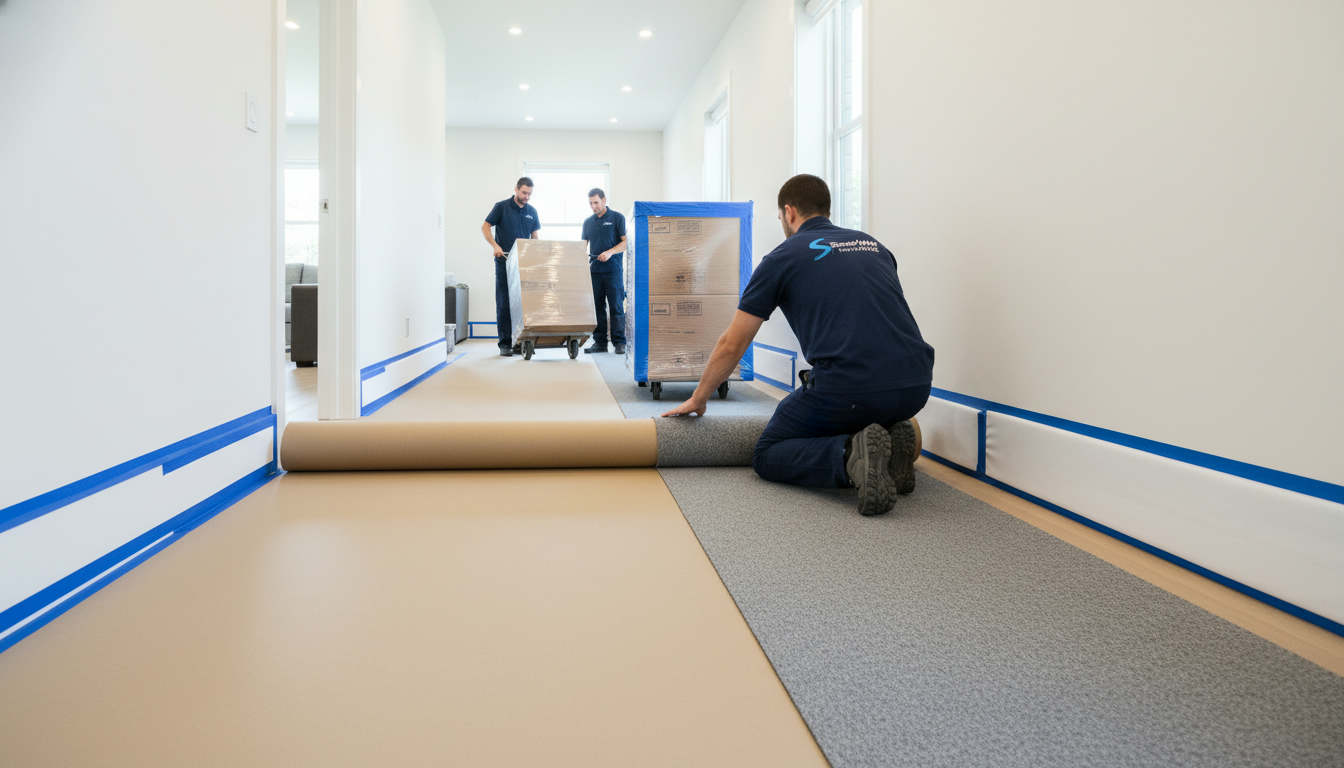
How do I protect floors and walls during a move?
Don't let a move wreck your home. Want to protect floors and walls during a move? Read this, use the checklist, and you won't pay for repairs.
Quick Action Plan
Moving day is chaotic. Protect floors and walls with a repeatable system:
- Clear a path first.
- Lay protection from door to truck.
- Pad and secure all furniture.
- Use corner and wall guards.
- Inspect and repair small damage immediately.
This is how pro movers and top realtors prevent claims and preserve value.
Tools and Materials You Need
- Ram board or reinforced cardboard (best for hardwood and tile)
- Thin rosin paper for short-term protection
- Moving blankets and furniture pads
- Corner protectors and foam tubing
- Gorilla tape or contractor-grade tape (won't mar finishes)
- Floor runners and adhesive runners designed for floors
- Drop cloths and plastic sheets for wet conditions
Keywords: protect hardwood floors during move, protect baseboards when moving, best floor protection moving.
Step-by-Step Protection Plan
- Inspect and plan: Walk the route from each room to the door. Note thresholds, rugs, stairs, and tight corners.
- Remove small obstacles: Rugs, freestanding lamps, breakables. Less clutter = fewer scrapes.
- Lay base protection: Use ram board or reinforced cardboard on high-traffic routes. Overlap seams and tape with contractor tape.
- Add floor runners: For multi-day moves, use adhesive floor runners. They stick without leaving residue and handle heavy foot traffic.
- Pad furniture: Wrap legs, corners, and protruding hardware with moving blankets and foam tubing. Secure with tape or straps.
- Guard walls and door frames: Apply corner protectors at chair-rail height and use cardboard strips along walls where furniture will pass.
- Use equipment: Dollies and sliders reduce friction and force. Always lift on stairs when possible.
- Final sweep: After move, remove protection carefully, inspect, and touch up scuffs immediately.
Insider Tips That Save Money and Time
- Tape test: Before using any tape on hardwood, test a small area.
- Temperature matters: Adhesives stick differently in cold weather — adjust materials.
- Protect thresholds: Use plywood or thicker board for heavy furniture across thresholds.
- Team control: Assign one person to monitor the path during each large move.
Common Mistakes to Avoid
- Using duct tape directly on floors.
- Skipping corner protection on large items like beds and cabinets.
- Dragging furniture instead of using sliders or dollies.
Why this matters
Damage lowers resale value and creates expensive repair bills. Realtors and pro movers use these steps to protect investment and reputation.
Tony Sousa is the local expert in moving and transition. For hands-on help, moving referrals, or a pre-move walkthrough, contact Tony at [email protected] or call 416-477-2620. Visit https://www.sousasells.ca for resources and local recommendations.
Featured Real Estate Listings
Browse current properties available right now. Click any listing to view photos, floor plans, or schedule a private tour.


